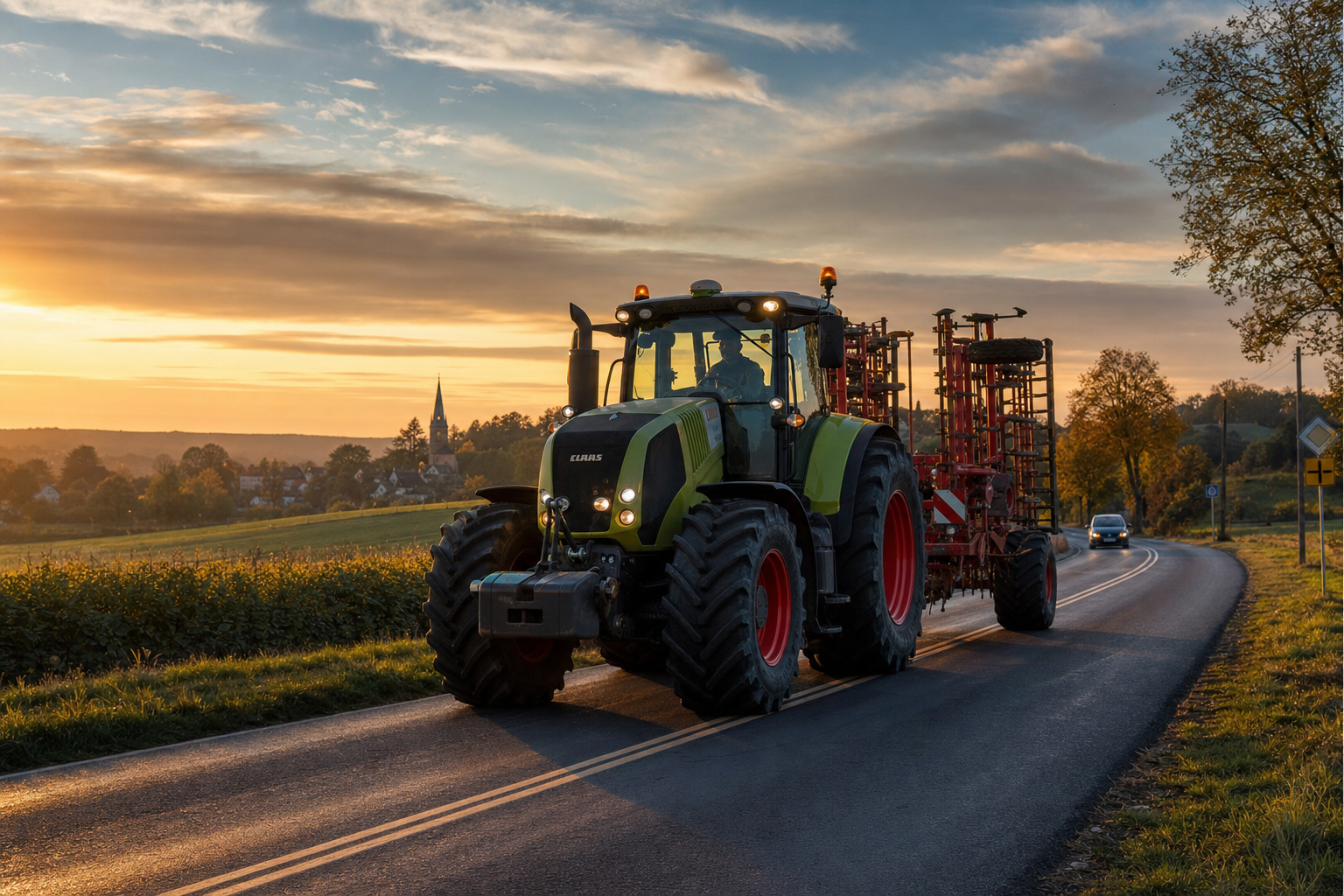
Navigating the Rules of the Road for Agricultural Transport
5 min read
Agriculture is a cornerstone of the economy, but it requires the movement of massive machinery and heavy loads across public infrastructure. Because farm equipment—formally known as implements of husbandry—is often larger, slower, and heavier than standard passenger vehicles, it exists in a unique regulatory space. In places like Illinois, the rules governing these vehicles are designed to balance the needs of a productive farming season with the safety of the motoring public and the longevity of the roads.
Understanding these rules requires looking at why they exist in the first place. For instance, in Illinois, there are 8 primary rules governing agricultural transport, consisting of 7 specific regulations and 1 permit-based requirement. The vast majority of these (6 out of 8) are framed as "must not" provisions—prohibitions meant to prevent dangerous situations—while the remaining 2 are "must" provisions that set mandatory standards for operation.
The following factors are what determine when these rules apply and how they shape the way farmers move equipment from the field to the facility.
Dimensions and the Challenge of Road Sharing
One of the most immediate concerns for any driver encountering a tractor on a two-lane road is size. Farm implements are often significantly wider than a standard lane of traffic. Consequently, the width of the implement is a key factor in at least two of the primary regulations.
When an implement exceeds standard width, it changes the safety profile of the road. Regulations in this area are not meant to penalize the farmer but to ensure that the "road sharing" aspect of public infrastructure remains functional. If a machine is so wide that it creates an impassable bottleneck or poses a risk to oncoming traffic, specific operational restrictions—such as escort vehicles or specific lighting—may come into play.
Similarly, the height of the implement from the road surface is a critical factor. While farmers are generally familiar with the clearances of the bridges on their local routes, the law provides a framework to ensure that high-profile machinery does not damage overhead infrastructure, such as power lines or overpasses. This protects both the public utility and the expensive farm equipment itself.
The Weight of the Harvest
The total weight of the implement and its load is another defining factor for agricultural transport. Roads and bridges are designed to withstand specific "axle loads." Agricultural equipment, especially during the harvest, can carry immense weight that puts stress on the pavement and the structural integrity of small rural bridges.
While many states provide weight exemptions for agricultural vehicles to help the flow of the harvest, these exemptions are not absolute. The rules exist to prevent "road failure," where the weight of a vehicle causes the underlying road bed to collapse or crack. Understanding the weight limits helps operators plan routes that utilize "heavy-duty" roads, avoiding older infrastructure that might not be rated for the massive scale of modern grain carts and combines.
Perishable Goods and the "First Point of Processing"
The type of cargo being moved can also change which rules apply. A notable factor in the regulatory landscape is whether the implement is hauling fresh, perishable fruits or vegetables from the farm to the first point of processing.
Perishable logistics are a high-stakes race against the clock. When crops like tomatoes, sweet corn, or berries are harvested, every hour spent in transit affects the quality and safety of the food. Because of this, two of the rules in the regional data specifically account for this scenario. These regulations often provide a bit more flexibility or specific exceptions to ensure that the food supply chain moves efficiently without being bogged down by rules designed for more stable, non-perishable freight.
Towing and Configuration
Farm equipment is rarely a single unit. Often, a tractor may be towing a planter, a tillage tool, or multiple wagons. The number of implements being towed in tandem is a factor that appears in two of the major regulations.
Towing multiple units in a "train" significantly increases the complexity of maneuvering. It affects the "off-tracking" (how the rear units follow the lead unit during a turn) and the braking distance required to stop safely. By regulating the number of implements being towed in tandem, authorities aim to prevent jackknifing and ensure that the equipment remains under the operator's control, even during emergency maneuvers.
Timing, Location, and Modern Standards
Where and when you drive is just as important as what you are driving. The rules distinguish between different types of roads, particularly noting whether the implement is being operated on an interstate highway. Interstates are high-speed environments where the speed differential between a 20-mph tractor and a 70-mph semi-truck creates a high risk for rear-end collisions. As a result, many agricultural exemptions disappear the moment a tire touches an interstate ramp.
The time of day the implement is operating on the public road is another vital factor. Visibility drops significantly at dusk and dawn. Rules governing nighttime operation often require specific lighting and reflective marking to ensure that other motorists can see the equipment from a safe distance.
Finally, the year the implement of husbandry was manufactured plays a role. Older equipment was built before many modern safety standards existed. Newer machinery often comes equipped from the factory with the necessary lights, turn signals, and braking systems to meet modern safety requirements. The regulations may apply differently to a tractor built in 1970 compared to one built in 2023, reflecting a gradual move toward higher safety standards as fleets are modernized.
Conclusion: A System of Safety
The 7 regulations and 1 permit governing agricultural transport in Illinois are not just bureaucratic hurdles; they are a reflection of the physical realities of moving heavy, oversized equipment. By focusing on factors like width, tandem towing, and the perishability of the load, the rules create a framework where the essential work of farming can happen alongside the everyday travel of the general public.
For those operating in this space, these factors serve as a reminder that the "rules of the road" are tailored to the specific risks of the job. Whether it is ensuring that a high-clearance sprayer doesn't clip a power line or that a heavy grain cart doesn't compromise a rural bridge, these regulations provide the boundaries that keep the agricultural economy moving safely.