Understanding the Road Ahead: A Guide to Super Single Tire Regulations and Load Limits
6 min read
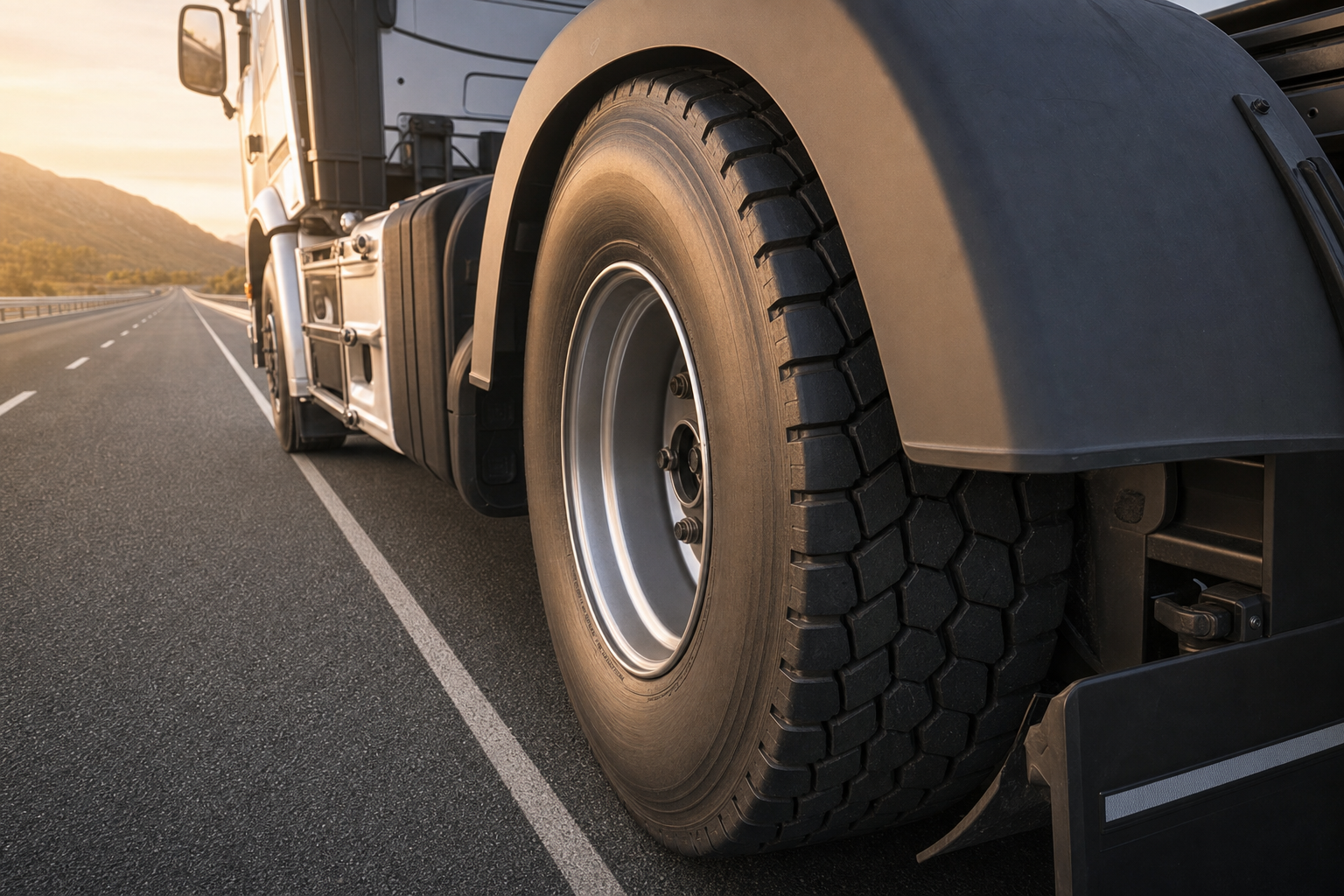
For decades, the standard image of a heavy-duty truck involved a "dualed-out" rear axle—two tires bolted side-by-side on each end of the axle. However, the introduction of wide-base single tires, commonly known as "Super Singles," has shifted the landscape of the trucking industry. While these tires offer significant advantages in fuel efficiency and weight reduction, they also sit at the center of a complex regulatory conversation.
When you look at the current data regarding Super Single regulations, you may notice a surprising statistic: a count of zero specific standalone regulations and zero dedicated permits in many standardized databases. This does not mean that Super Singles are unregulated or "free-for-alls" on the highway. Rather, it reflects a fundamental truth about how commercial vehicle laws are structured. Instead of creating a separate rulebook just for tires, authorities typically fold Super Single requirements into broader standards for axle weight, gross vehicle weight, and infrastructure protection.
This guide explores the factors that shape these rules and explains why the regulatory environment looks the way it does for wide-base tires.
The Efficiency Incentive: Why Super Singles Exist
To understand the regulations, one must first understand why a fleet would choose a Super Single over traditional dual tires. The primary drivers are weight and friction.
A single wide-base tire and its corresponding rim are significantly lighter than two standard tires and their two rims. For a long-haul carrier, replacing eight dual tires with four Super Singles can shave hundreds of pounds off the vehicle’s "tare weight" (the weight of the empty vehicle). In an industry where profit is often determined by how much freight can be carried within a legal limit, every pound saved on equipment is a pound earned in cargo.
Furthermore, Super Singles reduce rolling resistance. With only two sidewalls flexing instead of four per axle side, the engine doesn’t have to work as hard to keep the truck moving. This translates to measurable fuel savings—a crucial factor for both economic health and environmental compliance.
The Infrastructure Conflict: Why Rules Are Necessary
If Super Singles are lighter and more efficient, why isn't every truck using them? The answer lies beneath the pavement.
Regulations exist primarily to protect the massive public investment in roads and bridges. The core concern for transportation departments is "point loading." When a truck carries 34,000 pounds on a tandem axle equipped with dual tires, that weight is distributed across eight separate contact patches. When that same truck switches to Super Singles, the weight is concentrated into four contact patches.
Engineering studies have historically suggested that narrower contact patches—even if the tire is "wide"—can exert more vertical pressure on the road surface. This can lead to "rutting" or accelerated wear of the asphalt. Consequently, the rules governing these tires are designed to balance the economic benefits of the trucking industry with the maintenance costs of the highway system.
Key Factors Shaping Regulations
Because the regulatory landscape often integrates Super Singles into general weight laws, several key factors determine when and how they can be used.
Gross Vehicle Weight and Axle Loads
The most significant factor is the total weight the vehicle is carrying. Most jurisdictions have a "gross vehicle weight" limit (commonly 80,000 pounds in the United States) and specific "axle weight" limits.
Regulators look at how much weight each individual axle is pressing onto the road. If a Super Single is too narrow for the weight it is supporting, it risks exceeding the "pounds per inch of tire width" limit. This is a common metric used by enforcement officers to ensure that tires are not over-stressed and that the road isn't being subjected to excessive pressure.
Tire Width and Contact Patch
Not all Super Singles are created equal. The width of the tire—often measured in millimeters—is a primary factor in its legality. A "generation one" wide-base tire might be narrower and cause more road wear than the "new generation" wide-base tires, which are engineered to have a footprint nearly as large as a set of duals.
Regulations often specify a minimum width for a tire to be considered a legal replacement for a dual set without a weight penalty. If a tire falls below a certain width threshold, the allowable weight on that axle might be reduced to protect the pavement.
Bridge Formula Calculations
The "bridge formula" is a mathematical equation used by regulators to determine the maximum weight any group of axles on a vehicle may carry. This is based on the distance between the axles. Since Super Singles change the weight distribution of the vehicle, they must still comply with these complex spacing and weight requirements to ensure they don't cause structural fatigue on bridges.
Why Standalone Permits and Regulations Are Rare
As noted in the current totals, it is common to find zero specific "Super Single" permits or regulations listed in specialized databases. This is because the industry has largely moved toward a "performance-based" standard.
Instead of writing a law that says "Super Singles are allowed," authorities write laws that say "Any tire configuration must not exceed X pounds per inch of width." By doing this, the regulations remain "technology neutral." As tire manufacturers develop even better wide-base tires that are gentler on the road, the existing laws automatically accommodate them without needing to be rewritten.
Furthermore, the lack of specific permits suggests that in most jurisdictions, if your vehicle meets the standard weight and width requirements, you don't need a "special permission" slip to run wide-base tires. They are treated as standard equipment, provided they stay within the established boundaries of safe operation and infrastructure protection.
Regional Variations and the "Patchwork" Challenge
While the physics of road wear are the same everywhere, the political and geographic realities are not. This leads to regional differences in how general weight laws are applied to Super Singles.
- Pavement Composition: Regions with softer asphalt or extreme heat may be more restrictive because the road surface is more susceptible to rutting from concentrated loads.
- Legacy Infrastructure: Areas with older bridges may have stricter "axle weight" interpretations that indirectly affect Super Single users more than those using dual tires.
- State vs. Federal Standards: In many places, federal highways allow for certain weight tolerances that state or local roads do not. A driver might be legal on the interstate but find themselves in technical violation the moment they exit onto a secondary road if their "pounds per inch of width" exceeds local limits.
Educational Background, Not Compliance Advice
It is important to remember that the regulatory world is constantly evolving. While the factors mentioned above—gross weight, axle loading, and tire width—are the pillars of the rules, the specific numbers vary by jurisdiction.
The absence of standalone Super Single permits in a dataset often indicates that these tires have become a "normalized" part of the transport industry. They are no longer seen as an experimental exception requiring special oversight, but as one of many hardware choices a fleet can make, provided they respect the fundamental limits of the road.
When considering a move to wide-base singles, the focus should not be on finding a "Super Single law," but on understanding the "Size and Weight" laws of the regions where the vehicle will operate. By focusing on the "why" behind the rules—protecting the road and ensuring vehicle stability—operators can better understand the boundaries that keep the industry moving safely and efficiently.