Understanding Wheelbase Regulations: A Guide to Commercial Vehicle Permits and Requirements
5 min read
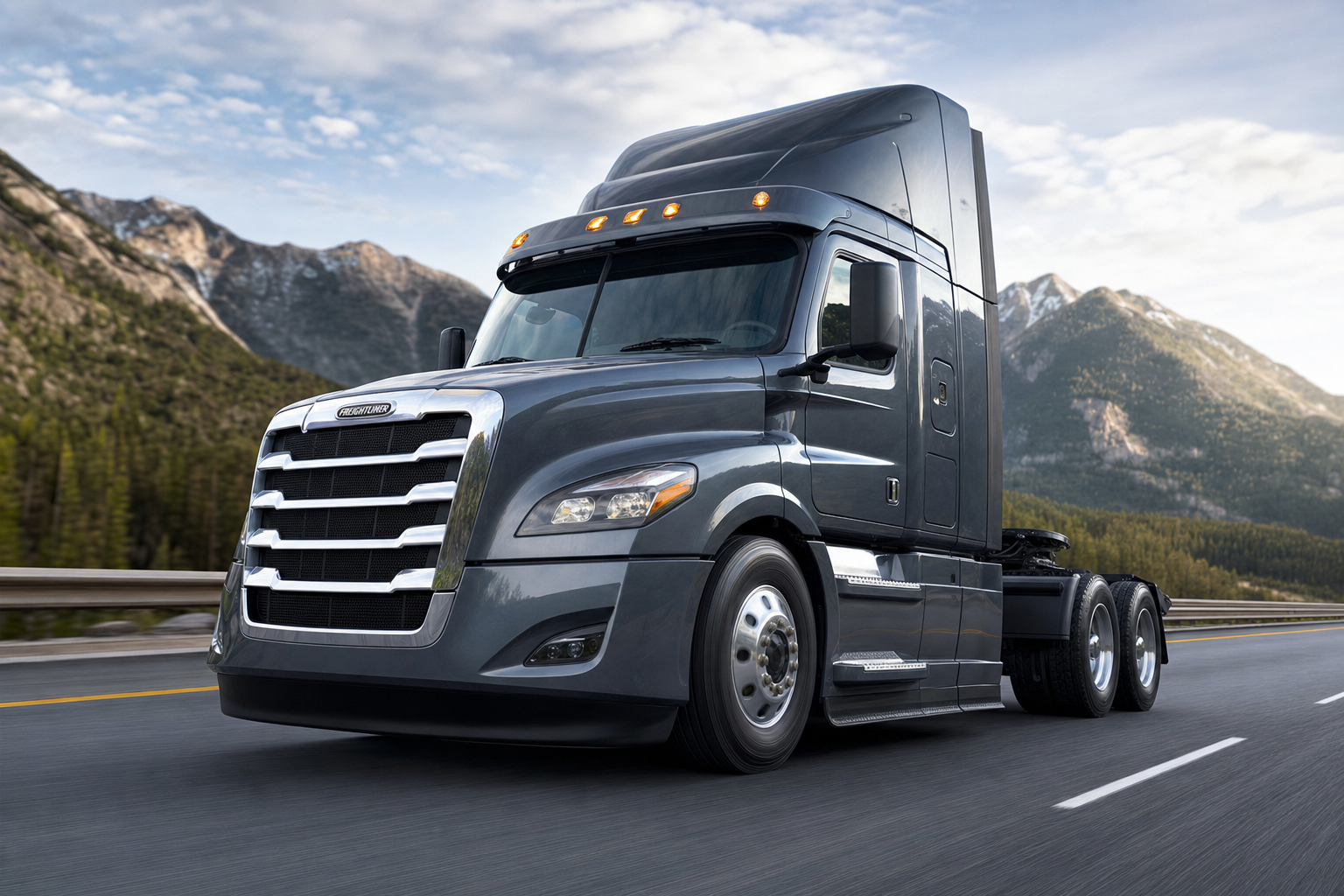
When you see a long-haul truck navigating a tight city corner or cruising down a narrow provincial highway, you are witnessing a delicate balance of engineering and law. One of the most critical aspects of that balance is the vehicle's wheelbase.
In the world of commercial trucking, wheelbase isn't just a technical specification; it is a heavily regulated dimension that determines where a truck can go, how much it can carry, and whether it requires a special permit to operate. Across various jurisdictions in North America, there are currently 20 distinct rules—comprising 14 specific regulations and 6 types of permits—that dictate how long a truck’s wheelbase can be.
Understanding these rules is essential for fleet managers, owner-operators, and logistics planners. This guide explores the factors that shape these regulations and the permits that allow for exceptions.
Why Wheelbase Matters
The "wheelbase" of a truck tractor is generally defined as the distance from the center of the steering axle to the center of the rear axle (or the center of the rear axle group, such as a tandem axle).
Regulators keep a close eye on this measurement for two primary reasons: maneuverability and infrastructure protection. A truck with an exceptionally long wheelbase requires a much wider turning radius. On older roads or in tight urban corridors, a long-wheelbase tractor can easily "off-track," causing the trailer to swing over curbs or into oncoming traffic lanes. Furthermore, the way a vehicle’s weight is distributed across its axles affects the stress placed on bridges and overpasses.
Because of these risks, the regulatory landscape is firm. Of the 20 rules identified across six major authorities, 10 are strict prohibitions (actions a driver must not take) and 7 are mandatory requirements (actions a driver must take). Only 3 are permissive, allowing for flexibility under specific conditions.
Key Factors Shaping the Rules
Regulations are rarely one-size-fits-all. Instead, they are triggered by specific characteristics of the vehicle and its intended use. Here are the primary factors that determine which rules apply to a commercial vehicle.
1. The Measurement of the Tractor Wheelbase
The most common factor, appearing in 12 of the 20 rules, is the actual wheelbase of the truck tractor measured in meters. Most jurisdictions set a "standard" maximum wheelbase. If a tractor exceeds this length, it moves out of the realm of general regulation and into the world of special permits.
2. Vehicle Configuration and Trailer Counts
A tractor doesn't operate in a vacuum; what it pulls matters just as much as the tractor itself. The number of semi-trailers in the configuration (a factor in 5 rules) and the total length of the entire vehicle combination (a factor in 4 rules) are critical. For example, a tractor that is perfectly legal when pulling a single 53-foot trailer might become "over-length" and require a permit if it is hooked up to a double-trailer configuration.
3. Equipment and Comfort Features
Interestingly, the design of the truck itself can change the rules. In at least one instance, whether a truck is equipped with a large sleeper berth or living quarters affects the regulation. This is often a nod to long-haul drivers who require more space for rest, but regulators must balance that need for comfort against the increased total length of the vehicle.
The manufacturing model year of the tractor also plays a role in 4 rules. This is typically due to "grandfathering" clauses, where older trucks are allowed to operate under the rules that existed when they were built, while newer trucks must adhere to stricter modern standards.
4. Axle Geometry
The technical layout of the axles is another determining factor. Rules frequently look at:
- Drive axle configuration: Whether the truck uses a tandem axle or another setup.
- Steering axle distance: The distance from the center of the steering axle to the center of the rearmost tractor axle.
- Trailer geometry: The overall length of the trailer and the distance from the kingpin (the connection point) to the center of the rear trailer axle.
The Regional Landscape
Wheelbase rules are governed by a patchwork of provincial, state, and federal authorities. Each region has its own philosophy on how to manage heavy traffic.
- New Brunswick: This province leans heavily on formal regulations rather than permits, with 4 specific regulations in place to manage vehicle dimensions.
- British Columbia: Similarly, B.C. focuses on 3 clear regulations to ensure trucks can safely navigate its mountainous and winding terrain.
- Nova Scotia: This maritime province maintains 3 regulations that define the boundaries for commercial wheelbases.
- Québec: Québec utilizes a mix of 2 regulations and 1 permit, offering a bit more flexibility for unique configurations through its permit system.
- Vermont: Unlike many other jurisdictions, Vermont relies heavily on permits. While it has 1 standing regulation, it offers 3 different types of permits, suggesting a system that handles long-wheelbase vehicles on a more case-by-case basis.
- Canada (Federal): At the national level, there is 1 overarching regulation and 2 permits designed to harmonize travel across provincial borders.
Permits vs. Regulations: What’s the Difference?
It is helpful to view regulations as the "laws of the land" and permits as "special permission."
Regulations are the baseline. They tell you that a truck tractor must not exceed a certain wheelbase measurement if it wants to operate on standard roads without extra paperwork. If your vehicle falls within these limits, you are compliant with the standard traffic acts.
Permits, on the other hand, are for those instances where the work requires something bigger. If you are using a tractor with an extended wheelbase to accommodate a heavy-duty crane or a large sleeper unit, you may apply for an annual permit. These permits often come with conditions, such as:
- Restricted travel on certain "local" or "weak" roads.
- Requirements for additional mirrors or safety lighting.
- Limitations on the overall length of the trailer you can pull behind the long-wheelbase tractor.
Summary
The rules governing truck wheelbases are a vital part of road safety. By limiting the distance between axles and the total length of vehicle combinations, authorities ensure that trucks remain controllable and that our infrastructure remains intact.
Whether a rule applies to you depends heavily on the specific "geometry" of your rig—from the year it was made to the distance between its kingpin and rear axle. While the 20 rules across these six jurisdictions may seem complex, they are all built around the same goal: ensuring that the largest vehicles on our roads move in harmony with the world around them.
Before hitting the road with a new configuration, it is always wise to check the specific requirements of your destination, as the transition from a "standard" truck to one requiring a "wheelbase permit" can happen with just a few centimeters of difference.