Managing the Road: Understanding Convoy Regulations for Oversize Loads
5 min read
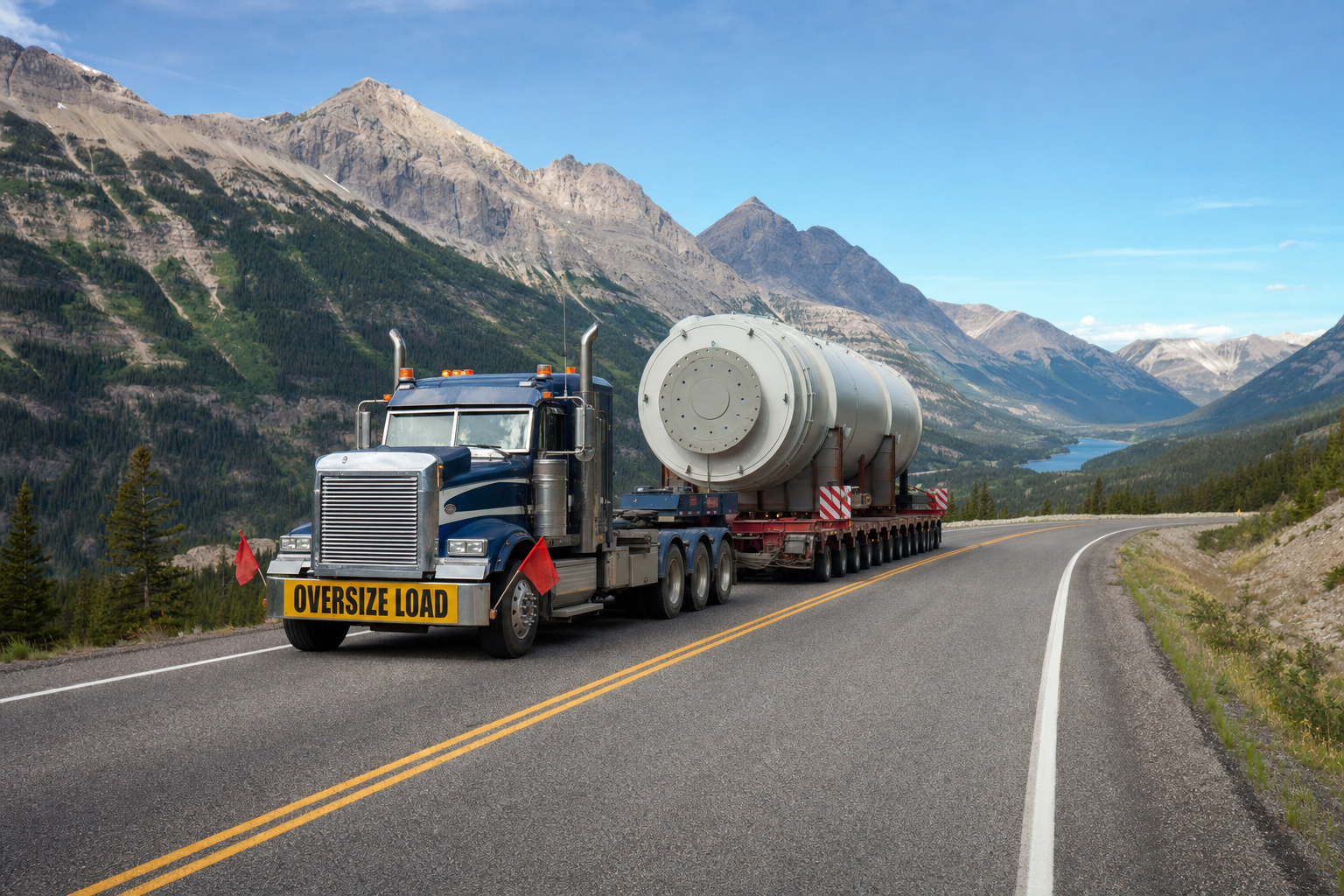
When you see a massive piece of industrial equipment moving down a highway, it is a feat of engineering and logistics. When you see two or three of them moving together in a line, it is what transportation officials call a convoy. While the idea of moving multiple large loads at once might seem like an efficient way to get a job done, it creates a unique set of challenges for public safety, road wear, and traffic flow.
In the world of heavy haul and transport, "convoying" is often strictly controlled or outright prohibited. Understanding the logic behind these rules requires a look at how authorities balance the needs of industry with the safety of the general public. By looking at the regulatory landscape—specifically within jurisdictions like Alaska—we can see a clear picture of why these rules exist and what specific factors trigger them.
The Regulatory Landscape: A Bias Toward Caution
Across the surveyed data from two authoritative sources, there are 13 total rules governing convoy operations for oversize or overweight vehicles. These rules are divided into two main categories: 4 general regulations and 9 specific permits.
What is most striking is the "modality" of these rules—the way they are enforced. Out of the 13 rules, 10 are framed as "must not" requirements. This indicates a heavy leaning toward prohibition. In most cases, the default stance of transportation authorities is that convoying is not allowed unless a very specific set of conditions is met. Only two rules are framed as "must" (requirements you have to follow) and only one is a "may" (a discretionary allowance).
This "must not" dominance exists because a convoy of oversize vehicles isn't just a line of trucks; it is a temporary moving wall that changes the physics of the highway.
Why These Rules Exist
To understand why 10 out of 13 rules are restrictive, we have to look at the impact a convoy has on the road. Regulations aren't designed to make transport more difficult; they are designed to manage three primary risks:
1. Traffic Flow and "The Passing Problem"
The most immediate concern for a driver encountering an oversize load is how to get around it. A single oversize vehicle with escort cars is already a significant hurdle. If two or three of these vehicles travel together without sufficient space between them, they create a "super-load" that can be hundreds of feet long. On a two-lane highway, this makes passing safely almost impossible for standard passenger vehicles, leading to frustration, risky driving maneuvers, and traffic congestion.
2. Infrastructure Stress
Bridges and overpasses are designed to hold significant weight, but that weight is usually calculated based on standard vehicle spacing. When multiple overweight vehicles travel in a tight convoy, they exert a concentrated amount of pressure on bridge spans that the infrastructure may not have been engineered to handle simultaneously. By prohibiting convoys, authorities ensure that the weight is distributed across the road network over time, rather than all at once.
3. Emergency Access
In the event of an accident or a medical emergency, a convoy can become a blockade. Because these vehicles are often wider than a standard lane, they can prevent emergency responders from filtering through traffic. Limiting the number of large vehicles that can travel together ensures the road remains "porous" enough for police, fire, and ambulance services to do their jobs.
The Determining Factors: Length and Width
Not every truck is subject to these convoy rules. The regulations generally trigger based on the physical dimensions of the vehicles involved. Based on the data, two primary factors determine when these rules apply.
Total Vehicle Length
One of the most critical factors is the total length of all vehicles in the convoy, excluding the escort vehicles. Authorities look at the cumulative footprint of the transport group. If the combined length of the vehicles exceeds a certain threshold, the convoy prohibition usually kicks in. This is because the longer the "train" of vehicles, the more difficult it is for other motorists to find a "gap" to move back into the lane after passing.
Maximum Width of the Load
The width of the load or the vehicle is the second major trigger. A vehicle that exceeds standard lane widths already requires significant "lane discipline" and often forces oncoming traffic to slow down or move over. When multiple wide loads are grouped together, the margin for error disappears. Rules are often written so that once a load reaches a specific width, it must travel independently to ensure that the "swept path" of the vehicle—especially on turns—doesn't occupy both sides of the road at once.
While other factors like the distance between vehicles, the total number of trucks, or the specific type of vehicle (such as off-road equipment) are often discussed in logistics planning, the core legal triggers in these specific regulations center heavily on these physical dimensions of length and width.
Regional Focus: The Alaska Example
The data shows that Alaska is a primary focal point for these rules, accounting for all 13 of the identified regulations and permits (4 regulations and 9 permits).
Alaska presents a unique environment for convoy operations. The state has a limited road network, often consisting of long stretches of two-lane highways with few opportunities for detours. The terrain is rugged, and weather conditions can change rapidly. In this context, the 9 permit-based rules are especially important.
A permit represents a case-by-case evaluation. While the 4 general regulations set the "law of the land," the 9 permits allow the state to look at a specific move—perhaps a massive piece of mining equipment headed to the North Slope—and decide exactly how it must be moved. If the state issues a permit, it might specify that the convoy "must not" travel during certain peak hours or that it "must" maintain a specific distance from other large loads to allow traffic to "bleed" through the gaps.
Summary of the Rules
To recap the landscape of convoy operations:
- Prohibition is the standard: With 10 "must not" rules, the assumption is that you cannot convoy unless you have explicit permission.
- Permits outweigh general regs: There are more permit-specific rules (9) than general regulations (4), suggesting that most convoying decisions are made based on the specific details of the trip rather than a one-size-fits-all law.
- Dimensions matter most: The physical length and width of the vehicles are the primary reasons these rules are triggered.
It is helpful to view these rules not as barriers to transport, but as a communication tool between the transport industry and the public. By strictly controlling how and when oversize vehicles can group together, authorities ensure that the massive equipment necessary for our economy can reach its destination without compromising the safety and mobility of everyone else on the road.