Heavy Duty Heroics: Understanding Weight Limits for Emergency Vehicles
5 min read
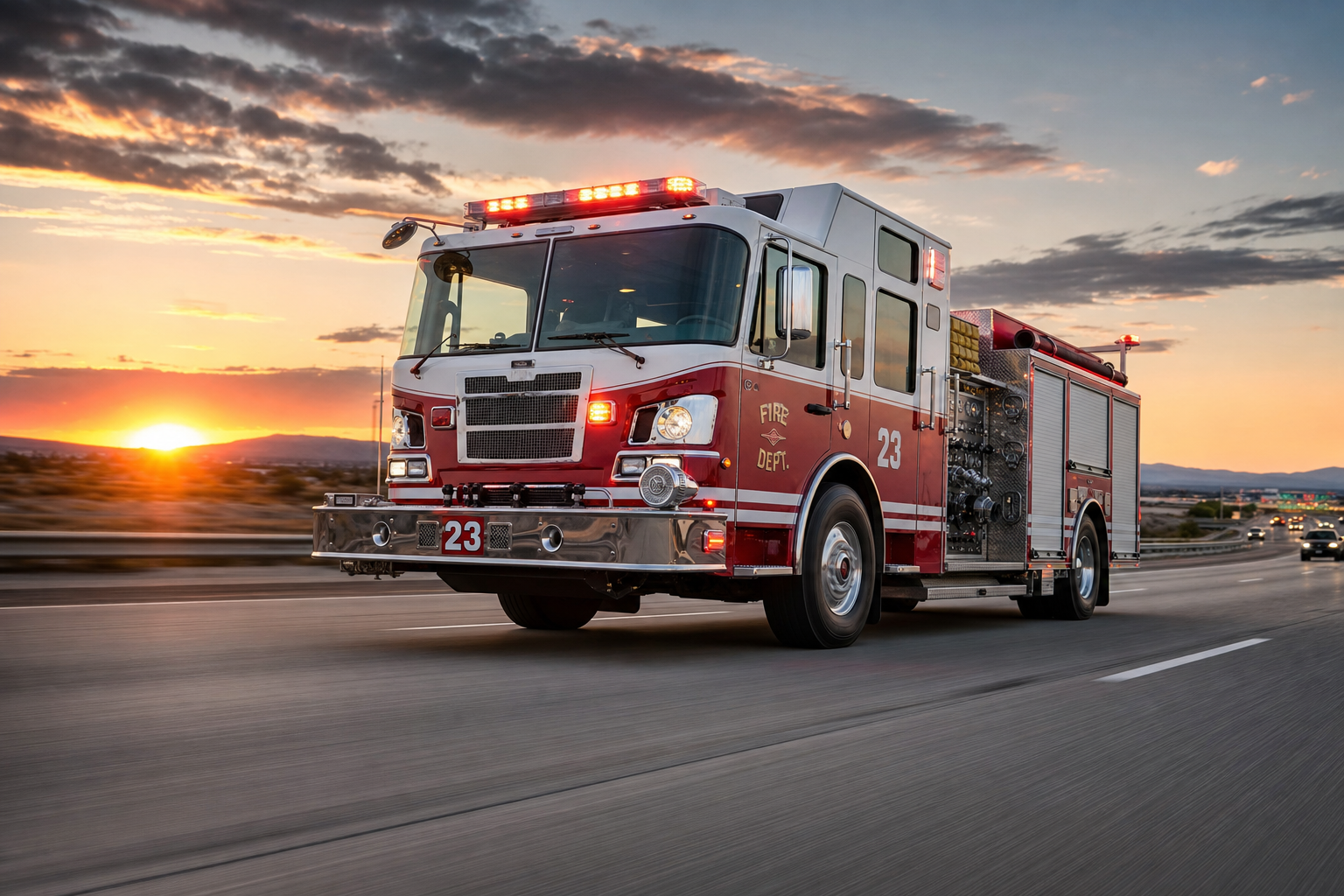
When a fire truck or a heavy rescue vehicle thunders down an interstate highway, most of us see a life-saving machine on a mission. We don't necessarily see a complex engineering challenge or a regulatory puzzle. Yet, beneath the sirens and the chrome lies a delicate balance between public safety and infrastructure preservation.
Emergency vehicles are, by necessity, heavy. A standard pumper truck might carry hundreds of gallons of water, specialized extraction tools, and heavy-duty ladders. When these vehicles travel on major highways, they exert significant pressure on the pavement and bridge decks. To manage this, authorities have developed a framework of regulations and permits designed to ensure that while help arrives as quickly as possible, the roads themselves don't suffer catastrophic damage in the process.
In this guide, we will explore the nine core rules that shape how these vehicles operate, focusing on why these regulations exist and the factors that determine when they apply.
The Regulatory Landscape: By the Numbers
In the transport sector, rules generally fall into two categories: regulations and permits. Regulations are the standing laws that apply to everyone in a specific category. Permits, on the other hand, are often specific authorizations that allow for exceptions to those general laws under controlled conditions.
Based on current authoritative data, there are 9 total rules governing weight limit exceptions for emergency vehicles on major routes. The vast majority of these—8 in total—are established regulations. Only 1 takes the form of a specific permit. This suggests that for most emergency service providers, the rules of the road are clearly defined in the law rather than negotiated on a case-by-case basis.
The "binding nature" of these rules—what we call the modality—is also telling:
- 7 rules are "must not" (prohibitive): These set the hard boundaries. Even an emergency vehicle has limits that cannot be crossed to prevent immediate road or bridge failure.
- 1 rule is a "may" (permissive): This provides the legal "wiggle room" or discretionary power for departments to act under specific circumstances.
- 1 rule is a "must" (mandatory): This is a specific requirement that must be met, often involving safety equipment or reporting.
This breakdown shows a system heavily weighted toward "thou shalt not." Even when saving lives, the physical limitations of a bridge or the structural integrity of a highway lane are treated as non-negotiable boundaries.
The "Why" Behind the Rules
It might seem counterintuitive to restrict a fire truck's weight when it is racing to an emergency. However, highway regulations exist for two primary reasons: structural longevity and vehicle safety.
Infrastructure Protection
Highways and bridges are designed to last decades, but their lifespan is determined by the "load cycles" they endure. A single extremely heavy vehicle can cause more "fatigue" to a bridge than thousands of passenger cars. If an emergency vehicle exceeds the weight capacity of a bridge, it risks not just damaging the road, but potentially causing a collapse that would hinder all future emergency responses and endanger the crew.
Vehicle Stability and Braking
Weight affects how a vehicle handles. A fire truck carrying 2,000 gallons of water has a high center of gravity. When that vehicle travels at high speeds on an interstate, its ability to stop quickly or navigate a sharp off-ramp is dictated by its weight. Regulations ensure that these vehicles stay within a range where the brakes and tires can safely manage the momentum of the truck.
Key Factors That Determine the Rules
Not every emergency vehicle is treated the same way under the law. Several specific factors determine which rules apply and when exceptions are granted.
1. The Operational State of the Vehicle
One of the most significant factors is what the vehicle is actually doing. Is it actively responding to an emergency, or is it returning to the station?
Rules are often more flexible when a vehicle is in an active "response mode." Authorities recognize that in a life-or-death situation, the risk of minor road wear is secondary to saving a life. However, once the emergency is over and the vehicle is returning from the scene, it may be subject to stricter weight enforcement. This distinction ensures that the "emergency exception" is used only when it is truly necessary.
2. Vehicle Type and Payload
The rules specifically distinguish between types of vehicles, with a particular focus on fire trucks carrying water or foam retardant. Water is incredibly heavy (about 8.3 pounds per gallon), and foam concentrates add even more mass.
A truck designed to carry thousands of gallons of liquid is fundamentally different from a technical rescue squad carrying tools. Because the payload (the water) is essential for firefighting but also creates the greatest weight risk, the regulations are specifically tailored to account for these "tanker" or "tender" style vehicles.
3. Engineering Metrics: Axles and Tires
While they might not appear in every single rule, two physical metrics are the foundation of transport safety:
- The weight applied to the axle or axle group: It isn't just the total weight of the truck that matters; it's how that weight is spread out. A truck with three axles can carry more total weight than a truck with two, because the "footprint" of the pressure on the road is more distributed.
- The width of the tire used on the axle: Wider tires spread the vehicle's weight over a larger surface area, reducing the "pounds per square inch" (PSI) pressing into the asphalt.
Regulations often use these metrics to determine if a vehicle is "overweight" in a way that will damage the road or if it is simply "heavy" but safe to travel.
A Regional Perspective: The Canadian Context
In the specific dataset we are examining, the focus is entirely on Canada. Within this region, the 9 rules (8 regulations and 1 permit) represent a standardized approach to emergency transport.
Canada’s vast geography and varying climate mean that its highways must endure extreme temperature shifts, making the pavement more susceptible to cracking under heavy loads. This may explain why the majority of the rules are "must not" regulations; the goal is to maintain a predictable, durable infrastructure across a massive highway network where help might have to travel long distances to reach a scene.
Conclusion
The regulations surrounding emergency vehicles on our highways are not meant to be "red tape" that slows down heroes. Instead, they are the guardrails that ensure the heroes arrive safely and that the roads remain standing for the next call.
By looking at the operational state of the vehicle, the specific nature of its payload, and the physical distribution of its weight across axles and tires, regulators have created a system that prioritizes speed during an emergency while demanding responsibility during routine operations. Understanding these nine rules helps us appreciate the careful engineering and legal planning that goes into every siren we hear on the highway.