The Lifelines of the North: Understanding Ice Road Regulations and Safety
5 min read
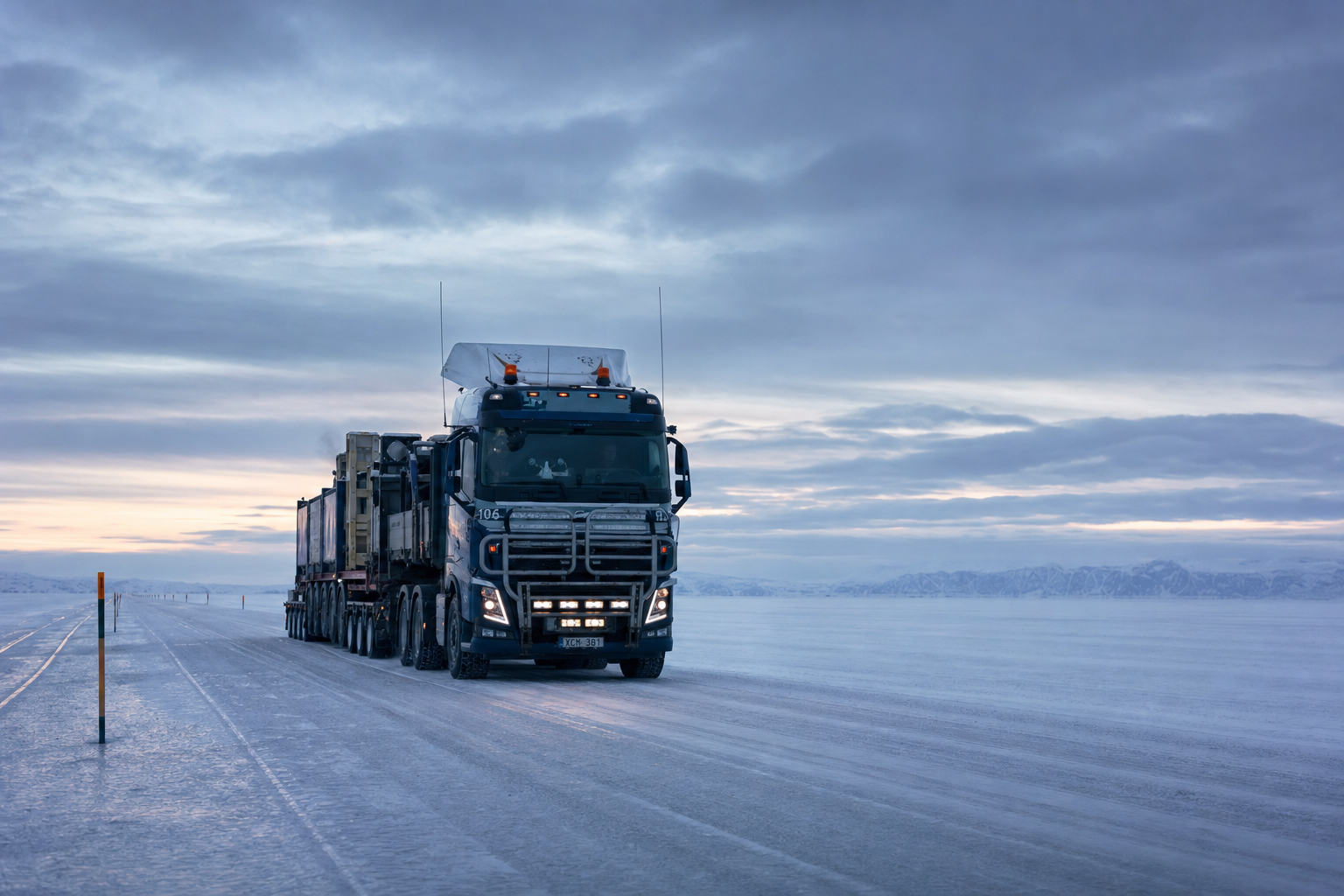
For many remote communities and industrial sites in the high latitudes, the arrival of winter does not mean a shutdown. Instead, it marks the opening of a vital infrastructure network: the ice road. These seasonal pathways, carved over frozen lakes, rivers, and tundra, provide a temporary window for the delivery of fuel, building materials, and essential goods that are otherwise too heavy or expensive to transport by air.
While they may look like simple stretches of cleared snow, ice roads are complex engineering feats. Because they are built on a medium that is constantly moving, melting, and shifting, the rules governing their use are some of the most dynamic in the transport world. Understanding the factors that shape these regulations is essential for anyone interested in how we manage the intersection of heavy industry and the natural environment.
The Data Landscape of Ice Road Management
When examining the formal regulatory framework for ice roads, we encounter a unique statistical profile. Currently, our data indicates a total of 0 regulations and 0 permits drawn from 0 authoritative sources.
At first glance, this might suggest a lack of oversight. However, in the world of seasonal transport, these numbers reflect a highly specialized and localized management style. Ice roads are often governed by private industry contracts, regional indigenous governments, or specific territorial departments that manage "active" status on a day-to-day basis rather than through permanent, year-round statutes. Because an ice road may only exist for eight weeks a year, the "rules" are often issued as daily bulletins or seasonal standing orders rather than fixed legislative permits. This fluid environment ensures that safety is dictated by the actual state of the ice rather than a static document in an office.
The Primary Factor: Ice Thickness and Weight Capacity
The most critical factor in any ice road regulation is the relationship between the thickness of the ice and the weight it can support. This isn't just a matter of "thick enough"; it is a calculation based on the physics of floating ice sheets.
Understanding Gross Vehicle Weight
The primary restriction on any ice road is the total weight of the truck and its cargo. Regulations generally categorize vehicles by their total mass. Early in the season, a road might only be open to light scout vehicles. As the "ice thickeners" (crews who pump water onto the surface to freeze in layers) do their work, the weight limits increase.
Axle Distribution
It isn't just about how much a vehicle weighs in total, but how that weight is distributed. A truck with more axles spreads its load over a larger surface area of the ice. Therefore, permits often specify not just a maximum weight, but a required configuration for trailers and wheels to ensure the pressure remains within the "flex" limits of the frozen surface.
The Invisible Threat: Speed and Hydrostatic Waves
One of the most counterintuitive factors in ice road regulation is the speed limit. On a standard gravel or paved road, speed limits are primarily about reaction times and collision prevention. On an ice road, they are about preventing a catastrophic "blowout" of the road itself.
When a heavy vehicle moves across ice floating on water, it creates a "bow wave" in the water beneath the surface. If a truck travels too fast, it can outpace this wave or cause it to reflect off a shoreline or a shallow bottom. When the wave catches up to the vehicle or meets a reflected wave, the resulting pressure can shatter the ice from underneath, even if the ice is several feet thick.
Regulations regarding speed are therefore strictly enforced to:
- Minimize the "flexing" of the ice sheet.
- Prevent the buildup of sub-surface water energy.
- Ensure that following distances between trucks are maintained (often up to 500 meters) so that the ice has time to "relax" after a heavy load passes.
Environmental Sensitivity and Ambient Temperature
Because ice roads are seasonal, they are deeply influenced by the weather. This leads to two specific types of regulatory shifts:
The "Deep Freeze" Requirement
Authorities often require a specific period of sustained cold—usually several days of temperatures well below zero—before a road can be officially opened or its weight limit increased. Even if the ice looks thick, "warm" ice (ice near the freezing point) is significantly weaker and more plastic than "cold" ice.
Shoreline Protection
The points where an ice road leaves the solid ground and enters the frozen water (the "portages") are the most vulnerable. Regulations often focus on these transition zones to prevent erosion and to ensure that the weight of the truck doesn't "punch through" where the ice meets the earth.
Why Permits and Regulations Shift
While our current count shows 0 formal permits in this specific dataset, in practice, a "permit" for an ice road is often a dynamic authorization. For example, a mining company might be granted a permit to move a specific number of loads, but that permit is contingent on the "Access Status" of the road.
If the ambient temperature rises or if a crack is detected by ground-penetrating radar, the "permit" is effectively suspended. This real-time regulation is necessary because, unlike a concrete bridge, an ice road is a living structure. It expands, contracts, and "heals" itself, requiring constant monitoring.
Safety Through Education, Not Just Enforcement
The goal of ice road guidelines is not to create barriers to transport, but to manage the inherent risks of driving over deep water. The regulations exist because the margin for error is slim. If a vehicle breaks through, the recovery is dangerous, environmentally damaging, and potentially fatal.
By understanding the factors—the total weight of the vehicle, the speed-induced waves, and the necessity of cold temperatures—operators can move thousands of tons of freight safely every year. Even when the formal "permit count" is low, the expertise and the unwritten laws of the ice remain the most important tools for northern transport.
Summary of Regulatory Logic
To summarize, ice road rules are shaped by three core pillars:
- Physics: Ensuring the weight of the vehicle does not exceed the structural capacity of the floating ice sheet.
- Hydrology: Controlling speed to prevent sub-surface waves from damaging the road.
- Climate: Adapting daily operations to the fluctuating temperatures of the Arctic or Sub-Arctic environment.
For those navigating these frozen highways, compliance is more than a legal hurdle; it is a fundamental requirement for survival in some of the most challenging environments on Earth. As data collection improves and more authoritative sources are integrated into central registries, we may see these "0" counts rise, reflecting a more digitized version of the rigorous safety standards already being practiced on the ice today.