The Logic of the Digital Roadside: Understanding Dynamic Message Sign Regulations
5 min read
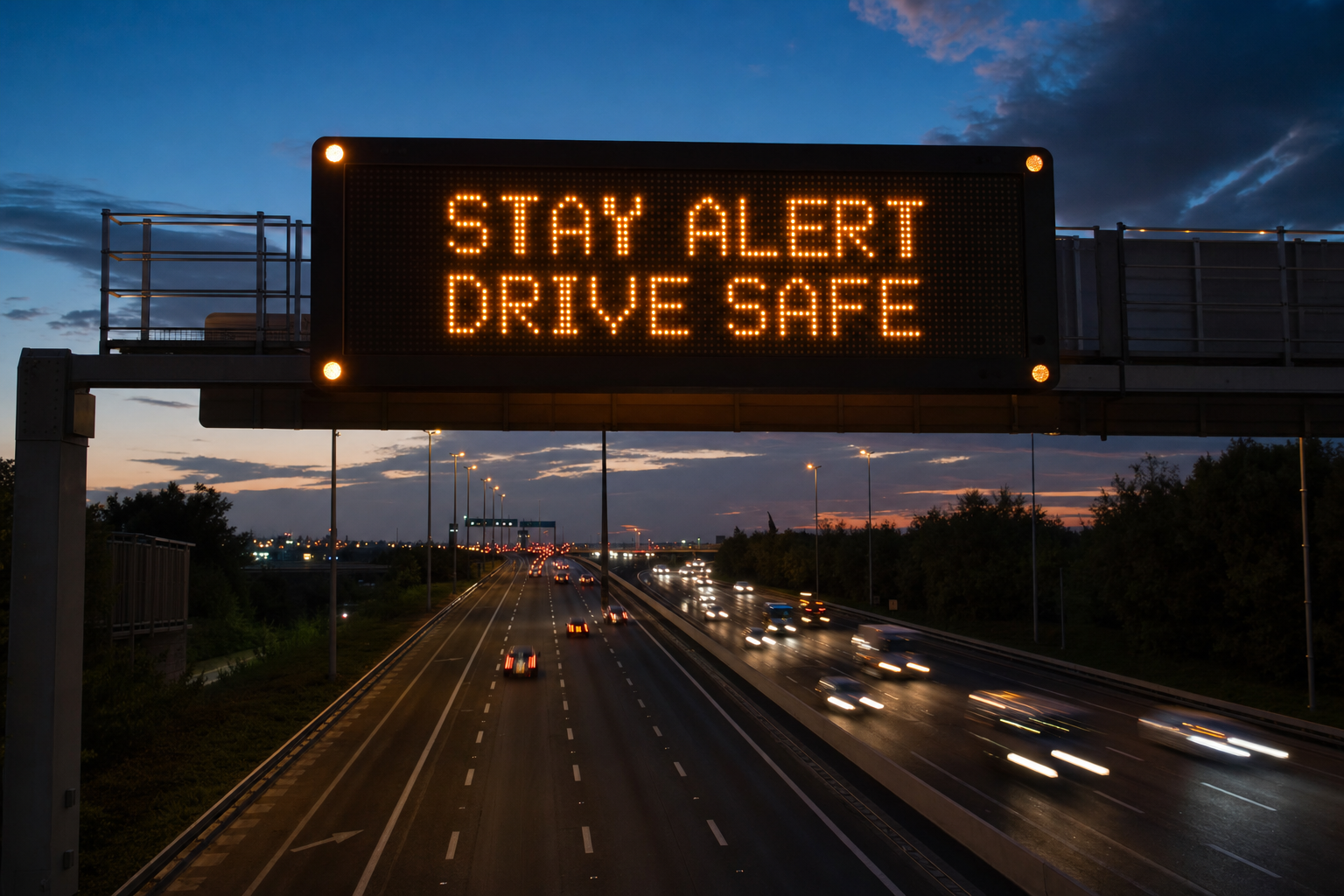
Dynamic Message Signs (DMS)—those large, glowing amber displays that hover over highways and arterial roads—are the primary "voice" of our transportation infrastructure. Whether they are notifying you of a three-mile delay, an upcoming construction zone, or an urgent weather warning, these signs are critical tools for traffic management and driver safety.
When we look at the regulatory landscape for these signs, a curious picture emerges. In many centralized data repositories, you might find a count of zero formal regulations and zero specific permits drawn from authoritative sources for these systems. At first glance, this might suggest a lack of oversight. However, in the world of transport infrastructure, a "zero" in a regulatory database often points to a different reality: these systems are so integrated into the core operations of transportation departments that they are managed through internal operational standards and federal guidelines rather than through the type of external permits you might need to build a house or open a business.
Understanding why these signs are governed the way they are requires a look at the factors that shape their existence, from the physics of light to the psychology of driver distraction.
The Foundation of Oversight
Why do we need rules for digital signs at all? The primary objective of any roadside communication is safety. If a sign is too bright, it can blind a driver at night. If the text is too small, it causes drivers to veer out of their lane while squinting to read. If the message is too long, it takes eyes off the road for a dangerous amount of time.
Because Dynamic Message Signs are typically owned and operated by public agencies—like a state Department of Transportation or a municipal public works office—they don't always fall under "permitting" in the traditional sense. A permit is usually a grant of permission from the government to a private citizen or business. Since the government is usually the one installing these signs, the "rules" take the form of internal design manuals and engineering specifications.
The absence of public-facing permits or regulations in the current data snapshot reflects this internal nature. The "zero" count highlights that DMS operation is treated as an essential utility service, governed by technical manuals rather than legislative mandates.
Key Factors That Shape the Rules
Even without a pile of permits to navigate, engineers must consider several critical factors when deploying a message sign. These factors determine whether a sign is a helpful tool or a roadside hazard.
Legibility and Visibility
The most basic requirement for any road sign is that it can be read. For a dynamic sign, this involves more than just font size. Engineers look at the "legibility distance"—how far away a driver can clearly understand the message while traveling at highway speeds. This is influenced by:
- Character Height: Most highway signs require characters at least 18 inches tall to be readable from a safe distance.
- Pixel Pitch: The spacing between the individual LEDs determines how "crisp" the letters appear.
- Color Contrast: While we often see amber on black, the contrast ratios are strictly monitored to ensure the sign remains readable in direct sunlight or heavy fog.
Light Intensity and Dimming
Unlike a static wooden or metal sign, a DMS emits its own light. This creates a unique regulatory challenge. A sign that is bright enough to be seen under the midday sun would be dangerously blinding at midnight. Consequently, standard guidelines require these signs to have automatic dimming capabilities. Light sensors detect ambient conditions and adjust the LED output to ensure the sign is always "just right"—bright enough to be seen, but dim enough to protect a driver’s night vision.
Structural Integrity and Weight
A massive electronic sign hanging over a crowded freeway represents a significant engineering challenge. The "gross weight" of the sign housing, including the electronics, cooling fans, and structural frame, must be accounted for in the design of the support gantries. Rules governing the physical installation often focus on:
- Wind Load: The sign must be able to withstand high-velocity gusts without vibrating or falling.
- Vertical Clearance: There are strict minimums for how high the sign must sit above the pavement to ensure that tall freight trucks do not strike the bottom of the display.
Content and Messaging Logic
The most complex "unwritten" rules of DMS involve what is actually written on them. To prevent driver distraction, there is a hierarchy of information. Generally, messages are categorized into:
- Emergency/Safety: Evacuation orders, wrong-way driver alerts, or Amber Alerts.
- Traffic Management: Accident reports, lane closures, and travel times.
- General Safety: Reminders to wear seatbelts or move over for emergency vehicles.
Guidelines generally prohibit the use of these signs for commercial advertising or "filler" content. If a sign is used for non-essential information too often, drivers may begin to ignore it, a phenomenon known as "sign fatigue."
Regional and Environmental Variations
While the overarching goal is consistency across the country, geography plays a role in how these signs are deployed. The factors that matter in a desert environment are different from those in a coastal or alpine region.
In northern climates, regulations and design standards must account for extreme cold and the corrosive effects of road salt. The internal components of a DMS need heating systems to keep the electronics functional in sub-zero temperatures. Conversely, in the Southwest, the primary concern is heat dissipation. Large cooling fans and ventilation systems are required to prevent the LEDs from burning out in 110-degree weather.
In coastal areas, the focus shifts to wind resistance and salt-air corrosion. The materials used for the sign housing must be treated to prevent rust, which could compromise the structural integrity of the unit over time.
The Future of Digital Infrastructure
The fact that current statistics show zero formal permits and zero regulations for Dynamic Message Signs suggests that we are in a period of operational stability. However, this is likely to change as we move toward "Smart Cities" and connected vehicle technology.
As cars begin to "talk" to infrastructure (Vehicle-to-Infrastructure, or V2I communication), the role of the physical sign may evolve. We may see new regulations emerge that govern how data is transmitted from a roadside sign directly to a driver’s dashboard. When the message moves from a giant overhead board to a personal screen inside the car, a whole new set of rules regarding data privacy, cybersecurity, and digital distraction will surely follow.
For now, the management of Dynamic Message Signs remains a specialized field of civil engineering. It is a world governed by "best practices" and "engineering judgment" rather than a dense thicket of permits. While the data may show a blank slate today, the reality is a highly disciplined system designed to keep the flow of information as smooth as the flow of traffic.