Understanding the Logistics: The Factors Behind Mobile and Modular Home Transport
5 min read
Moving a home is not like moving a piece of furniture; it is a complex engineering task that involves shifting a massive, semi-rigid structure across public infrastructure. Whether it is a single-wide manufactured home or a multi-section modular unit, the transition from the factory or a previous site to a new foundation is governed by a framework of rules.
While the specific number of permits and regulations can vary significantly depending on the jurisdiction, the logic behind these rules remains consistent. They are designed to ensure that the home arrives intact, the towing vehicle remains under control, and—most importantly—the public remains safe on the road. Understanding the "why" behind these requirements is the first step for anyone looking to navigate the logistics of mobile and modular home transport.
Why Rules Exist: Safety and Infrastructure
The primary reason for the heavy regulation of mobile home transport is the sheer physical presence of the cargo. Most homes are "oversize" by standard transit definitions. When a vehicle exceeds the standard lane width or the typical height clearance of an overpass, it ceases to be a normal part of traffic and becomes a potential hazard.
Regulations exist to mitigate three main risks:
- Public Safety: A home that is wider than a highway lane can easily clip oncoming traffic or roadside obstacles.
- Infrastructure Protection: Excessive weight can damage bridge decks and road surfaces, while excessive height can tear down power lines or damage overpasses.
- Transport Stability: Because a mobile home has a high center of gravity and a large surface area, it is highly susceptible to wind. Rules ensure the towing setup can handle these forces without Jackknifing or overturning.
The Role of the Towing Vehicle
The vehicle pulling the home, often called a "toter," is subject to its own set of requirements. You cannot simply hitch a modular home to a standard heavy-duty pickup truck and head down the interstate.
Engine Power and Braking Capacity
One of the most critical factors is the gross vehicle weight rating of the towing unit. The vehicle must have enough torque to maintain minimum highway speeds, especially on inclines, to prevent traffic congestion. More importantly, the braking system must be robust enough to stop both the truck and the home. Regulations often dictate that the home itself must have functioning brakes on a specific number of its own axles, which are synchronized with the towing vehicle’s braking system.
Hitches and Connections
The mechanical connection between the home and the truck is a frequent point of inspection. The hitch must be rated for the specific weight of the home, and safety chains or secondary attachment points are almost always required. These rules exist to prevent a "runaway" scenario where the home becomes detached at high speeds.
Dimensions: The Deciding Factor for Permits
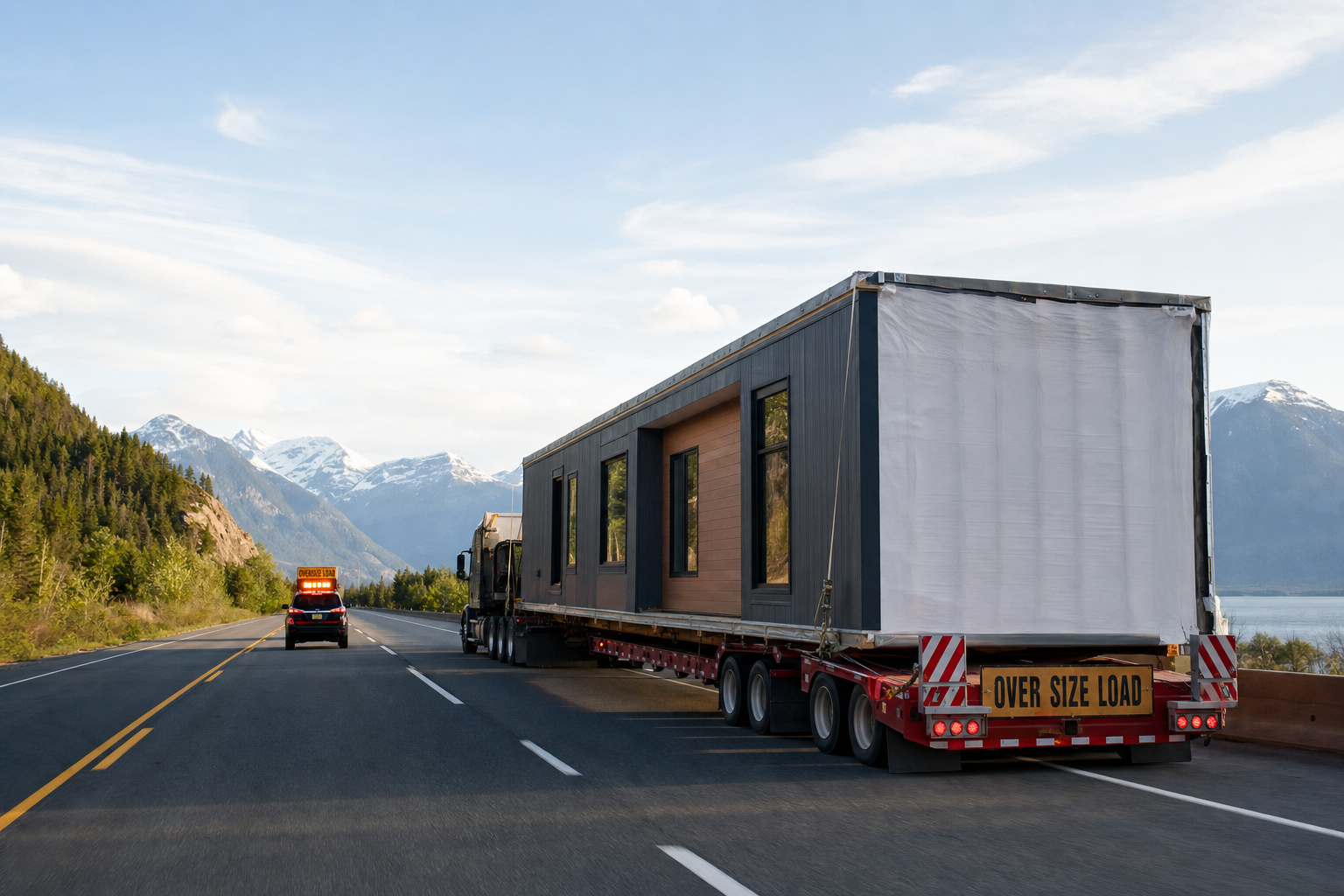
When it comes to permits, the physical dimensions of the home are the primary trigger. Most jurisdictions require a special "Oversize Load" permit if the home exceeds a certain width, height, or length.
Width and the "Wide Load"
Width is perhaps the most scrutinized dimension. A standard lane is typically 12 feet wide. Many modern manufactured homes are 14 or even 16 feet wide. When a load is this wide, it requires more than just a permit; it often requires "pilot cars" or escort vehicles. These escorts act as a buffer, warning oncoming traffic to pull over and helping the driver navigate tight turns or narrow bridges.
Height and Overhead Clearances
The height of the home determines the route it can take. Most interstate overpasses are roughly 14 to 16 feet high. A modular home sitting on a transport chassis might exceed this, requiring a route that avoids low bridges or involves "pole cars"—escorts equipped with a high-reaching pole to ensure the home can clear overhead utility lines without causing a blackout.
Length and Articulation
The overall length of the towing vehicle combined with the home affects its "off-tracking." This is the tendency of the rear of the load to cut corners during turns. Long loads require specialized route planning to ensure the driver doesn't encounter intersections or roundabouts that are physically impossible to navigate.
Weight and Axle Distribution
While width often gets the most attention, weight is what determines if a home can legally cross a bridge.
Gross Vehicle Weight
The total weight of the truck and the home must stay within the limits prescribed for the specific roads being used. If the gross vehicle weight is too high, the transport may be restricted to specific "truck routes" designed to handle heavy industrial traffic.
Axle Weight and Tire Pressure
It isn't just the total weight that matters, but how that weight is distributed. Regulations often specify the maximum weight allowed per axle. This is why you will see mobile homes being moved on four, five, or even six axles. Distributing the weight prevents the tires from sinking into the asphalt on hot days and protects the structural integrity of the home's frame during the move.
Regional Variations and Route Planning
It is a common misconception that a single permit covers a home's entire journey. Because roads are managed by different entities—municipal, county, and state—a single move may require multiple layers of permission.
Timing and Environmental Constraints
Regulations also dictate when a home can be moved. Many regions prohibit the transport of oversized loads during holidays, weekends, or during "peak hours" when commuter traffic is at its heaviest. Wind speed is another factor; if gusts exceed a certain threshold (often 25 to 30 miles per hour), transport must cease because the home acts like a giant sail, making it impossible to steer safely.
The Importance of a Pre-Run
For particularly large modular moves, regulations may require a "route survey." This is a documented drive-through of the intended path to ensure that no new construction, low-hanging branches, or narrow detours have appeared since the permit was issued.
A Note on the Statistics
In analyzing the current landscape of transport rules for this category, it is interesting to note that while the principles of safety are universal, the formal centralized tracking of these specific "mobile home" rules can vary. Currently, our data shows zero specific regulations or permits drawn from authoritative sources for this exact category within this specific dataset.
However, this does not mean that rules do not exist. Rather, it suggests that these requirements are often bundled under broader "Oversize/Overweight" commercial vehicle regulations rather than being categorized as standalone "mobile home" statutes. If you are planning a move, you will still encounter the factors discussed above—weight, width, and vehicle capacity—even if they are filed under general transportation department headings.
Conclusion
Transporting a mobile or modular home is a feat of logistics that requires balancing physics with public policy. Every rule—from the number of flashing lights on an escort car to the specific weight capacity of the towing vehicle's axles—is there to ensure that the "mobile" part of a mobile home doesn't result in a permanent problem for the owner or the public. By focusing on these core factors of dimensions, weight, and vehicle capability, you can better understand the professional requirements necessary to get a home safely to its final destination.