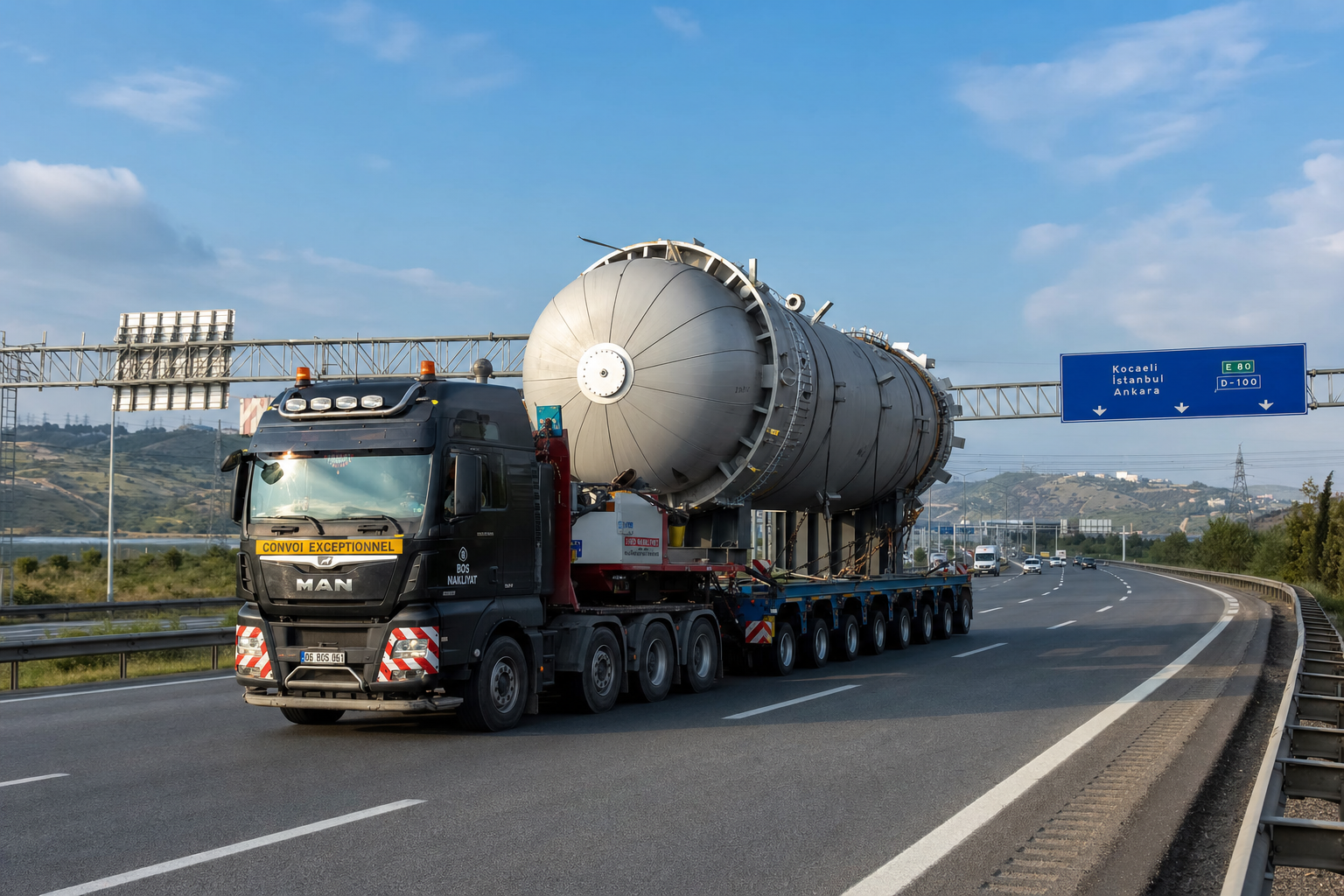
Navigating the Road: A Guide to Oversize and Overweight Transport Rules
5 min read
When you see a massive wind turbine blade stretching across two highway lanes or a modular home creeping along a secondary road, you are witnessing a carefully choreographed dance between logistics and law. These movements aren't just about big trucks; they are about managing the physical limits of our shared infrastructure.
In the world of transport, these are known as Oversize/Overweight (OS/OW) movements. To ensure these loads don't crush bridges, snag power lines, or cause accidents, a complex network of 1,008 total rules has been established across North America. This framework, drawn from 155 authoritative sources, is divided almost evenly between 531 standing regulations and 477 specific permits.
Understanding these rules isn't just for truck drivers; it’s for anyone interested in how our economy moves massive objects while keeping the "musts" and "must-nots" of public safety in balance.
Why the Rules Exist: Safety and Sustainability
The primary reason for OS/OW rules is simple: our roads and bridges were built with specific limits in mind. When a vehicle exceeds these limits, it transitions from a standard transport unit into a "non-conforming vehicle" that requires special oversight.
The regulations are highly binding. Of the rules recorded, 685 are "must" requirements—mandatory actions like displaying warning flags or obtaining a specific permit. Another 272 are "must-not" restrictions, such as prohibiting travel during certain holidays or weather conditions. Only a small fraction of the rules (about 4%) are "may" or "should," representing optional or recommended practices.
The Key Factors: What Triggers a Rule?
Not every large truck is treated the same. The specific rules that apply to a shipment are determined by a few critical factors, usually revolving around the physical dimensions and weight of the load.
Physical Dimensions
The most common trigger for a regulation is the total width of the load, appearing in 148 different rules. Because most highway lanes are roughly 12 feet wide, any load exceeding this requires special marking, and often, escort vehicles.
Other dimensional triggers include:
- Total length of the vehicle and load: This impacts how a truck can navigate turns and cloverleaf on-ramps (51 rules).
- Total height of the load: This is critical for avoiding collisions with overpasses and overhead wires (46 rules).
- Front and rear extensions: Rules often dictate how far a load can project beyond the front or rear of the trailer (8 rules).
Weight and Axle Configuration
Weight is the invisible force that wears down pavement and threatens bridge integrity. The total weight of the vehicle and its load is a factor in 50 major rules. However, it isn't just the total weight that matters; it’s how that weight is distributed. Factors like the number of axles and the total gross weight help authorities determine if a vehicle can safely cross a specific structure.
In some cases, a load is so heavy it is classified as a Superload. These movements (appearing in 39 rules) often require a letter of essentiality to prove the load cannot be broken down into smaller pieces and a formal bridge analysis to ensure the route can handle the extreme pressure.
The Nature of the Load
Certain types of cargo trigger specific sub-categories of rules. For example:
- Mobile and modular housing: These involve 15 specific rules due to their unique wind resistance and width.
- Self-propelled cranes: Often used in construction, these vehicles have their own set of 5 rules because they are heavy and lack traditional cargo space.
- Sealed shipping containers: Containers coming from foreign ports often have specific weight allowances to facilitate international trade.
Timing and Environment: When Travel is Restricted
Even if you have the right permit, you can't always move an oversize load whenever you want. The "when" is often as important as the "what."
The Calendar and the Clock
Travel is frequently restricted based on the date and time. Statutory or civic holidays (22 rules) are often "no-go" periods because traffic volumes are higher, increasing the risk of an accident. Similarly, many permits specify that travel must occur only during daylight hours (10 rules) to ensure maximum visibility for other drivers. Conversely, some extreme loads are moved during hours of darkness (7 rules) specifically to avoid daytime traffic, though this usually requires extensive lighting and police escorts.
Weather and Visibility
Safety is also tied to the elements. Rules frequently mention adverse weather conditions or reduced visibility (9 rules). If a driver cannot see a certain distance—often measured as a visibility distance threshold—they must pull over. Special attention is paid to snow or icy road conditions and wind speed, particularly for high-profile loads like mobile homes that act like sails in a storm.
One unique environmental factor is the Quebec spring thaw period (or similar "road thaw" periods in other regions). During the months of March to May, the ground beneath the pavement softens, making roads more susceptible to damage. In these times, weight limits are strictly reduced to protect the infrastructure.
Regional Variations
The rules change significantly depending on where you are. Because transportation is largely managed at the state or provincial level, the balance of permits and regulations varies across the map.
- The United States: Overall, the U.S. has a balanced mix of 124 regulations and 127 permits. However, individual states have their own priorities. For instance, Missouri has 16 regulations and 15 permits, while Alaska has 12 regulations and 15 permits.
- Canada: Across the provinces, there is a slight lean toward permits (18) over regulations (11). British Columbia stands out with 20 regulations, focusing heavily on the "how-to" of mountain driving, while the Yukon has a high permit count (17) relative to its regulations (10).
- Saskatchewan: This province shows a heavy focus on standing regulations (18) with very few individual permits (2), suggesting a highly standardized system for OS/OW moves.
The Importance of Planning
The existence of over 1,000 rules highlights that OS/OW transport is not a "one-size-fits-all" industry. A single trip might require a route survey to ensure the truck can fit under every bridge, a Traffic Management Plan for urban areas, and a specific escort configuration involving front and rear pilot cars.
Whether it is a single-trip routine move or an annual permit for a fleet of construction vehicles, these rules exist to ensure that the massive components of our modern world—from bridge beams to hospital equipment—reach their destination without compromising the safety of the people or the integrity of the roads they travel on. By understanding the factors like width, weight, and timing, we can appreciate the immense effort that goes into keeping our highways moving.