Understanding Divisible Load Permits: Balancing Logistics and Infrastructure
5 min read
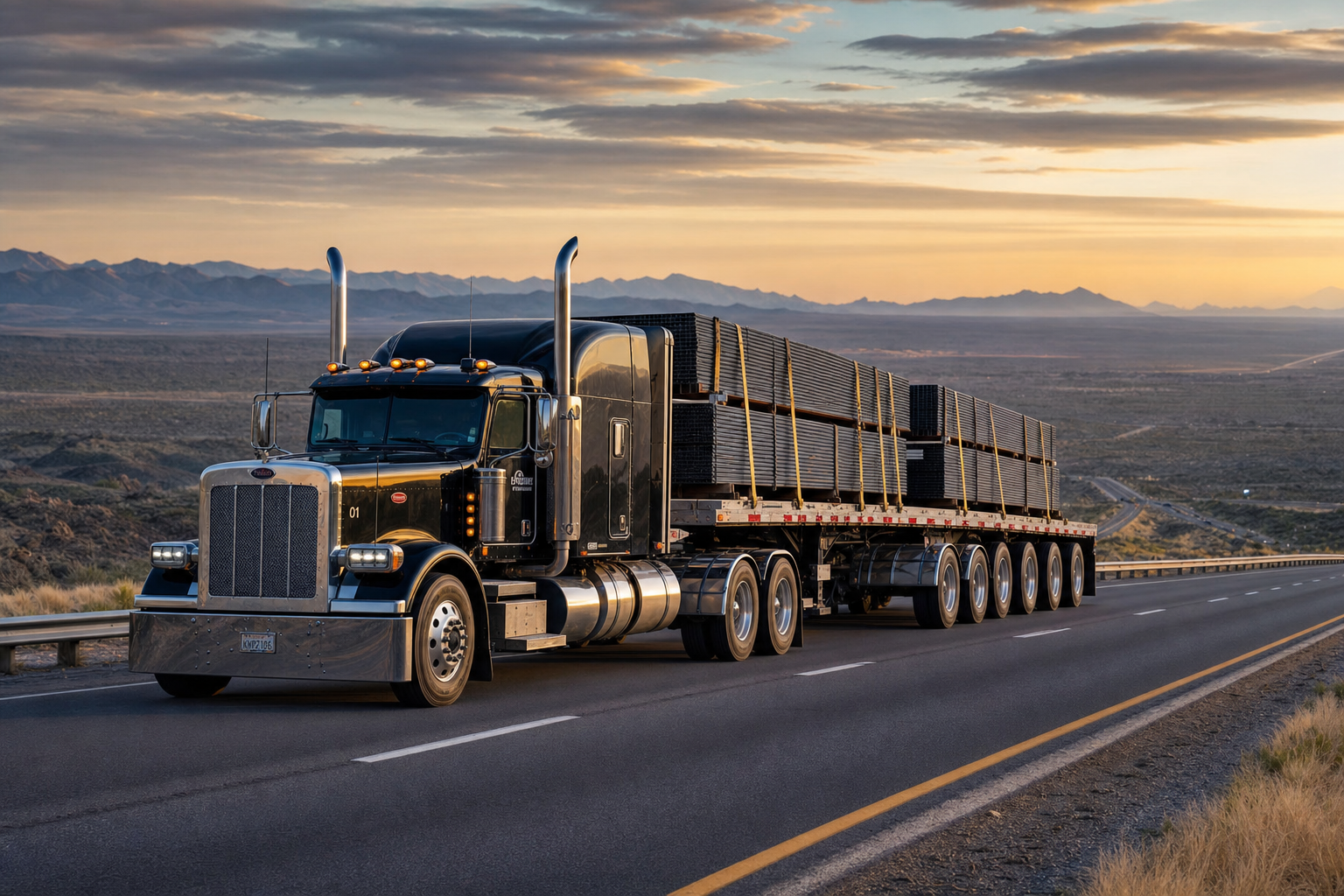
When we think about heavy-duty trucking, we often imagine massive, single objects—like a bridge girder or a wind turbine blade—moving slowly down the highway with escort vehicles. These are "non-divisible" loads because they cannot be easily broken down into smaller pieces. However, a significant portion of the heavy-haul world involves "divisible" loads. These are shipments of multiple items, such as gravel, agricultural products, or bundles of steel, that could theoretically be separated but are permitted to stay together at weights exceeding standard highway limits to improve efficiency.
Navigating the world of divisible load permits is a complex task. Across the landscape of North American freight, there are currently 32 distinct rules (comprising 19 regulations and 13 permits) drawn from seven authoritative sources that dictate how these loads must move. Understanding these rules requires looking past the paperwork to the physics of the road and the specific factors that authorities use to decide who gets a permit and who doesn't.
The Logic of Regulation: Must vs. Must Not
The framework for divisible load permits is built on a foundation of strict requirements. Out of the 32 rules identified, 18 are "must" requirements—mandatory standards that a carrier must meet to operate. Another 11 are "must not" rules, which act as prohibitions to prevent unsafe configurations. Only 3 rules fall into the "may" category, allowing for discretionary operations.
These rules exist to solve a fundamental conflict: the desire for economic efficiency through heavier shipments versus the need to protect public infrastructure. Roads and bridges have a finite lifespan, and that lifespan is directly tied to the weight and pressure applied by passing tires. By regulating divisible loads, authorities ensure that if a truck is going to carry more than the standard 80,000 lbs (often up to 105,500 lbs or more), it does so in a way that the pavement can handle.
Key Factors Shaping the Rules
When a state or provincial agency reviews a permit application for a divisible load, they aren't just looking at the total weight. They are looking at how that weight is distributed and what the vehicle actually looks like. Several key factors determine which rules apply to a specific trip.
Axle Configuration and Distribution
One of the most frequent factors in these regulations (appearing in 5 different rules) is whether the vehicle is equipped with one or more lift axles. Lift axles allow a driver to raise or lower wheels depending on the load, but for heavy divisible loads, they are critical for spreading weight across a larger surface area.
Similarly, the total number of axles on the vehicle is a primary determinant of legality. More axles generally allow for higher weight thresholds because they reduce the "footprint" of pressure on the asphalt. Authorities also look at the "Equivalent single-axle load" (ESAL) value for a trip. This is a calculation used to estimate the specific amount of wear and tear a vehicle will cause to the road surface during its journey.
The Geography of the Load
How the items are placed on the trailer matters as much as what they weigh. Regulatory agencies look closely at the spatial arrangement of multiple objects—specifically whether they are placed side-by-side, end-to-end, or stacked vertically.
The quantity of objects and the number of layers in a vertical stack are also key factors. If you are hauling 20 bundles of steel, the rules might change if you stack them four high versus two high. This is primarily a safety concern; higher stacks can raise the center of gravity, increasing the risk of rollovers, while wider arrangements can impact lane clearance.
Weight and Vehicle Classification
There is a distinction between the "total gross weight for which the permit is requested" and the "registered gross weight of the vehicle." Permits often bridge the gap between what the truck is normally registered for and the maximum capacity it can safely handle under special conditions.
The vehicle type also plays a role. Rules are tailored specifically to whether the vehicle is a single unit (like a dump truck), a tractor-trailer combination, or a semi-trailer. Each configuration handles weight and turns differently, meaning the permit requirements for a single-unit concrete mixer might be vastly different from a tractor hauling a flatbed of timber.
Beyond Weight: Dimensions and Logistics
While weight is the headline, dimensions and logistics are the fine print that can make or break a permit application.
- Vehicle Dimensions: The total width, the vertical height, and the distance from the center of the kingpin to the center of the rearmost axle are all factored into the rules. The kingpin measurement is especially vital for ensuring the truck can navigate turns without swinging into oncoming traffic or clipping curbs.
- Trip Scope: The rules also look at the logistics of the journey. This includes the maximum travel distance from the origin and the number of additional destinations beyond the primary drop-off point. A permit might be granted for a short 50-mile "shuttle" of heavy materials that would be denied for a cross-state haul.
- Commodity Specifics: In some jurisdictions, the type of commodity—such as agricultural products or raw materials for construction—triggers specific exemptions or additional requirements.
Regional Variations
The 32 rules governing divisible loads are not spread evenly across the map. Different regions have different priorities, resulting in a patchwork of regulations and permits:
- New York: Leads with the highest number of regulations (6) and 2 specific permits. The state’s dense infrastructure and aging bridges necessitate a heavy regulatory approach.
- Indiana and Saskatchewan: Both show a balanced approach, with an equal split of 3 regulations and 3 permits each. This suggests a structured system where the rules of the road are clearly defined alongside the permit process.
- Ohio: Takes a more permit-focused approach, with 4 permits and only 1 overarching regulation. This often means the specifics of a move are governed more by the individual permit conditions than by broad state statutes.
- United States (Federal): There are 4 general federal regulations that provide a baseline for weight and safety, though the actual permitting is usually handled at the state level.
- Rhode Island: A smaller set of rules, with 2 regulations and 1 permit, reflecting the smaller geographic area but still maintaining oversight on heavy divisible hauls.
Conclusion
Divisible load permits are more than just a bureaucratic hurdle; they are a sophisticated tool for infrastructure management. By weighing factors like axle count, the way a load is stacked, and the specific distance a vehicle will travel, authorities can allow for the efficient movement of goods that keep our economy running without prematurely destroying our highways.
For those in the industry, the key is to recognize that "heavy" is not a one-size-fits-all category. Whether a move is legal depends on the interplay of the vehicle's design and the way the cargo is organized. By understanding the "why" behind these 19 regulations and 13 permits, carriers can better prepare for the requirements they will face on the road.