Clearing the Path: Understanding Emergency Oversize and Overweight Authorizations
5 min read
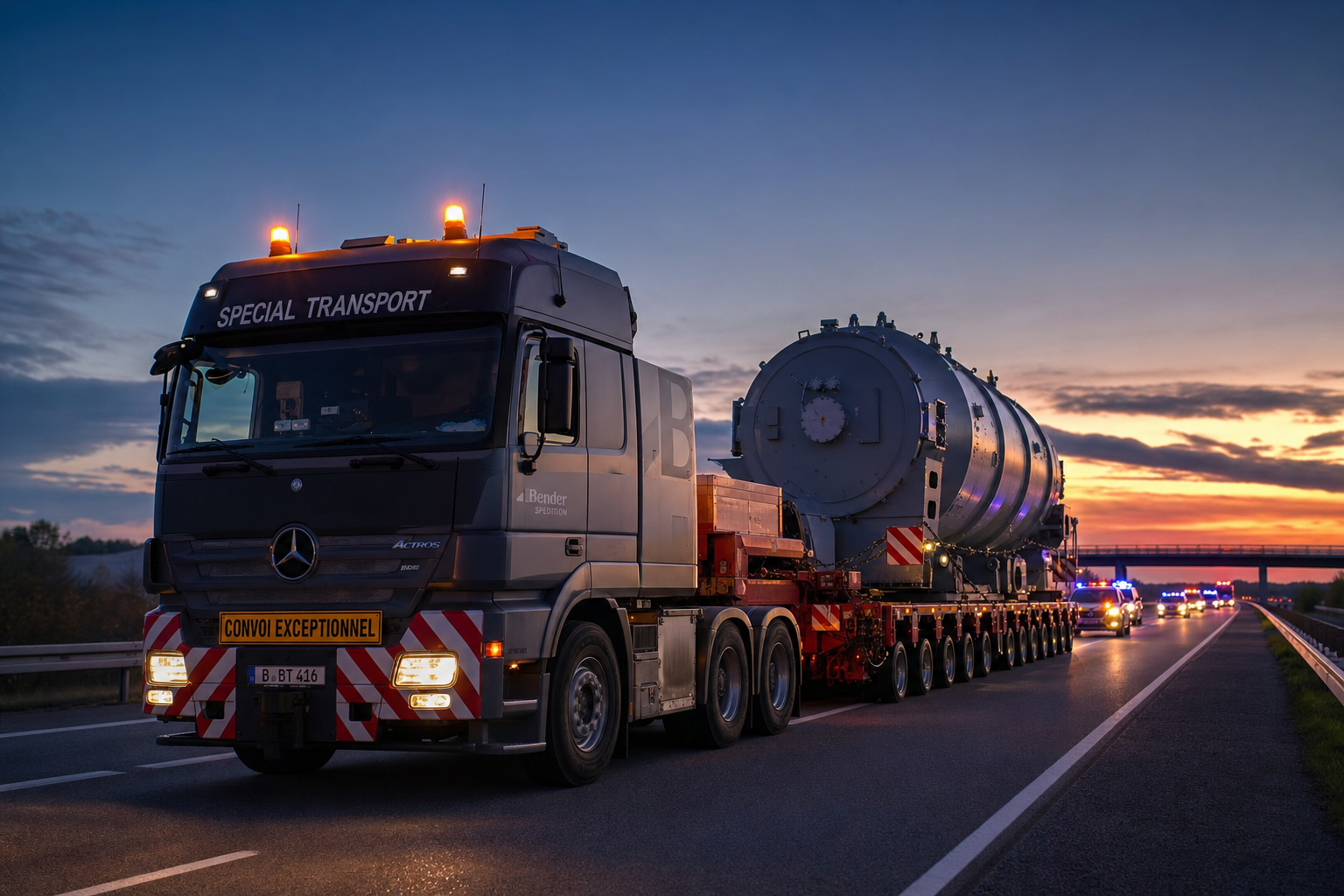
In the wake of a natural disaster, a major infrastructure failure, or a public safety crisis, time is the most valuable commodity. When a bridge collapses, a tornado levels a neighborhood, or a massive flood cuts off a community, the equipment needed for recovery—bulldozers, mobile generators, bridge components, and massive utility trucks—often exceeds standard size and weight limits for highway travel.
Under normal circumstances, moving a vehicle that is "oversize" or "overweight" (OS/OW) involves a meticulous permitting process designed to protect the integrity of roads and the safety of the motoring public. However, in an emergency, the delay of a few hours can have life-altering consequences. This is where "Emergency Movement Authorizations" come into play. These specialized rules are designed to bypass certain bureaucratic hurdles while maintaining a baseline of safety.
To understand how these rules work, we can look at a specific framework—in this case, the regulations and permits established in Missouri—to see how authorities balance the desperate need for speed with the uncompromising reality of road safety.
The Framework of Emergency Logistics
In the state of Missouri, the system for managing these high-priority movements is built on a foundation of seven specific rules. These are divided into four formal regulations and three distinct permits. This distinction is important: regulations generally set the "rules of the road" and the legal requirements for all operators, while permits provide specific, documented permission for a single vehicle or fleet to deviate from those standard rules.
What is most striking about these seven rules is their binding nature. Out of the seven, six are classified as "must" requirements. This means that even in the chaotic environment of an emergency response, there is very little room for "maybe." If you are moving heavy equipment to a disaster site, you are legally obligated to follow these protocols. Only one of the rules is discretionary (a "may" provision), allowing for some situational flexibility based on the judgment of transit officials.
This high ratio of mandatory rules highlights a core principle of emergency management: order prevents further disaster. By requiring strict adherence to specific routes or safety markers, the state ensures that a truck carrying a massive transformer doesn't accidentally get stuck under a low overpass, which would create a second emergency and block the only remaining path for ambulances and fire trucks.
Factor 1: Defining a True Emergency
The first and most frequent factor used to determine if these special rules apply is the official classification of the transport. In four out of the seven rules, the specific "emergency movement" designation is the primary trigger.
An emergency movement is not simply any transport that feels urgent to the driver. It is a classification defined by specific procedures for emergency response. Usually, this means the governor has declared a state of emergency, or a federal agency has issued a disaster declaration. It can also apply to localized public safety emergencies as defined by state law.
When a transport is officially classified this way, it unlocks the ability to use expedited permitting processes. This classification serves as a gatekeeper; it ensures that the "fast lane" of regulatory oversight is reserved for those who are truly responding to a crisis, preventing the system from being bogged down by non-essential heavy loads.
Factor 2: The Critical Window of the Initial Response
In any crisis, there is a "golden window" where the immediate preservation of life and property is at stake. This is reflected in the regulatory framework through a factor that identifies the "initial response" to an emergency site.
This specific factor appears in one of the key rules and serves as a powerful waiver. When a vehicle is part of the initial wave of response—for example, a utility crew rushing to repair downed power lines in the middle of the night—standard travel restrictions are often waived.
Under normal OS/OW permits, travel is often restricted to daylight hours or prohibited on holidays and weekends to reduce traffic risks. However, when a movement is recognized as part of the initial response, these time-of-day restrictions are set aside. This acknowledges that the public benefit of restoring power or clearing a blocked artery outweighs the incremental risk of moving a large load at night.
Factor 3: The Reality of Visibility
While emergency rules are designed to move things faster, they cannot override the laws of physics or the limits of human perception. This is why "visibility distance" is a factor in two of the seven rules.
Even if a transport is classified as a top-priority emergency movement, it must still account for the current visibility conditions on the route. If a disaster involves heavy smoke from a wildfire, blinding rain from a hurricane, or thick fog, the rules may mandate that the movement stop or follow specific escort procedures.
A 100,000-pound vehicle becomes a significant hazard when other drivers cannot see it until they are just a few feet away. By weaving visibility requirements into the emergency authorizations, the state ensures that the relief effort does not inadvertently cause a multi-vehicle pileup that would further strain emergency resources.
Balancing Urgency and Oversight
The existence of four regulations and three permits in Missouri illustrates a highly structured approach to what might otherwise be a chaotic situation. By relying on one authoritative source for these rules, the state provides a "single source of truth" for haulers and emergency managers.
The overarching goal of these authorizations is to replace the standard permit application process—which might take days of review for bridge stress analysis and traffic patterns—with a pre-vetted system of "standing orders" or expedited approvals.
In summary, if you are looking at how emergency movements are governed, it boils down to three questions:
- Is it a recognized emergency? (The classification trigger).
- Is it happening right now? (The initial response waiver).
- Is it safe to move? (The visibility and physical condition check).
These rules exist not to create red tape, but to provide a safe "corridor" through the red tape. They ensure that when the worst happens, the people and equipment needed to fix it can get there as quickly as possible without becoming part of the problem themselves. For the general public, these regulations are a silent safeguard, ensuring that even in the midst of a disaster, the heavy loads moving through our communities are doing so under a disciplined, safety-first framework.