Navigating the Roadways: Understanding Houseboat Transport Regulations
5 min read
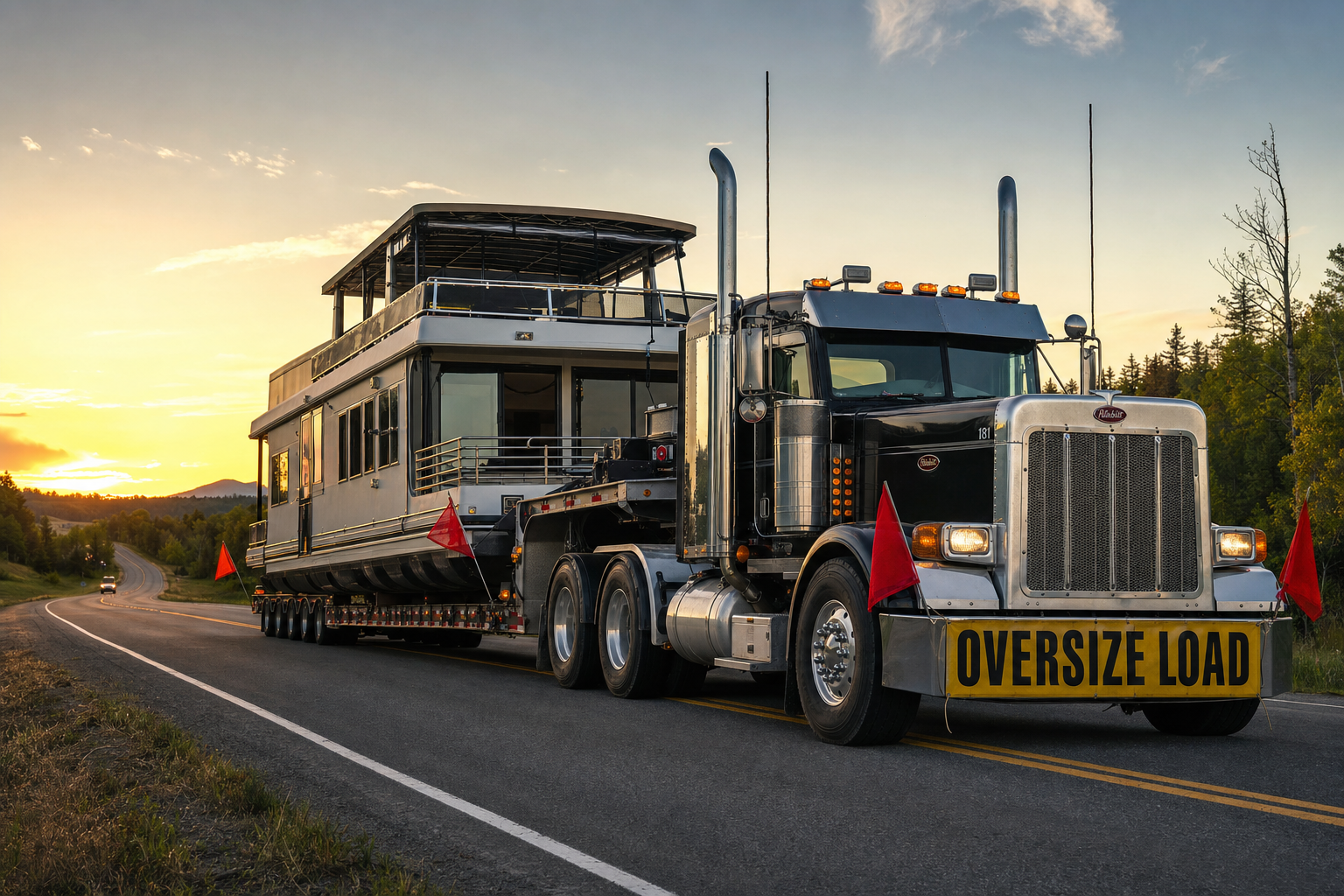
When we think of a houseboat, we usually envision a peaceful afternoon on a glassy lake or a slow-moving river. We rarely imagine these massive structures barreling down a multi-lane interstate or navigating a tight two-lane country road. However, most houseboats eventually need to move by land, whether they are being delivered from a manufacturer, relocated to a new body of water, or taken to a specialized facility for significant repairs.
Because houseboats are significantly wider and taller than almost anything else on the road, they fall into the category of Oversize/Overweight (OS/OW) loads. Transporting them is not as simple as hitching a trailer to a truck. It is a highly regulated process governed by a complex web of permits and safety requirements. Understanding the "why" behind these rules is the first step in appreciating the logistical dance required to move a home across the highway.
Why Do These Rules Exist?
The primary goal of any transportation regulation is safety—both for the driver of the transport vehicle and for the general public sharing the road. When a load exceeds the standard dimensions of a lane, it creates several physical risks:
- Infrastructure Protection: Bridges, overpasses, and utility lines are built to specific heights. A houseboat that is even an inch too tall can strike a bridge, causing catastrophic damage to both the boat and the public infrastructure.
- Lane Integrity: Standard highway lanes are typically 12 feet wide. Many houseboats have a beam (width) of 14, 16, or even 18 feet. This means the boat will inevitably "overhang" into the neighboring lane or onto the shoulder.
- Traffic Flow: Because these loads are heavy and wide, they move slower and require much larger turning radiuses. Regulations ensure that these moves happen at times and in ways that minimize the risk of multi-car accidents or massive traffic jams.
Key Factors Shaping Regulations
While every move is unique, the requirements for a permit are generally shaped by a few core factors: the physical dimensions of the boat and the specific geography of the route.
The Impact of Width
Width is arguably the most significant factor in houseboat transport. In the world of logistics, "gross vehicle width" determines the level of scrutiny a move receives.
If a boat is only slightly wider than a standard lane, the regulations might simply require "Oversize Load" banners and flags. However, as the width increases, the risk level jumps. Once a boat reaches a certain threshold—often around 12 to 14 feet—transportation authorities begin to require escort vehicles. These rules exist because a wide load creates blind spots for the truck driver and makes it impossible for passing cars to see what is ahead.
Height and Vertical Clearances
Houseboats are often "double-decked" or have permanent flybridges and railings. This makes them exceptionally tall. Unlike width, which can sometimes be managed by shifting lanes, height is an absolute limit. If a bridge is 14 feet high and the boat on the trailer is 14 feet 2 inches, the boat cannot pass.
Regulations often require a "pole car" for loads over a certain height. This is an escort vehicle equipped with a tall, flexible pole set to the height of the boat. If the pole hits a wire or a bridge, the driver alerts the transport truck to stop immediately.
Road Type and Classification
The type of road being traveled is just as important as the size of the boat. An interstate highway is designed with wide lanes, gentle curves, and high-clearance overpasses. A local county road might have narrow shoulders, sharp turns, and low-hanging tree branches.
When applying for permits, the specific route is often dictated by the authorities. You may be required to take a longer, circuitous route on major highways to avoid a single low bridge or a narrow downtown corridor on a more direct path. The "road type" factor ensures that the heavy, wide load stays on pavement designed to support its weight and dimensions.
The Role of Escort Vehicles
One of the most visible parts of houseboat transport is the use of escort vehicles, also known as pilot cars. For houseboats, regulations frequently call for "staggered escorts."
In a staggered escort setup, one vehicle may be several hundred yards ahead of the truck, while another follows behind. The lead car warns oncoming traffic to move over or prepare to stop, especially on two-lane roads where the houseboat might take up more than half the pavement. The rear car protects the load from being rear-ended and assists the truck driver in lane changes by "blocking" traffic when necessary.
The number of escorts required is directly tied to the width and the road type. On a multi-lane divided highway, you might only need a rear escort. On a winding two-lane road, you might need a lead car, a rear car, and even a police escort in certain jurisdictions.
Permits vs. Regulations
It is helpful to distinguish between general regulations and specific permits.
- Regulations are the standing rules that apply to everyone. For example, a regulation might state that any load over 10 feet wide must have amber flashing lights.
- Permits are specific permissions granted for a single trip. A permit will outline the exact route the driver must take, the hours they are allowed to be on the road (often avoiding holidays or rush hours), and the specific escort requirements for that journey.
In many cases, the data for specific houseboat regulations might appear sparse in general databases because houseboats are often handled under broader "Oversize" permit categories rather than having a unique set of laws written just for them. Every move is treated as a unique event that requires its own set of "case-by-case" permissions.
Planning for Regional Variations
One of the most challenging aspects of moving a houseboat is that regulations change the moment you cross a state or provincial line. What is legal in one region might be strictly prohibited in the next.
Some regions may allow transport on Saturdays, while others restrict OS/OW loads to Monday through Friday. Some might require a specific type of certified escort driver, while others have more relaxed requirements. This regional variation is why professional boat haulers spend a significant amount of time in the planning phase, ensuring that every permit is secured and every local rule is understood before the wheels start turning.
A Focus on Coordination
At its heart, the regulation of houseboat transport is about coordination. It is a system that brings together the truck driver, escort teams, and government agencies to ensure that a massive, stationary object can travel safely through a world designed for small cars.
While the permits might seem like a mountain of paperwork, they serve a vital purpose. They ensure that the route has been checked for clearances, that the public is warned of the wide load, and that the transport happens at a time that minimizes disruption. By understanding these factors—width, road type, and the necessity of escorts—boat owners and enthusiasts can better appreciate the expertise and planning required to move these floating homes from one horizon to the next.