Moving Mobile and Modular Homes: Understanding the Rules of the Road
5 min read
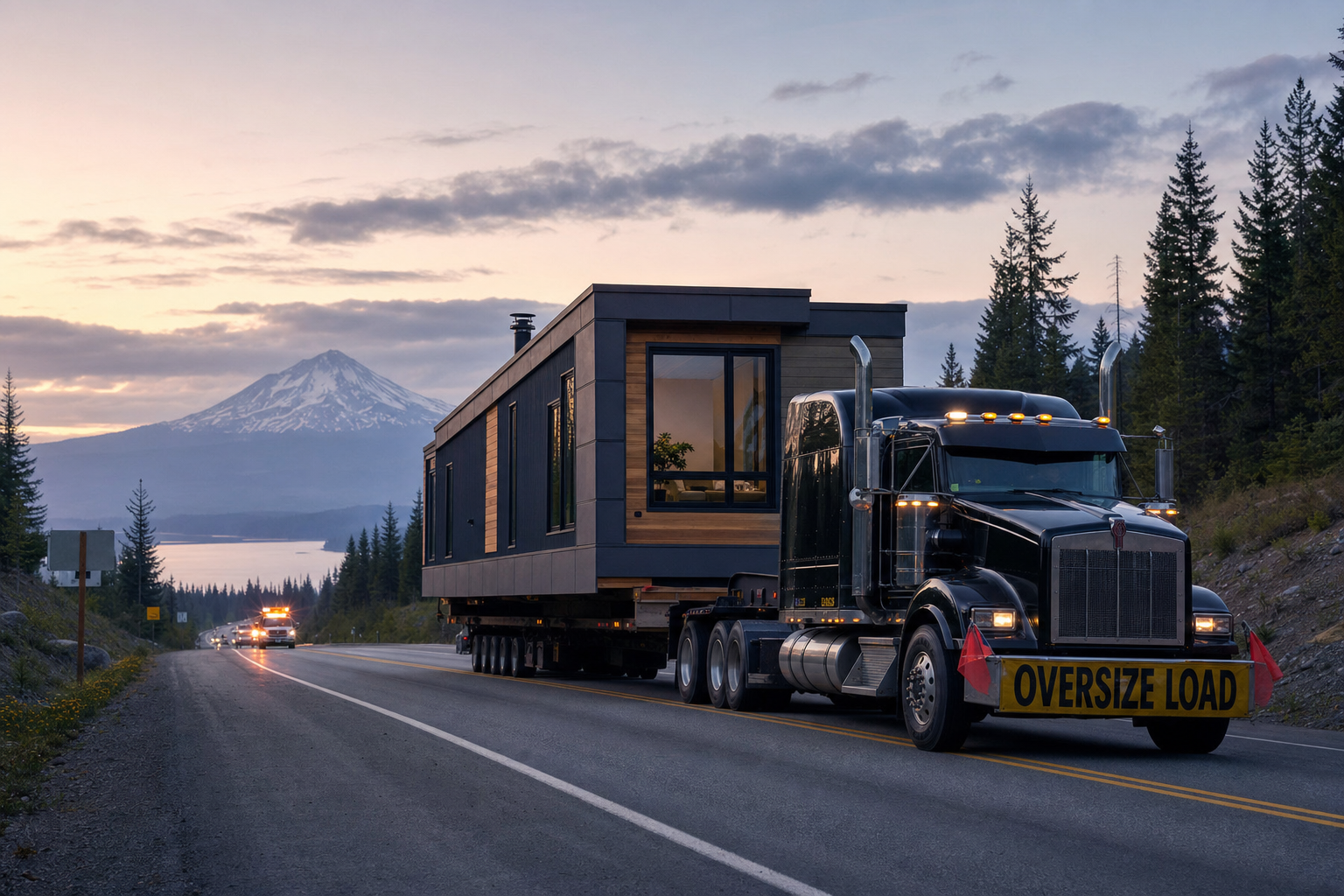
Transporting a home is a feat of engineering and logistics that transforms a residential structure into a temporary vehicle. Because mobile and modular homes are significantly wider and heavier than standard cargo, they fall under the category of Oversize/Overweight (OS/OW) loads. Navigating the legalities of this process is not just about paperwork; it is about ensuring that a fifty-ton house can safely share a narrow highway with passenger cars without damaging infrastructure or causing accidents.
In Washington State, the framework for moving these structures is defined by specific regulations designed to mitigate risk. Understanding these rules requires looking at the factors that trigger them, such as where you are driving and how much space the load occupies.
The Regulatory Framework in Washington State
When we look at the data governing mobile and modular home transport in Washington, we find a specific set of three core regulations derived from primary authoritative sources. Interestingly, while the administrative process involves various temporary authorizations, the foundational rules in this category are framed as prohibitions—or "must not" requirements.
There are currently three primary regulations identified that set the boundaries for what transporters cannot do. These regulations are not merely suggestions; they are binding constraints that dictate the feasibility of a move. Unlike some other transportation categories that rely heavily on a high volume of individual permits, the movement of modular homes is heavily guided by these overarching regulatory standards that apply before a vehicle even hits the pavement.
Why the Rules Exist: Safety and Infrastructure
The primary reason for these three regulations is the physical limitation of our road system. Most highways were designed for standard vehicles roughly eight and a half feet wide. A mobile home can easily double that width. This creates two major challenges:
- Public Safety: A wider load encroaches on neighboring lanes and the shoulder. On two-lane roads, this can force oncoming traffic off the road if not managed correctly.
- Infrastructure Integrity: Bridges, overpasses, and even roadside signage are positioned based on standard clearances. A modular home that is too tall can strike an overpass, while one that is too heavy can cause structural fatigue on older bridges.
Because the stakes are so high—involving the potential destruction of a person’s future home and the safety of the motoring public—the regulations are strict.
Key Factor: The Classification of the Route
One of the most significant factors determining which rules apply to a move is the classification of the route itself. Not all roads are created equal, and the state distinguishes between "standard" routes and "exception" routes.
Standard Routes
Standard routes are typically major interstates and well-maintained state highways designed to handle larger volumes of traffic and heavier loads. These routes often have higher clearances and wider lanes. If a mobile home move stays entirely on these designated paths, the regulations are generally more predictable.
Exception Routes
Exception routes are the "tricky" parts of the map. These may include secondary roads, mountainous passes with tight curves, or urban areas with low-hanging power lines and narrow intersections. In Washington State, the regulations specify that certain movements are prohibited on these exception routes unless specific, stringent criteria are met.
The classification of the route is a factor in all three of the primary regulations for this category. Before a home is moved, the entire path must be vetted to ensure it does not cross into a restricted zone where the physical dimensions of the home would make passage impossible or dangerous.
Key Factor: The Maximum Width of the Load
The second pillar of regulation is the maximum width of the mobile home. This factor is perhaps the most visible constraint during a move. As the width of the load increases, the regulations become more restrictive to compensate for the shrinking "margin of error" on the road.
A home that is 12 feet wide is treated differently than one that is 14 or 16 feet wide. As the width crosses certain thresholds, the "must not" regulations kick in to prevent these massive structures from entering specific routes. For example, a regulation might state that a load exceeding a certain width must not travel during peak traffic hours or must not traverse specific bridges where the lane width is insufficient to allow for a safety buffer.
While the current data focuses on these three specific prohibitive regulations, the width also dictates the need for "escort vehicles" (or pilot cars) that warn other drivers of the oncoming wide load.
The Cost of Compliance and Registration
While the core regulations set the "no-go" zones, the administrative side of moving a mobile home involves managing costs and exemptions. For instance, in Washington, there are specific provisions for three-day permit costs that allow for the temporary movement of these structures.
Furthermore, some modular or mobile homes may fall under registration exemptions depending on their use and how they are being moved. These exemptions are designed to streamline the process for homes being moved from a manufacturer to a dealership or a permanent homesite, acknowledging that these structures are not "vehicles" in the traditional sense but are "cargo" for a brief period of their lifespan.
Navigating the "Must Not" Rules
It is helpful to think of the three regulations as the "outer markers" of a flight path. They define the boundaries that a transporter cannot cross. Because these rules are binding prohibitions, failing to adhere to them can result in significant fines, the halting of the move mid-transit, or—in the worst-case scenario—a catastrophic collision.
The fact that there are zero permits listed in this specific data subset (compared to three regulations) suggests that the state relies heavily on these fixed rules to govern behavior. Rather than negotiating every aspect of a move through a permit-by-permit basis, the state sets clear, non-negotiable standards regarding route classification and width that must be followed as a baseline.
Summary for the Informed Mover
If you are involved in the purchase or relocation of a mobile or modular home in Washington, it is essential to understand that the move is governed by a small but rigid set of rules. The process is defined by:
- The Route: Knowing whether your path involves "standard" or "exception" routes is the first step in planning.
- The Dimensions: The width of the home is the primary metric that determines which roads are legally accessible.
- The Authority: With regulations drawn from authoritative state sources, these rules ensure that every move is backed by engineering data and traffic safety analysis.
While this information provides a high-level overview of the factors shaping the industry, moving a home remains a professional task. The regulations exist to create a predictable environment where these massive structures can move through our communities safely. By respecting the "must nots" of the road—staying off restricted routes and adhering to width limits—transporters ensure that the journey from the factory or old lot to the new foundation is a successful one.