Moving Homes: A Guide to Mobile and Modular Housing Transport Regulations
5 min read
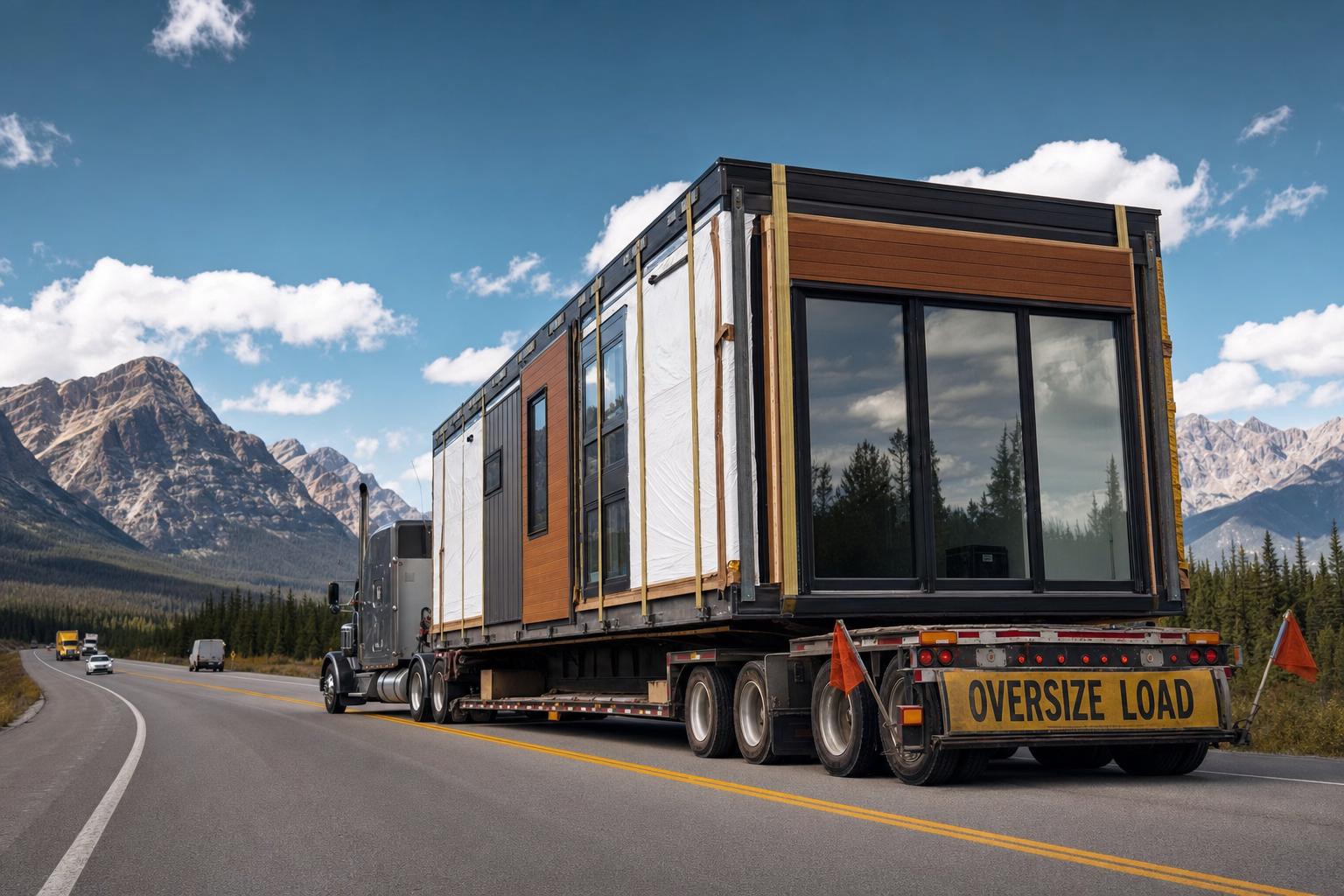
When we think about housing, we usually think of something permanent—poured concrete, fixed foundations, and structures that stay exactly where they were built. However, for a significant portion of the housing market, a home’s journey begins long before it reaches its final destination. Mobile and modular housing units, along with prefabricated structures, spend a critical portion of their "lives" as oversized loads on public highways.
Moving a house is a monumental logistical challenge. It isn't just about the size of the load; it’s about how that load interacts with existing infrastructure, the flow of traffic, and the safety of every other driver on the road. To manage this, authorities have developed a framework of 16 specific rules—comprising 6 formal regulations and 10 individual permits—drawn from authoritative sources across several states.
Understanding these rules is about more than just checking boxes; it is about understanding the delicate balance between housing development and public safety.
The Weight of Authority: Must vs. Should
When it comes to hauling a home, the rules are rarely suggestions. Of the 16 rules governing this category, 13 are classified as "must" requirements. This means that for the vast majority of transport scenarios, the requirements are non-negotiable legal mandates. Two rules are "must not" prohibitions, and only one is a "should not" recommendation.
This high ratio of mandatory requirements reflects the high stakes involved. An improperly hauled modular unit doesn't just risk damaging the home itself; it can compromise bridges, tear down power lines, or cause catastrophic accidents in narrow corridors.
The Most Critical Factor: Width and Clearance
If there is one factor that shapes transport regulations more than any other, it is the width of the mobile or modular home unit. This single measurement appears as a determining factor in six different rules.
Modern homes are often built to maximize living space, which frequently leads to wide eave overhangs. While these look great once the home is assembled, they present a significant hazard on the road. The width determines which routes are accessible and whether the load will require a specific type of towing vehicle equipped with dual wheels and specialized braking systems.
Closely related to width is the question of whether the configuration of the load allows one-way traffic to pass. This factor appears in four of the rules. If a modular unit is so wide that it completely consumes the roadway, preventing any other vehicle from passing in either direction, the transport becomes a high-priority event that requires much stricter oversight and potentially different permitting.
Infrastructure and Traffic Volume
The road itself is a silent partner in every modular home move. Regulators look closely at the "average daily traffic volume" on a proposed route—a factor that informs four of the 16 rules. Moving a 16-foot-wide unit through a quiet rural backroad is a different matter entirely than moving it through a high-traffic corridor during peak hours.
Infrastructure limits also play a key role:
- Bridge Weight Limits: At least one rule is triggered specifically by the maximum weight limit of bridges along the path.
- Total Height: While width gets most of the attention, the total height of the load from the ground is a factor in one rule, primarily to ensure the unit doesn't strike overpasses or low-hanging utility lines.
The Elements: Weather and Timing
Transporting a home is not an "anytime, anywhere" activity. Regulations are highly sensitive to the calendar and the clock. Two rules specifically dictate which days of the week travel is permitted, often restricting moves during weekends or holidays when recreational traffic is higher.
Visibility and road safety are also paramount. There are rules triggered by:
- Current Visibility: If fog, heavy rain, or smoke reduces how far a driver can see, transport may be legally required to stop.
- Night Travel: One rule specifically addresses whether a move is authorized to occur at night, which usually requires specialized lighting and escort configurations.
- Winter Conditions: The presence of compact snow or ice, the use of tire chains, and the status of emergency load restrictions (often common during spring thaws or winter storms) all determine if a move can proceed. Interestingly, even the active operation of snow removal equipment on a route can trigger specific regulatory requirements.
A Regional Snapshot
Regulations are not uniform across the country; they are shaped by the geography and legislative priorities of each state. The 16 rules we’ve discussed are distributed across three key regions:
Washington State
Washington maintains a balanced approach with 4 regulations and 3 permits. The state’s diverse geography—ranging from dense urban centers like Seattle to the mountain passes of the Cascades—necessitates a mix of standing regulations and case-by-case permits to ensure homes can be moved safely through varying terrain.
Missouri
Missouri leans heavily on a permit-based system, with 6 permits and 0 standing regulations in this specific dataset. This suggests a more individualized approach where the specific details of the move—the route, the time of year, and the dimensions of the home—are evaluated on a per-trip basis rather than through a one-size-fits-all regulation.
New York
New York manages its transport through 2 regulations and 1 permit. In a state with some of the oldest infrastructure and most congested corridors in the country, the focus is often on strict adherence to established transit paths and rigid safety standards for the power units pulling the homes.
Why These Rules Exist
To the casual observer, the requirement for a spare tire on a towing vehicle or a specific eave overhang allowance might seem like bureaucratic minutiae. However, these rules exist because of the physical realities of moving a building.
When a modular home is in transit, it ceases to be "real estate" and becomes a "load." As a load, it is subject to the laws of physics that govern center of gravity, wind resistance, and braking distance. By accounting for factors like traffic volume, bridge capacity, and even the day of the week, these 16 rules ensure that the dream of a new home doesn’t become a nightmare for the people sharing the road with it.
The goal of this regulatory framework is simple: to ensure that every mobile and modular unit reaches its foundation safely, without leaving a trail of damaged infrastructure or compromised safety in its wake. Understanding these factors provides a window into the complex dance of logistics that keeps our modern housing industry moving.