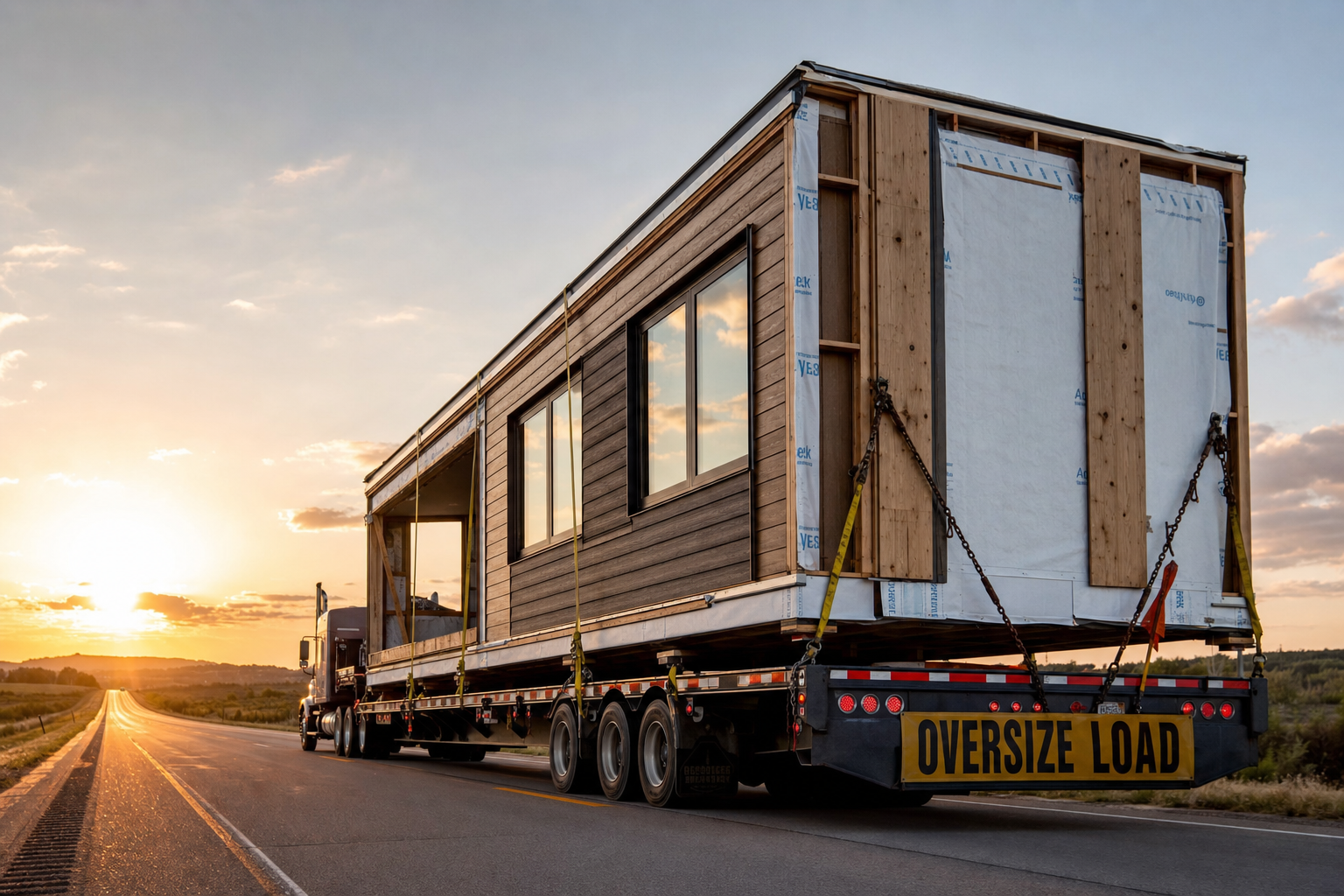
Moving the Modern Home: Understanding the Regulations for Prefabricated Building Transport
5 min read
The sight of a fully constructed home or a massive modular section cruising down a highway is a marvel of modern engineering and logistics. Prefabricated building transport, often categorized as a "Class 2" oversize load, allows for high-quality construction to happen in a controlled factory environment before the finished product is delivered to its permanent site. However, moving a structure that was designed to sit on a foundation—not a flatbed—presents a unique set of challenges for public infrastructure and road safety.
In the world of transport, these buildings aren't just cargo; they are significant physical obstacles that must navigate a world of fixed clearances. Because of this, authorities have developed specific frameworks to manage their movement. In regions like Manitoba, these movements are governed by a tight set of rules—specifically, a combination of one standing regulation and two distinct permits—all of which are mandatory.
To understand how these rules work, we have to look past the paperwork and understand the physical realities of the road.
The Invisible Ceiling: Why Height is Everything
When you are transporting a prefabricated building, the single most important factor—the one that appears in every single rule governing this activity—is the total height of the loaded structure. This measurement is not just the height of the building itself; it is the distance from the ground to the very highest peak of the structure once it is secured onto the trailer.
This focus on height is not arbitrary. While a truck driver can often see what is directly in front of them, the "invisible ceiling" of the highway is much harder to judge. Every overpass, bridge, power line, and traffic signal has a maximum clearance. A building that is even an inch too tall can cause catastrophic damage to public infrastructure or lead to a dangerous collision that blocks a major artery for hours or days.
Because prefabricated buildings often include peaked roofs, chimneys, or specialized architectural protrusions, the "highest peak" measurement becomes the definitive metric for safety. Whether the load is governed by a general regulation or a specific permit, this height dictates where the vehicle can go and what precautions it must take.
The Regulatory Framework: Regulations vs. Permits
In Manitoba, the oversight of prefabricated building transport is structured through three primary rules: one regulation and two permits. Understanding the difference between these two categories is essential for anyone involved in the logistics of modular moves.
Standing Regulations
A regulation is a permanent, foundational rule. It sets the baseline for what is expected of every carrier. Think of it as the "standard operating procedure" for the industry. This regulation ensures that all prefabricated buildings categorized as Class 2 meet a minimum safety standard before they ever touch the pavement. It establishes the boundaries for what can be moved under general conditions and sets the stage for when more specific permissions are required.
Special Permits
When a building exceeds the standard dimensions laid out in the general regulations, permits come into play. In the context of Manitoba’s transport rules, the two available permits act as specific authorizations for loads that require extra oversight.
A permit is essentially a contract between the transport company and the transport authority. It says, "We recognize this load is larger than usual, and we agree to follow these specific conditions to move it safely." These conditions often involve restricted travel times, specific approved routes that have been vetted for height clearances, and the use of pilot vehicles to warn oncoming traffic.
The Mandatory Nature of Compliance
A striking feature of the rules governing this category is their binding nature. All three of the identified rules in this sector are classified as "musts." In the regulatory world, this indicates there is no room for "best efforts" or "optional guidelines."
The mandatory nature of these rules reflects the high stakes involved. If a standard passenger vehicle deviates from a recommendation, the risk is usually localized. If a professional carrier moving a two-story modular home ignores a height restriction or a permit condition, the result can be a multi-million dollar infrastructure repair bill or a life-threatening accident. By making every rule mandatory, authorities ensure a level playing field where safety is never sacrificed for speed or cost-savings.
Special Allowances for Roofs and Protrusions
Prefabricated buildings are unique in the oversize load world because they aren't shaped like standard shipping containers. They have eaves, porches, and rooflines that may overhang the trailer.
Regulations for Class 2 loads often include specific language regarding these protrusions. The goal is to balance the needs of the builder—who wants to deliver a complete, beautiful home—with the needs of the road—which requires clear lanes for other drivers. The rules often specify how these overhangs must be marked (usually with flags or lights) and, once again, how they contribute to that all-important total height measurement. If a roof peak can be folded down or a chimney cap removed during transport, doing so can often move a load from a high-restriction permit category into a more manageable one.
The Logistics of the Move
Because total height is the primary factor in all three rules, the preparation for a move starts long before the truck reaches the highway.
- The Measurement: The carrier must measure the load from the pavement to the highest point. This requires precision; guessing is not an option when dealing with bridge clearances.
- Route Scouting: For permitted loads, the route is often pre-determined. This involves checking "clearance logs" to ensure that every bridge and wire on the path is higher than the load’s peak.
- The "Must" Factor: Because the rules are mandatory, carriers must have their paperwork in order and their vehicles properly equipped before they depart. In Manitoba, having the 1 regulation and 2 permits correctly applied means the difference between a successful delivery and a costly legal or physical setback.
Conclusion: A Partnership for Safety
The regulations and permits surrounding prefabricated building transport are not meant to be hurdles for the industry. Instead, they serve as a roadmap for safety. By focusing heavily on the total height of the load and making compliance mandatory, authorities in regions like Manitoba create a predictable environment for both transport professionals and the motoring public.
For the homeowner awaiting their new modular house, these rules are a silent guarantee that their investment will arrive in one piece. For the public, they are a shield that protects the bridges and power lines we all rely on. Understanding these factors—the why behind the "musts"—helps everyone appreciate the complex choreography required to move the modern home across the map.
Disclaimer: This article is provided for educational purposes only and does not constitute legal advice or formal compliance guidance. Always consult with official transport authorities and current provincial statutes before planning the transport of oversize or overweight loads.