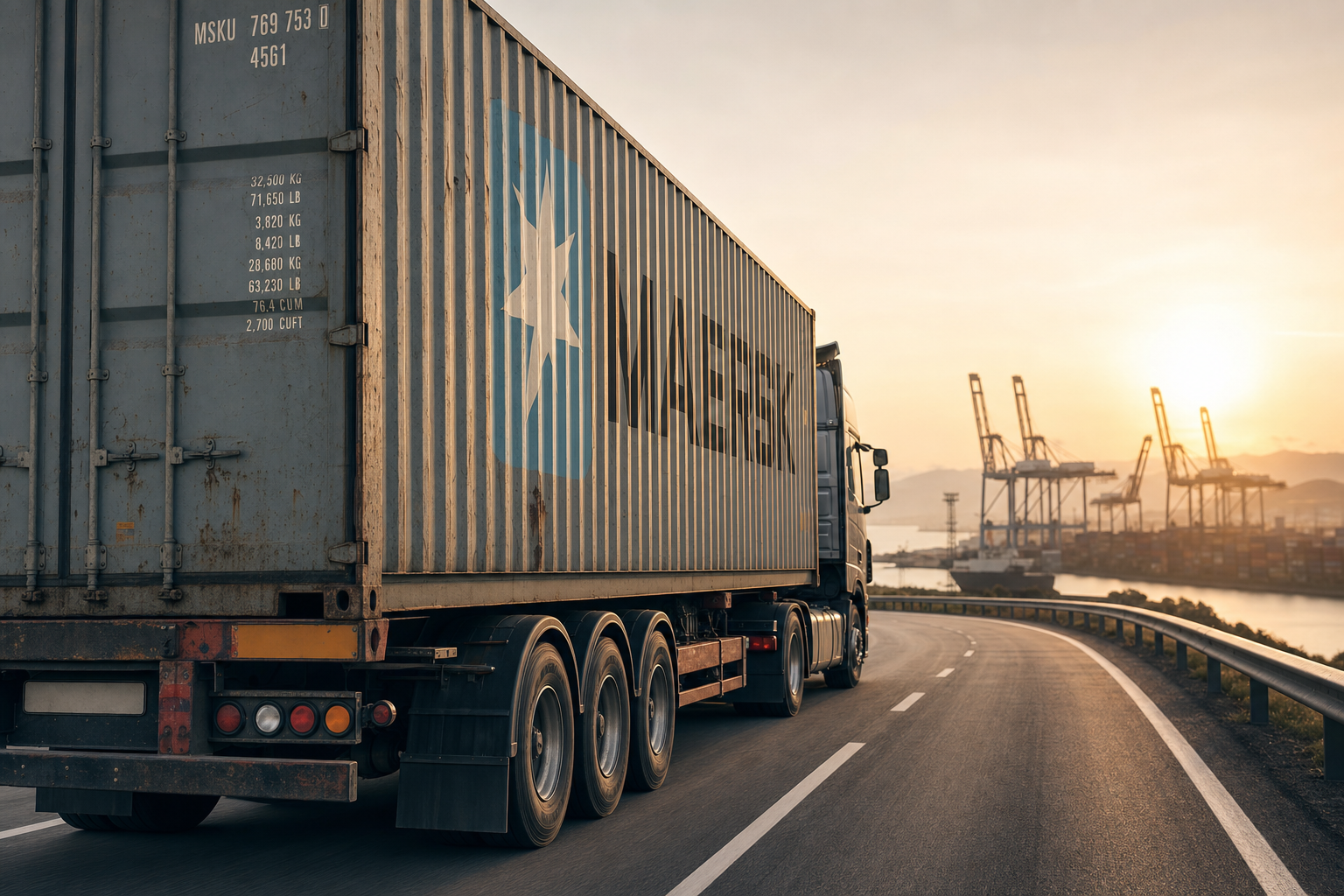
Navigating the Heavy Load: Understanding Permits for Sealed Shipping Containers
6 min read
If you have ever spent time on a highway near a major port, you have seen them: the towering, corrugated steel boxes known as sealed shipping containers. These containers are the lifeblood of global trade, carrying everything from electronics and clothing to heavy machinery and liquid chemicals.
Because these containers are packed at a point of origin—often a factory halfway around the world—and then sealed for security and customs purposes, they present a unique challenge for the inland transportation network. You cannot simply open a sealed container on the side of the road to shift the weight around if it happens to be too heavy for a standard truck.
To keep international commerce moving while protecting our roads and bridges, a specific system of permits exists. In the United States, this system is governed not by general "one-size-fits-all" regulations, but by a series of specialized permits. Understanding these rules requires looking at the technical factors that determine how much weight a vehicle can safely carry and where it is allowed to go.
The Permit Landscape: Exceptions to the Rule
In the world of oversize and overweight (OS/OW) transportation, there is a distinct difference between a regulation and a permit. A regulation is a broad rule that applies to everyone on the road. A permit, however, is a specific grant of permission to exceed those general rules under certain conditions.
According to current data, the framework for transporting sealed shipping containers in this category consists of nine distinct permits and zero general regulations. This tells us something important: the default state for these heavy containers is that they must abide by standard weight laws. If a container exceeds those limits, the carrier must apply for one of these nine specific permissions.
The language within these permits provides a glimpse into how they are structured:
- Flexibility (the "mays"): Four of the rules are framed as "may," indicating areas where operators have options or where permissions are granted if certain conditions are met.
- Strict Prohibitions (the "must nots"): Three of the rules are restrictive, setting hard boundaries that carriers cannot cross, even with a permit in hand.
- Requirements (the "musts"): Two of the rules are mandatory requirements, ensuring that safety or administrative standards are strictly followed.
Why Sealed Containers Are Treated Differently
The primary reason for these special permits—often referred to as Class I or Class II permits—is the "non-divisible" nature of the load. Under normal circumstances, if a truck is too heavy, the law expects the driver to take some of the cargo off. However, a sealed container used in international trade is treated as a single unit. Breaking the seal could violate international customs laws, compromise the security of the goods, or void insurance policies.
To accommodate this, authorities allow for "port-radius" permits. These permits typically allow heavier-than-normal containers to travel within a specific distance from a marine terminal or port. This ensures that the "last mile" (or first mile) of a container’s journey doesn't become a bottleneck for global trade.
The Factors That Shape the Rules
When an agency decides whether to grant a permit for a sealed container, they don't look at the cargo inside. Instead, they look at the physics of the vehicle and the nature of the shipment. There are five key factors that determine which rules apply and how much weight is allowed.
1. International Trade Status and Sealed Containers
The most significant factor, appearing in all nine of the rules identified, is whether the load is a sealed ship container transported by marine shipment for international trade. This is the "gatekeeper" factor. If the container was packed locally and isn't part of an international maritime journey, it generally does not qualify for these specific permits. The rules are designed specifically to support the flow of goods across borders via sea ports.
2. The Number of Axles
The total number of axles on the vehicle or vehicle combination is a factor in eight out of the nine rules. This is a matter of basic physics: the more axles a truck has, the more the total weight is "spread out" across the pavement. A 20-ton load on two axles puts significantly more stress on a specific point of the road than the same 20-ton load distributed across four or five axles. Permits often mandate a minimum number of axles to ensure the vehicle doesn't crack the pavement or damage underground utilities.
3. The Outer Bridge Span (Wheelbase)
Four of the rules specifically look at the distance between the center of the first axle and the center of the last axle. In the industry, this is often related to the "Bridge Formula." Even if a truck has enough axles to protect the pavement, the total weight must be spread across a long enough distance so that it doesn't overwhelm a single span of a bridge. A short, heavy truck is much more dangerous to a bridge than a long, heavy truck.
4. Licensed Weight of the Power Unit
One of the rules considers the maximum weight the power unit (the tractor) is licensed to carry. This ensures that the truck itself is mechanically capable of pulling the load. It is a matter of safety; a truck rated for a much lighter load might not have the braking power or engine strength to safely manage a heavy sealed container, especially in stop-and-go port traffic.
5. The Total Weight of the Vehicle and Load
Interestingly, while the total weight of the vehicle and its load is a background concern for all shipping, it serves more as a threshold for needing a permit rather than a variable factor within the specific rules of this category's permits. The permit is the solution to the weight, but the axle count and wheelbase are the tools used to make that weight safe.
Understanding Class I and Class II Permits
While the specific names can vary by jurisdiction, these permits are often categorized into two classes:
- Class I Permits: Often used for sealed containers that exceed standard weight limits but stay within a relatively moderate overweight range. These frequently have specific requirements regarding the distance they can travel from the port.
- Class II Permits: Usually reserved for even heavier loads or specific types of containers, such as those carrying liquids. These typically have stricter requirements for the vehicle’s configuration, such as mandatory extra axles or specific wheelbase lengths.
A Balancing Act
The regulations surrounding sealed shipping containers represent a delicate balance. On one side is the economic necessity of moving goods quickly and efficiently from the deck of a ship to a warehouse. On the other side is the massive public investment in infrastructure.
Roads and bridges are designed to last decades, but they can be destroyed in a much shorter time by repeated exposure to loads that exceed their design limits. By using a system of nine specialized permits—rather than a single, rigid regulation—authorities can manage this risk. They ensure that heavy containers are moved by the right trucks, with the right number of axles, over the right distances.
For the general public, these rules mean that while our store shelves stay stocked with international goods, the bridges we drive over and the roads we travel on remain stable and safe. The "mays," "musts," and "must nots" of the permit world are the invisible guards of our modern supply chain.