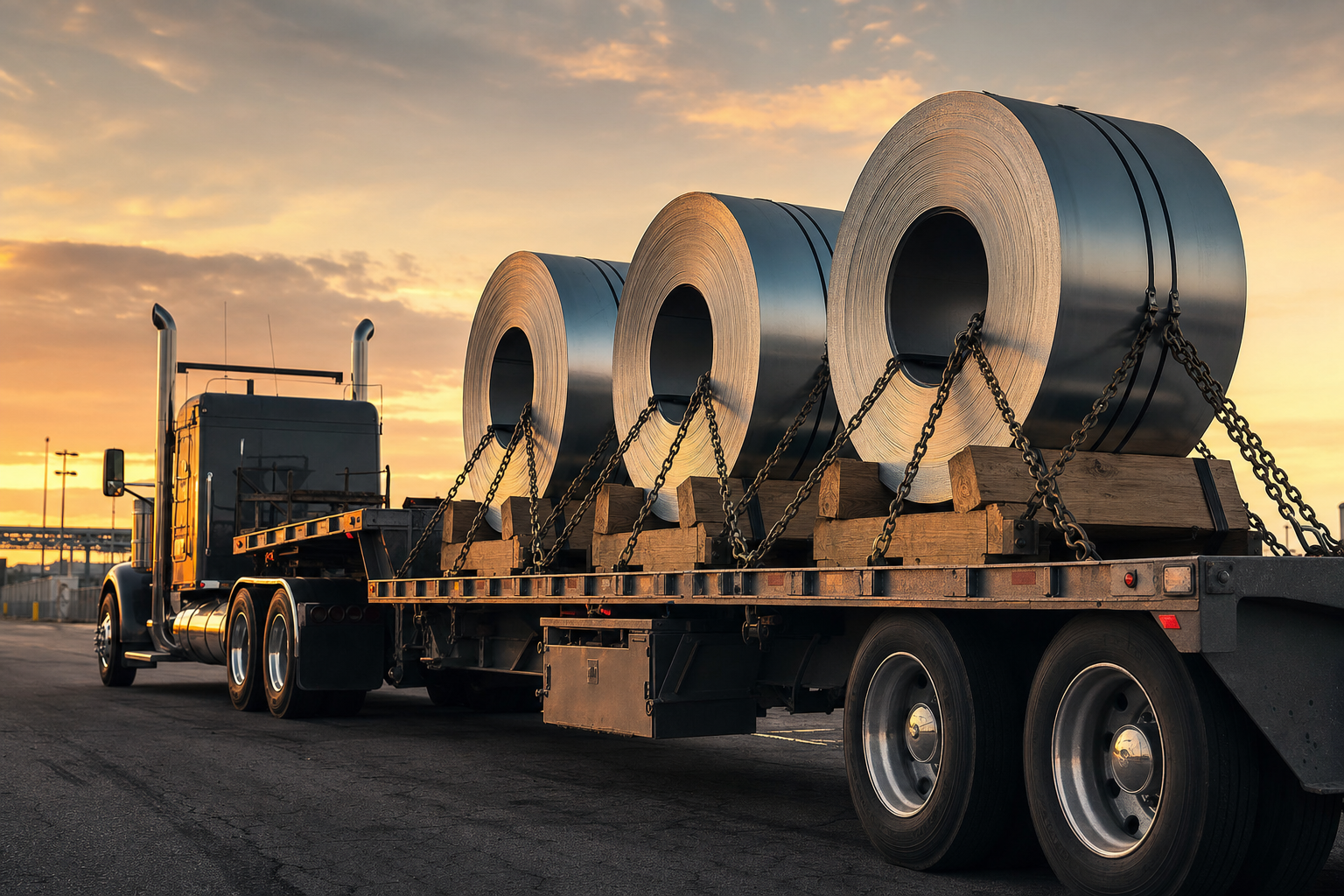
The Heavy Haul: Understanding the Rules for Transporting Steel and Aluminum Coils
5 min read
In the world of freight and logistics, few loads are as iconic or as intimidating as the metal coil. Whether it is gleaming aluminum or rugged steel, these massive rolls of metal are the lifeblood of the automotive, construction, and appliance industries. Yet, transporting them—particularly when dealing with "three or fewer" units—presents a unique set of challenges that occupy a specific niche in transportation law.
Because these materials are incredibly dense, a single coil can easily weigh as much as an entire trailer full of consumer goods. When a carrier moves these items, they aren't just driving a truck; they are managing a high-stakes physics problem. Understanding why the regulations and permits for these loads exist requires looking past the paperwork and into the mechanics of safety, infrastructure, and the laws of motion.
The Nature of the Load: Why Coils are Different
The primary factor shaping the regulatory landscape for steel and aluminum coils is density. Unlike a load of lumber or boxed electronics, a metal coil concentrates an immense amount of weight into a very small footprint.
When a truck carries a balanced load of lightweight goods, the weight is distributed evenly across the trailer’s floor and, consequently, across the axles. A steel coil, however, creates a "point load." If placed incorrectly, all that weight presses down on a tiny section of the trailer frame. This creates two major concerns for regulators:
- Structural Integrity of the Vehicle: The trailer must be rated to handle concentrated stress without bowing or breaking.
- Infrastructure Impact: Roads and bridges are designed to support weight that is spread out. A concentrated heavy load acts like a hammer, potentially causing more damage to a bridge joint or a section of pavement than a much larger, lighter vehicle would.
The Critical Factors: What Determines the Rules?
When authorities look at whether a permit is required for three or fewer coils, they aren't just looking at the number of items. They are looking at how that weight interacts with the vehicle and the road. Several key factors determine when a standard trip becomes a "permitted" overweight move.
Gross Vehicle Weight
The most common factor is the total weight of the truck, the trailer, and the cargo combined. Most regions have a standard threshold (often around 80,000 pounds) beyond which a vehicle is considered "overweight." Because steel is so heavy, even two or three large coils can push a standard tractor-trailer over this limit, triggering the need for a specialized permit.
Axle Weight and Spacing
Even if the total weight is under the legal limit, a truck can still be "overweight" on a specific axle. Regulators look at how much pressure is being applied to the road by each individual set of tires. For coil haulers, the challenge is positioning two or three coils so that no single axle or group of axles is carrying more than its fair share. If the coils are too close together, the middle axles might be overloaded; if they are too far apart, the front or rear might be.
Load Securement and Orientation
While not always a "permit" factor in the sense of weight, the way a coil is oriented—either "suicide" (with the hole facing the sides) or "shotgun" (with the hole facing the front and back)—dictates the safety requirements. The physics of a rolling object mean that if a securement system fails, the coil becomes a massive, uncontrollable kinetic force. Regulations exist to ensure that the friction mats, chains, and cradles used are sufficient to keep that weight stationary even during emergency braking.
The Regulatory Landscape: A Snapshot of the Data
When we look at the data surrounding these specific overweight permits for three or fewer coils, an interesting pattern emerges. In our current analysis of authoritative sources, we find a count of zero specific standalone regulations and zero independent permits for this exact sub-category.
At first glance, this might seem like a lack of oversight, but it actually reveals how the regulatory system works. In many jurisdictions, "three or fewer steel coils" is not treated as a separate legal category with its own unique set of rules. Instead, these loads fall under the broader umbrella of "non-divisible" or "specialized overweight" permits.
Because a single large coil cannot be broken down into smaller pieces without destroying its industrial value, it qualifies for overweight permits that a load of "divisible" cargo (like crates of apples) would not. The absence of specific "three-coil-only" statutes in some databases suggests that these moves are governed by general heavy-haulage standards that apply to any high-density, non-divisible load.
Why the Rules Exist: Protecting the Public and the Road
It is easy to view permits and regulations as mere bureaucratic hurdles, but in the context of metal coils, they serve a vital protective function.
Bridge Preservation
Bridges are the most sensitive parts of our infrastructure. They are rated based on "bridge formulas" that calculate the maximum weight a structure can support based on the distance between the axles. If a truck hauling three massive steel coils crosses a bridge that isn't rated for that concentrated weight, it could cause fatigue in the steel beams or even structural failure over time. Permits ensure that these heavy loads stay on routes that have been engineered to handle them.
Braking and Control
The more weight a vehicle carries, the more energy it takes to stop it. Regulations regarding gross vehicle weight are closely tied to the mechanical limits of heavy-duty braking systems. By requiring permits for overweight coil loads, authorities can ensure that the equipment being used is up to the task and that the driver is operating within safe mechanical tolerances.
Economic Consistency
Regulations also provide a level playing field for the industry. By setting clear standards for weight distribution and securement, authorities ensure that all carriers are following the same safety protocols. This prevents a "race to the bottom" where safety might be compromised for the sake of hauling more weight at a lower cost.
Navigating the Requirements
For those involved in the transport of steel and aluminum, the "three or fewer" threshold is a common operational standard. It often represents the limit of what a standard flatbed or coil-well trailer can reasonably carry without moving into the territory of "superloads" or multi-axle heavy-haul configurations.
While the specific data may not show a unique rulebook just for this sub-category, the factors of axle weight, gross vehicle weight, and load securement remain the guiding stars. Anyone moving these materials must be aware that the lack of a specific "coil permit" in a database often means they must instead comply with more comprehensive state or regional overweight regulations.
In summary, the transportation of steel and aluminum coils is a testament to the balance between industrial necessity and public safety. The rules are shaped not by a desire to restrict trade, but by the cold, hard facts of physics and the need to keep our infrastructure intact for everyone. Whether you are hauling one coil or three, the goal remains the same: getting that heavy metal to its destination without leaving a mark on the road or a dent in the safety record.