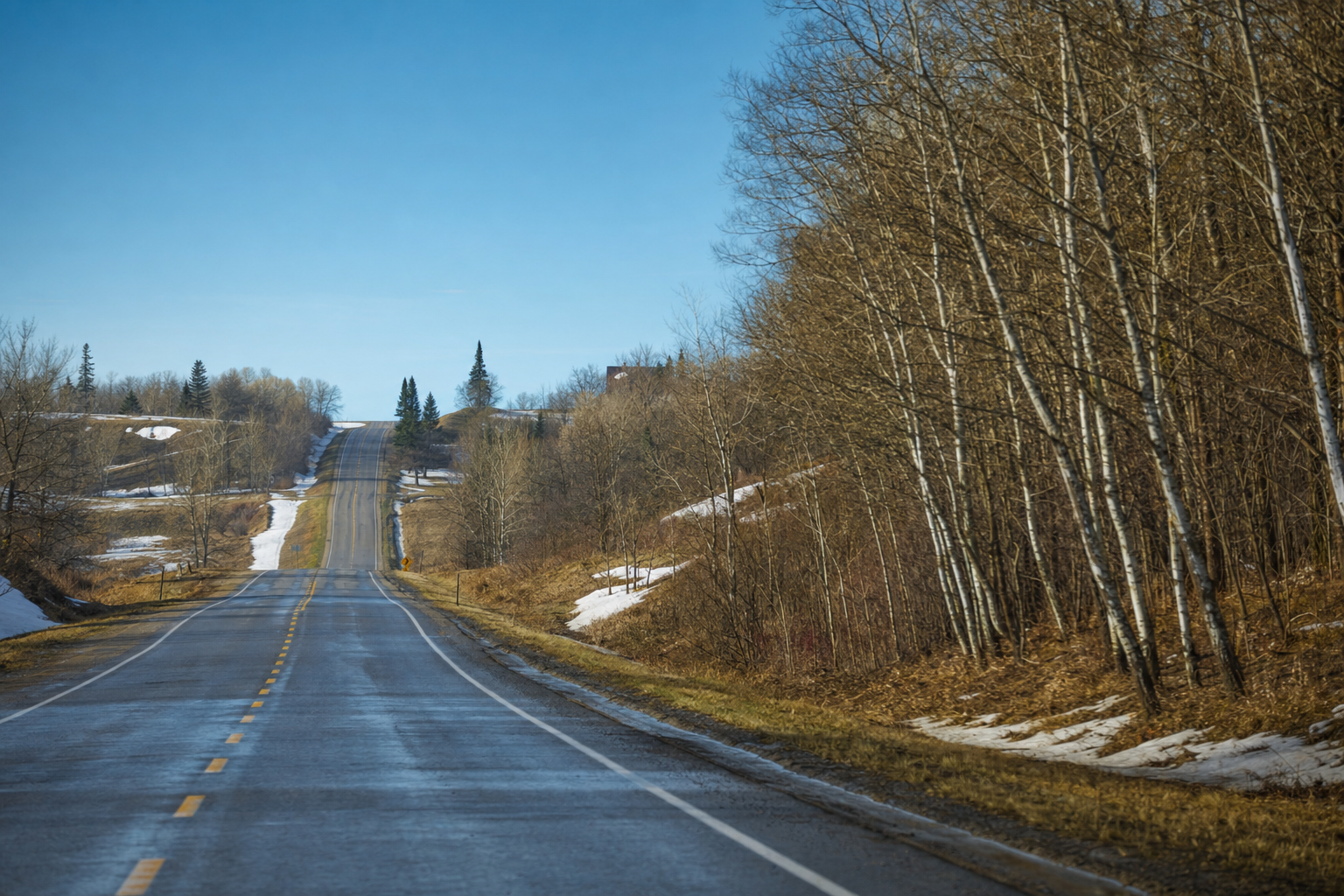
Navigating the Thaw: Understanding Seasonal Road Weight Restrictions
4 min read
Every spring, as the ice melts and the ground begins to soften, a quiet but significant shift occurs across the highways of North America. Heavy truck drivers and fleet managers suddenly find themselves navigating a complex web of "Road Bans" and seasonal weight limits. While these rules can feel like a logistical hurdle, they are the primary defense mechanism for our infrastructure.
To understand these regulations, we have to look beneath the pavement. Seasonal road restrictions are not just arbitrary dates on a calendar; they are a response to the physical vulnerability of the earth itself during the transition between seasons.
The Science of Soft Roads
The primary reason for seasonal restrictions is a phenomenon known as the "spring thaw." During the winter, the moisture in the soil beneath a road freezes. As water turns to ice, it expands, creating "frost heaves" that can push the pavement upward.
The real danger, however, comes when the weather warms. The ice nearest the surface melts first, but the ground deeper down remains frozen. This traps water in the upper layers of the soil, essentially turning the road’s foundation into a saturated sponge. In this state, the road loses its structural integrity. A heavy load that a highway could easily support in the dead of winter or the heat of summer can cause catastrophic damage—cracking, rutting, or complete collapse—when the ground is in this fragile, semi-liquid state.
To prevent millions of dollars in infrastructure damage, transport authorities implement specific regulations to limit the pressure exerted on these vulnerable routes.
A Closer Look at the Rules
Based on data from two authoritative sources, there are currently 10 distinct regulations governing seasonal road restrictions. Interestingly, in the specific data analyzed, there are no special "permits" listed to bypass these rules. This suggests that during these critical thaw periods, the regulations act as firm boundaries rather than flexible guidelines.
The "modality" of these 10 rules is split down the middle:
- Five are "must not" rules: These are explicit prohibitions, such as "vehicles over a certain weight must not travel on this route."
- Five are "must" rules: These are mandatory requirements, such as "vehicles must reduce their axle loads to a specific percentage of their normal capacity."
This 50/50 split shows that authorities use a balanced approach of both stopping certain behaviors and requiring specific adjustments to keep the transport network moving safely.
Key Factors: What Determines if a Rule Applies?
Not every road is treated the same way, and a restriction isn't always active just because it is March or April. Several factors determine when and where a "Road Ban" is in effect.
1. Highway Classification
The most frequent factor—appearing in four of the rules—is the specific load restriction classification assigned to a highway. Civil engineers design roads to different standards. A major interstate or 400-series highway is built with a much deeper, more resilient base than a secondary county road. Authorities categorize roads based on their ability to withstand the thaw, and the rules apply more strictly to those with lower durability ratings.
2. The Calendar
Dates are the most visible factor for most drivers. The start date of the restriction period is cited in three rules, while the end date appears in two. These dates are often based on historical weather patterns, though they can be adjusted if an unseasonably warm or cold spring occurs.
3. Environmental Conditions
Two of the rules are triggered specifically by the "calendar season," such as the official declaration of the spring thaw period. This allows authorities to be reactive. If the ground is still frozen solid in late March, the restriction might be delayed; if a sudden heatwave hits in February, it might be moved up.
4. Physical Signage
In some cases, the law isn't "active" until it is visible. Two of the rules specify that the regulation is only effective when physical signs are posted along the route. This provides a clear, real-world signal to drivers that the ground conditions have reached a critical point.
5. Time of Day
In rare instances—appearing in one of the rules—the time of day can be a factor. This often relates to the "freeze-thaw cycle." At 4:00 AM, the ground might be frozen and stable enough to support a load, but by 2:00 PM, the sun has warmed the surface, making the road too soft to travel.
Regional Variations: Ontario and the United States
The challenge of managing thawing roads is shared across the border. The 10 regulations we’ve examined are divided equally between two major jurisdictions:
- Ontario: 5 regulations
- United States: 5 regulations
In Ontario, seasonal weight limits are a staple of the spring season, particularly in the northern and rural regions where secondary highways are vital for the forestry and construction industries. The Ministry of Transportation typically provides "frozen ground" allowances in the winter, which are then sharply clawed back during the "Reduced Load Period" in the spring.
In the United States, regulations vary significantly by state. Northern states like Minnesota, Michigan, and Wisconsin have sophisticated systems that monitor soil temperature and moisture levels to trigger restrictions with scientific precision.
Why This Matters for the General Public
Even if you don't drive a heavy semi-truck, these regulations affect your daily life. They ensure that the roads we use for commuting, emergency services, and school buses remain intact. Without these "must" and "must not" rules, the cost of road repairs would skyrocket, leading to higher taxes and more frequent construction delays.
For those in the transport industry, understanding these factors is about more than just avoiding a ticket. It is about understanding the "why" behind the road bans. By paying attention to highway classifications, watching for physical signs, and respecting the seasonal calendar, we can all contribute to preserving the infrastructure that keeps our economy moving.
This article is provided for educational purposes to help the public understand the factors behind seasonal road regulations. It is not intended as legal advice or a definitive guide for compliance.