Understanding Seasonal Road Bans: How Weather and Weight Shape Our Infrastructure
5 min read
If you have ever driven through rural areas or industrial corridors during the early spring, you may have noticed bright orange signs or electronic placards announcing "Road Bans in Effect" or "Seasonal Weight Restrictions." While they might seem like a nuisance to logistics companies or a confusing hurdle for local businesses, these regulations are a critical part of civil engineering and public safety.
Road bans are not arbitrary rules designed to slow down commerce. Instead, they are a defensive strategy used by transportation departments to protect the massive public investment in our asphalt and gravel networks. Understanding the "why" behind these rules—and the factors that trigger them—is essential for anyone involved in hauling, construction, or local government.
The Science of the Thaw: Why Roads Become Vulnerable
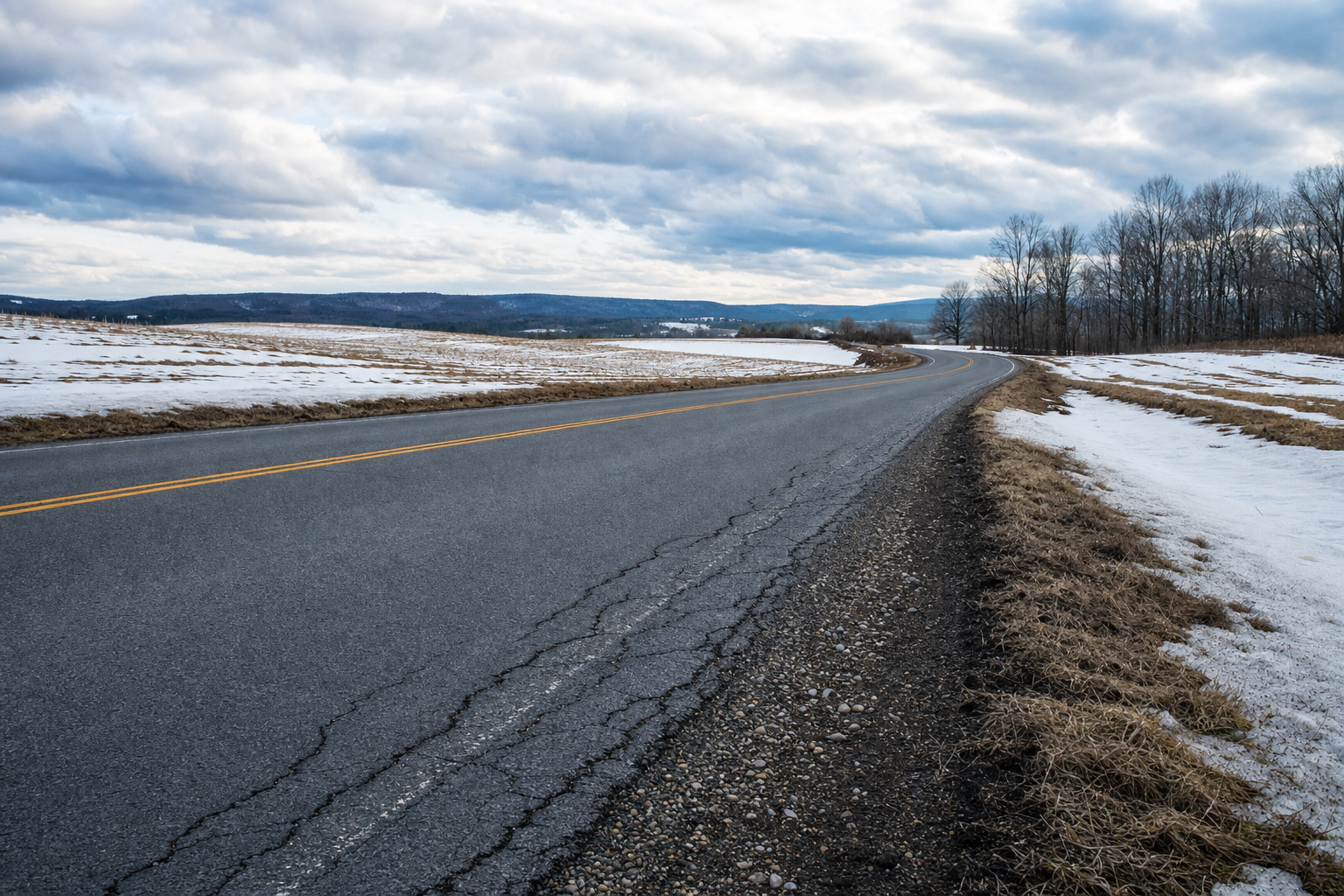
The primary reason for seasonal road bans is the transition from winter to spring. To understand why a heavy truck can drive safely over a road in January but might destroy it in April, we have to look beneath the surface.
In many climates, the ground freezes deep below the pavement during the winter months. This frozen subgrade acts as a solid, incredibly strong foundation that can support immense weight. However, as the weather warms, the ground begins to thaw from the top down.
This creates a "moisture sandwich." The top layer of soil turns into a soft, saturated slurry because the meltwater cannot drain downward through the still-frozen layers below it. During this period, the road surface is essentially floating on a layer of mud. If a heavy vehicle passes over the road at this moment, the pressure can cause the pavement to flex beyond its limits, leading to deep ruts, "alligator cracking," or even total structural failure.
Key Factors That Shape Road Restrictions
Regulators do not apply road bans to every street or every vehicle equally. Several specific factors determine when a ban is triggered and how restrictive it needs to be.
1. Gross Vehicle Weight and Axle Loads
The most significant factor is weight, but it isn't just about how much the entire truck weighs. Engineers look closely at "axle weight"—how that total load is distributed across the vehicle’s footprint. A very heavy trailer with many axles might actually be less damaging to a soft road than a smaller truck with only two axles carrying a dense load. Regulations often specify a percentage of the normal allowable axle weight (such as 75% or 90%) that vehicles must adhere to during the ban period.
2. Road Classification and Construction
Not all roads are built the same. A major interstate highway is designed with thick layers of crushed stone and reinforced asphalt, making it much more resilient than a thin-surfaced rural road or a gravel track. Road bans are typically tiered based on the "functional class" of the road. Local residential streets and secondary highways are usually the first to see restrictions, while primary trade routes may remain open to full weights longer.
3. Environmental Conditions
Temperature is the ultimate trigger. Many jurisdictions use "Thaw Indices," which are calculations based on daily high and low temperatures. Once the cumulative heat reaches a certain threshold, authorities know the subsurface is likely liquefying, and they will issue a formal notice. Conversely, if a sudden cold snap re-freezes the ground, restrictions might be temporarily lifted.
4. Vehicle Configuration and Tire Width
The physical way a vehicle touches the ground matters. Regulations may take into account the width of the tires; wider tires spread the weight over a larger surface area, reducing the "psi" (pounds per square inch) exerted on the fragile pavement.
Navigating the Regulatory Landscape
When looking at the data surrounding road bans, it is common to see fluctuations in the number of active regulations and permits. In many regional databases, you may find "0 active regulations" or "0 permits" listed during the summer or mid-winter months. This does not mean the rules don't exist; rather, it reflects the seasonal nature of the category.
Seasonal road bans are often "reactive orders" rather than permanent statutes. They are activated by ministerial or county orders on short notice—sometimes with only 24 to 48 hours of warning—and are deactivated just as quickly once the road subgrade has stabilized and the excess moisture has drained away.
Permits and Exceptions
Even when a road ban is in effect, the world doesn’t stop turning. Essential services often have a path forward through specialized permits. These are generally categorized into a few types:
- Essential Service Exemptions: Vehicles carrying heating fuel, drinking water, or livestock feed may be allowed to travel despite the bans to ensure public safety and animal welfare.
- Emergency Repairs: Utility trucks responding to a power outage or a water main break are typically exempt.
- Night-Time Travel: In some regions, "frost permits" allow heavy loads to move only during the coldest part of the night (e.g., between 2:00 AM and 7:00 AM) when the surface layer has re-frozen enough to provide temporary strength.
The Economic Impact of Compliance
While it is tempting to view these bans as an economic drag, the alternative is far more costly. The cost of completely rebuilding a mile of paved road ruined by "subgrade failure" can run into the millions of dollars. By implementing weight restrictions for a few weeks each spring, municipalities can extend the lifespan of a road by decades.
For businesses, staying informed about these bans is a matter of logistical efficiency. If a construction site requires several loads of gravel, a 75% road ban means the company might need to run four smaller loads instead of three full ones, increasing fuel and labor costs. Understanding the historical timing of these bans allows companies to plan their heavy hauling for the "deep freeze" of winter or the "dry heat" of summer, avoiding the volatile spring window altogether.
A Shared Responsibility
Road bans are a primary example of how environmental science and public policy intersect. They require constant monitoring of ground temperatures, soil moisture, and traffic patterns. While the data may show zero active restrictions during much of the year, the framework for these rules is always standing by.
For the general public, these bans are a reminder that our infrastructure is a living, breathing system that reacts to the world around it. By respecting these seasonal limits, we ensure that the roads remain safe, smooth, and functional for everyone once the ground finally settles and the spring flowers begin to bloom.