Understanding Seasonal Weight Restrictions: Protecting the Foundations of Transport
5 min read
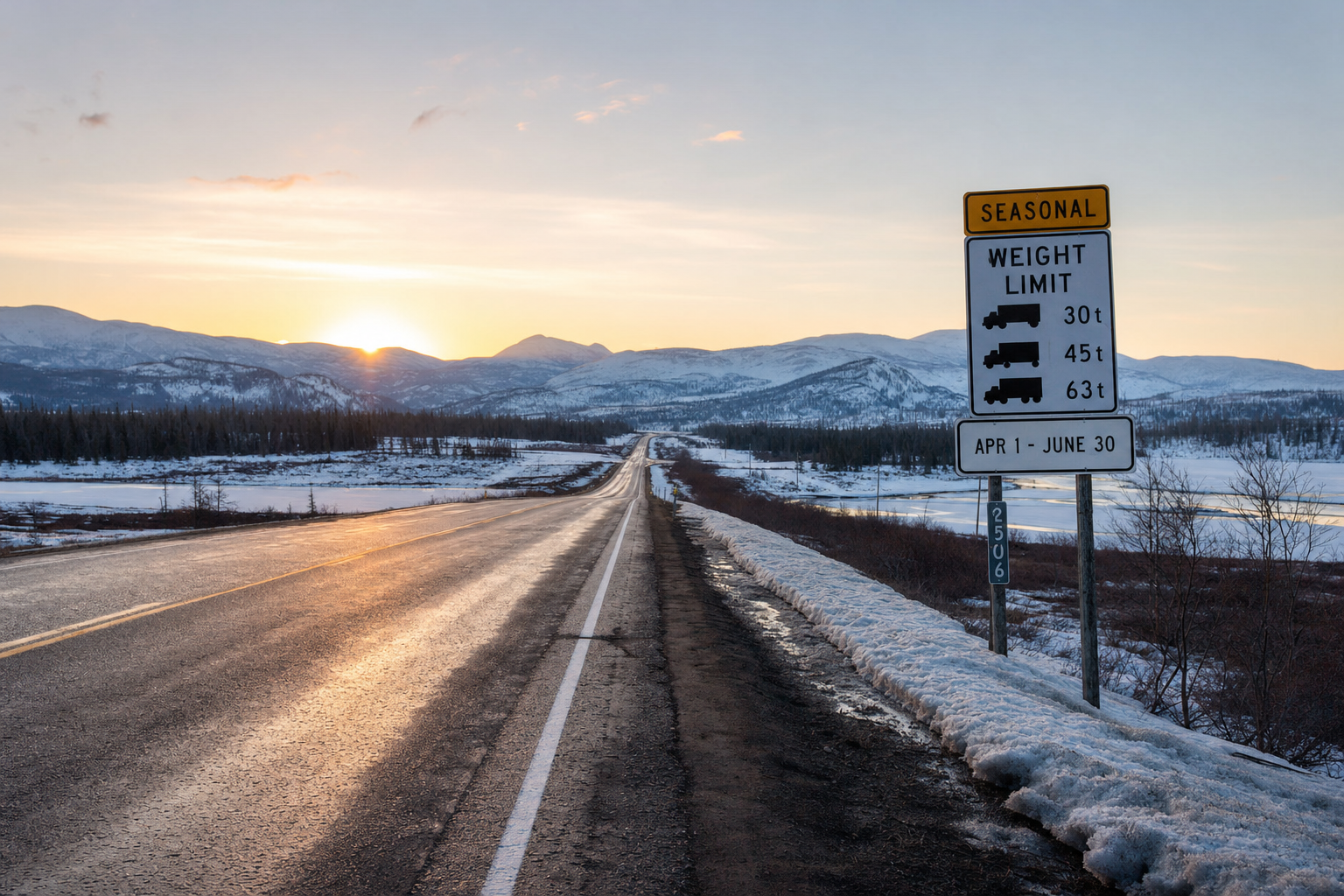
If you have ever driven through the northern United States or across the Canadian provinces during the late winter and early spring, you may have noticed signs appearing on the shoulders of secondary highways. These signs often announce "Spring Weight Limits" or "Reduced Load Periods." To the casual observer, they are a minor detail of the landscape. For the logistics and transport industry, however, they represent a complex set of rules that dictate how, when, and where goods can move.
Across various jurisdictions, there are 31 distinct rules—comprising 23 regulations and 8 specific permits—that govern how heavy a vehicle can be during these sensitive periods. These rules aren't arbitrary; they are a calculated response to the physical reality of how our roads are built and how they react to the changing environment.
The Science of the "Thaw"
To understand why 20 of these rules are "must" requirements—meaning they are mandatory and non-negotiable—we have to look beneath the asphalt. During the winter, the ground beneath a road freezes. This frost can penetrate deep into the soil, creating a rigid, frozen structure that can actually support significantly more weight than usual. This is why some regions offer "winter weight allowances," a specific boolean condition where certain road segments are actually granted higher weight limits because the frozen ground is temporarily indestructible.
However, as the sun gets higher and the temperature rises, the road begins to thaw from the top down. The ice melts, turning into water that becomes trapped between the still-frozen ground below and the pavement above. For a few weeks every year, the road foundation is essentially floating on a layer of mud. This is when the road is at its most vulnerable. Even a single "overweight" truck can cause damage that would take years of normal traffic to replicate.
Key Factors in Determining Weight Limits
Regulatory bodies use several specific factors to decide when and how to apply these restrictions. It is rarely a one-size-fits-all approach. Instead, it is a nuanced system based on the following:
1. Road Classification and Surface Material
Not all roads are created equal. In many systems, rules depend heavily on the classification of the road. You might see 100-series highways or primary provincial roadways exempted from the strictest limits because they are built with thicker foundations and more robust drainage. Conversely, secondary roads or roads with specific surface materials—such as gravel or thin-membrane pavement—are the first to see restrictions.
2. Vehicle and Axle Configuration
The impact a vehicle has on the road isn't just about its gross vehicle weight; it’s about how that weight is distributed. This is why the type of axle arrangement—whether it’s a steering axle, a single axle, or grouped configurations like tandem or tridem axles—appears in five different rules across our data.
By spreading the weight over more axles or using specific groups, a vehicle might be allowed to carry more total weight than a smaller truck with only two axles. Authorities also look at the total number of axles and the overall length and width of the vehicle to ensure the load isn't putting undue stress on specific road segments or bridges.
3. Environmental Indicators: Frost and Temperature
Modern road management has moved beyond simply picking a date on the calendar, though the effective date remains a factor in four of the rules. Today, engineers often look at the depth of frost penetration into the ground. By monitoring how deep the frost goes and how quickly it is retreating, they can determine the status of seasonal weight restrictions with scientific precision. Some jurisdictions even use specific frost zone classifications to trigger different levels of restriction based on the local climate.
4. Specific Infrastructure Landmarks
Sometimes, a restriction isn't for an entire highway but for a single weak link. In three of the rules studied, the specific name or identifier of a bridge is the determining factor. If a bridge has a known structural limit, it may be subject to a "must not" regulation, where vehicles over a certain weight are strictly prohibited from crossing, regardless of the season.
The Difference Between Regulations and Permits
The 31 rules are split into two distinct categories: 23 regulations and 8 permits.
- Regulations are the baseline. They are the laws that apply to everyone by default. Most of these (20) are framed as "must" requirements, while 9 are "must not" prohibitions. For example, a regulation might state that during the spring thaw, no vehicle on a secondary road "must" exceed 75% of its normal axle weight.
- Permits offer a path for flexibility. These are often "may" rules (though only two fall into this category in our dataset), providing a mechanism for transport companies to carry essential loads that exceed the seasonal limits. Permits are typically issued for specific routes, specific timeframes, or specific types of cargo that are deemed necessary for the community, provided the vehicle meets certain safety and weight-distribution criteria.
A Regional Perspective
The burden of protecting roads falls differently depending on the local climate and the density of the road network. In our survey of eight authoritative sources, we see a clear regional breakdown:
- Saskatchewan leads with 6 total rules (5 regulations and 1 permit), reflecting its vast network of rural roads and its intense freeze-thaw cycles.
- Yukon and Minnesota follow closely, with Yukon managing 5 rules and Minnesota 4. In these northern climates, the transition from deep winter to spring is dramatic, making seasonal management essential.
- Michigan maintains 4 regulations with no specific seasonal permits listed in this data, suggesting a strict adherence to mandatory limits during the transition periods.
- New Brunswick manages 3 rules, while Wisconsin focuses on a single, high-impact regulation.
- At the national level, both the United States and Canada maintain overarching rules (4 each) that help standardize how these restrictions are applied across state and provincial lines.
Summary
Seasonal weight restrictions are a vital tool for infrastructure preservation. While they may seem like a logistical hurdle, they are grounded in the physical realities of soil science and structural engineering. By considering road classification, axle arrangements, and environmental factors like frost depth, authorities ensure that the roads we rely on for commerce remain functional for decades rather than being destroyed in a single season.
Understanding these factors—the "why" behind the "what"—helps everyone from truck drivers to business owners navigate the changing seasons with a clearer picture of the rules of the road. These 31 rules represent a careful balance between the need to move goods and the need to protect the very ground those goods travel upon.