Understanding Non-Conforming Transport: The Logic Behind Specialized Vehicle Rules
5 min read
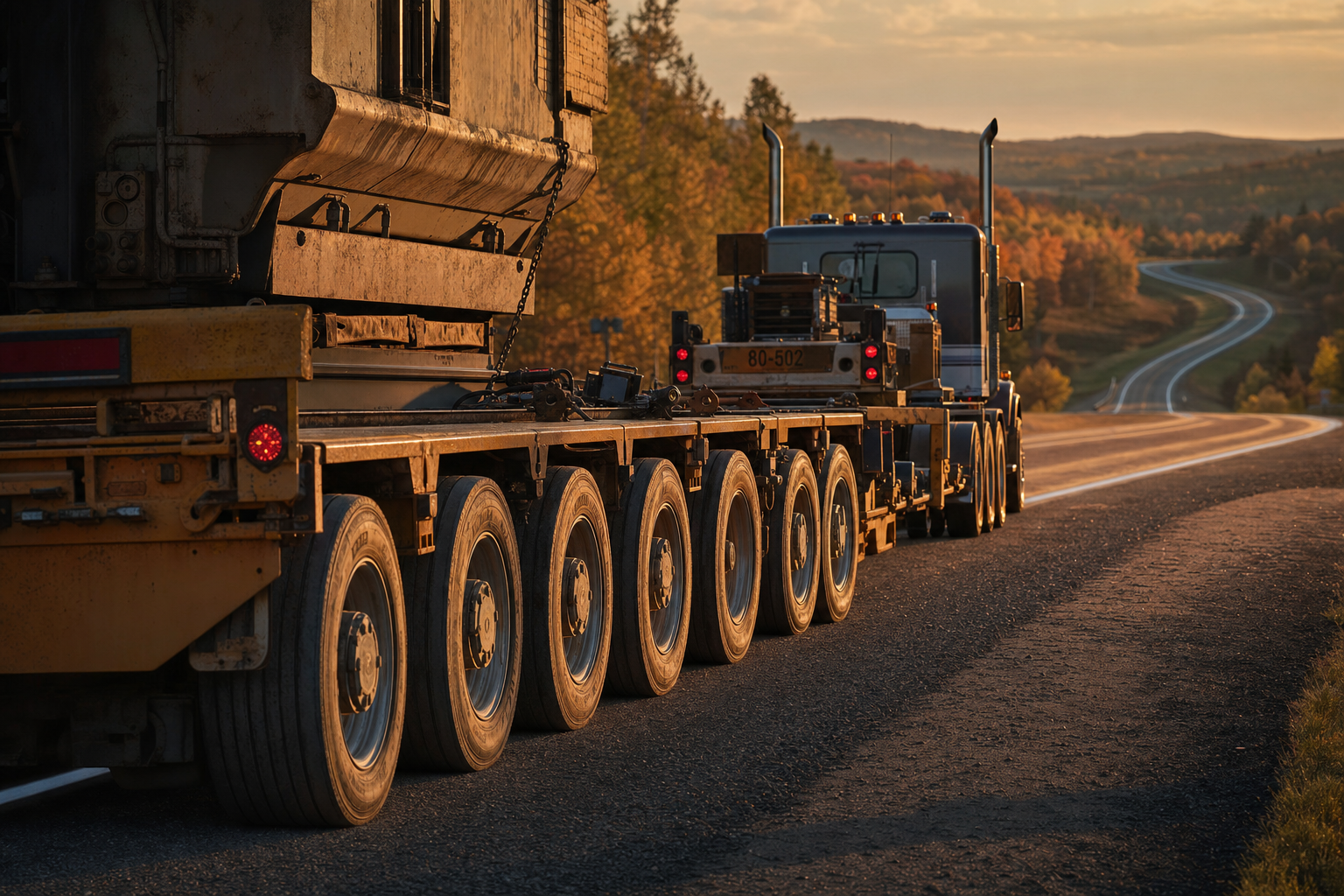
In the world of logistics and heavy transport, standard semi-trailers and box trucks are the backbone of the industry. However, there is a specialized subset of transportation that involves vehicles that do not fit the traditional mold. These are often referred to as "non-conforming configurations." Whether it is a "saddlemount" setup—where multiple trucks are stacked like a line of piggybacking hikers—or a heavy-duty Quadrem semi-trailer designed for massive loads, these configurations require a specific set of rules to ensure they can share the road safely with the general public.
When we look at the regulatory landscape for these unique setups, we find a framework built on safety, infrastructure protection, and mechanical stability. For those operating in Atlantic Canada, specifically New Brunswick, understanding these rules is not just about compliance; it is about understanding how the physics of a vehicle dictates the law of the land.
The Regulatory Framework
Data drawn from authoritative transport sources reveals a very specific regulatory environment for non-conforming configurations. In this category, there are currently seven distinct rules in effect. Interestingly, all seven of these are classified as regulations rather than individual permits.
This distinction is important. While a permit often grants a one-time or temporary exception for a specific move, a regulation is a standing rule that applies to everyone operating that type of equipment. In New Brunswick, the focus is clearly on setting high, consistent standards for these vehicles rather than managing them through case-by-case permissions.
The tone of these regulations is proactive. Of the seven rules, five are phrased as "must" requirements—positive obligations that a driver or carrier is required to fulfill. The remaining two are "must not" requirements, which serve as hard boundaries to prevent dangerous maneuvers or setups. This 5-to-2 ratio suggests that the regulatory goal is to provide a clear roadmap for how to operate safely, rather than simply listing prohibitions.
Key Factors Shaping the Rules
Regulations do not exist in a vacuum. They are shaped by the physical realities of the vehicles and the environments they traverse. When authorities determine whether a rule applies to a specific truck or trailer, they look at several key factors.
The Type of Cargo
Perhaps the most significant factor is the nature of what is being moved. In the context of non-conforming configurations, the "cargo" is often other vehicles. In a saddlemount or "piggyback" configuration, one truck is driven while others are mounted on the frame of the lead vehicle or the vehicle ahead of them. Because the cargo is itself a motorized vehicle with its own center of gravity, weight distribution, and height, the regulations must account for how that cargo affects the handling of the entire unit.
Self-Steering Axles and Maneuverability
Specialized trailers, such as Quadrem configurations, often deal with extreme lengths or weights. To help these massive units navigate turns without scrubbing tires or damaging road shoulders, they are often equipped with self-steering axles.
Regulations pay close attention to whether a semi-trailer is equipped with these axles because they fundamentally change how a vehicle tracks around a curve. A trailer that "follows" the lead unit more accurately is generally safer, but it also introduces more mechanical complexity. Therefore, the presence of these axles often triggers specific safety requirements to ensure they are functioning correctly and are not compromising the trailer’s stability at highway speeds.
Liftable Axles: Protection for the Pavement
Beyond just having a self-steering axle, the question of whether that axle is "liftable" is a major regulatory factor. Liftable axles allow a driver to raise wheels off the ground when the vehicle is empty or lightly loaded, saving on fuel and tire wear.
However, when a vehicle is under a heavy load, those axles must be down to distribute weight across more of the road surface. If a driver lifts an axle while carrying a heavy load, the remaining axles put significantly more pressure on the pavement, which can lead to ruts, cracks, and bridge fatigue. Because of this, the ability to lift an axle is strictly regulated to ensure it is only used under appropriate conditions.
The Mass of the Vehicle
Finally, the total mass of the vehicle or semi-trailer is a universal factor in transport law. For non-conforming configurations, mass is especially critical because these vehicles often push the limits of standard weight allowances. The heavier the vehicle, the more momentum it carries and the longer its braking distance becomes. Regulations centered on mass ensure that the braking systems, frame strength, and tire ratings of a non-conforming setup are actually capable of handling the weight they are tasked to carry.
Why These Rules Matter
The existence of seven specific regulations in New Brunswick highlights the regional importance of maintaining strict oversight on specialized transport. New Brunswick serves as a vital corridor for freight moving between the United States, Central Canada, and the Atlantic ports. Ensuring that "piggyback" trucks and heavy Quadrem trailers are regulated consistently prevents bottlenecks and reduces the risk of accidents on transit routes.
By focusing on "must" requirements—such as ensuring self-steering axles are operational or that mass limits are strictly observed—the province creates a predictable environment for carriers. When a carrier knows exactly what is required for a saddlemount configuration, they can invest in the right equipment and training.
Summary of the Landscape
It is helpful to view these rules not as bureaucratic hurdles, but as a specialized toolkit for road safety. The transport of non-conforming vehicles is a feat of engineering, and the regulations are the guardrails that keep that engineering safe.
To recap the current state of these rules:
- Total Rules: 7 (All are regulations; there are currently 0 individual permits in this specific dataset).
- Location: All 7 rules are currently centered in New Brunswick.
- Tone: Predominantly proactive (5 "must" requirements vs. 2 "must not" prohibitions).
- Primary Drivers: Cargo type, the presence and functionality of steering axles, and the total mass of the unit.
For those in the industry, staying informed about these factors is the first step toward a successful haul. While standard trucks may follow the "general" rules of the road, non-conforming configurations operate in a world where the specifics of an axle or the weight of a trailer can make all the difference between a routine trip and a regulatory violation.
Note: This article is intended for educational purposes and provides a general overview of the factors shaping transport regulations. It does not constitute legal advice. For specific compliance requirements, carriers should always consult the most recent official provincial documentation.