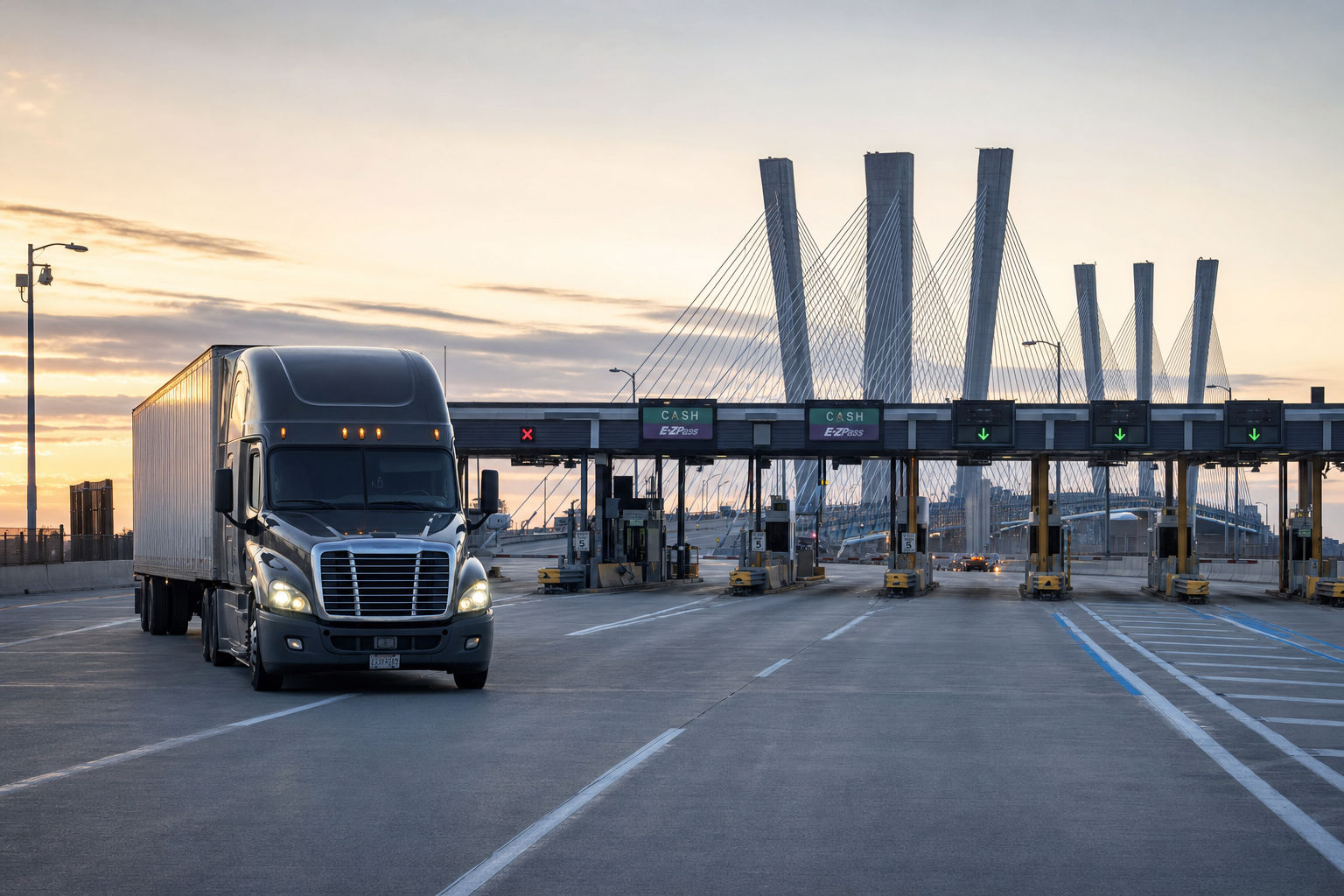
Navigating the Gates: A Guide to Toll and Bridge Regulations for Heavy Transport
5 min read
Bridges and toll facilities are the critical "gatekeepers" of our transportation infrastructure. While a highway might stretch for hundreds of miles with consistent conditions, a bridge represents a fixed point of physical and structural limitations. For the general public, a toll is simply a fee for service. However, for those operating heavy machinery, oversized loads, or commercial fleets, these facilities represent a complex intersection of engineering, safety, and regulatory oversight.
Understanding why these regulations exist—and what factors trigger the need for special permits—is essential for anyone involved in the movement of goods. Whether it is a historic suspension bridge or a modern multi-lane toll plaza, the rules governing their use are designed to protect the integrity of the structure and the safety of every traveler on the road.
The Purpose of the Rules: Why Constraints Exist
At first glance, it might seem that toll and bridge regulations are merely bureaucratic hurdles. In reality, they are grounded in the hard laws of physics and civil engineering. Bridges are designed to support specific weight limits and accommodate vehicles of certain dimensions. When a vehicle exceeds these standards, it moves from a "standard user" to a "permitted load," necessitating a different set of rules.
The primary goal of these regulations is infrastructure preservation. Every time a heavy vehicle crosses a bridge, it causes a minute amount of structural fatigue. By regulating gross vehicle weight and axle distribution, authorities ensure that the wear and tear remains within the bridge’s design life. Furthermore, toll facilities often involve narrow lanes and overhead gantries. Regulations ensure that a vehicle doesn’t physically strike the toll infrastructure or get stuck in a lane that is too narrow for its width.
Factors That Shape Regulations
When authorities look at a vehicle to determine if it can safely pass a toll or bridge, they aren't looking at the brand of the truck or the nature of the cargo. They are looking at several key physical factors that determine the vehicle's "footprint" on the infrastructure.
Weight and Pressure
The most significant factor is the gross vehicle weight. This is the total weight of the vehicle and its load. However, the total weight is only part of the story. Engineers also look at the axle weight—how that total mass is distributed across the road surface. A very heavy load spread across twelve axles may do less damage to a bridge deck than a lighter load concentrated on only three axles. This is why many toll structures base their fees and their access rules on the number of axles a vehicle has.
Physical Dimensions
Vehicle height is a non-negotiable factor. If a bridge has a clearance of 14 feet and a load is 14 feet 2 inches, no amount of careful driving will make it fit. Similarly, vehicle width determines whether a truck can stay within a standard toll lane. Many toll plazas have specific "wide load" lanes, often located on the far right, which are the only points of entry for oversized permitted loads.
Timing and Traffic Flow
Because toll facilities are often bottlenecks, the time of day matters. Regulations may restrict permitted loads to "off-peak" hours—typically late at night or mid-day—to avoid causing massive traffic congestion during morning and evening rushes.
Regulations versus Permits: Understanding the Data
In the world of transport oversight, there is a distinction between a general regulation and a specific permit. A regulation is a standing rule that applies to everyone (for example, "all vehicles over five tons must use the right lane"). A permit is a specific piece of documentation granted to a single operator for a single trip, allowing them to bypass a general restriction under controlled conditions.
In certain specialized datasets, you may find a count of zero specific regulations or permits for a localized facility. This does not mean the "Wild West" exists without rules; rather, it often indicates one of two things:
- Standardization: The facility may follow the broader state or regional Department of Transportation (DOT) rules rather than having its own unique set of independent regulations.
- Integration: Specific "bridge-only" permits are increasingly rare. Instead, the requirements for crossing a bridge are usually bundled into a larger "Oversized/Overweight" (OSOW) permit that covers the entire journey from origin to destination.
This centralization is actually a benefit for the transport industry. It means that instead of applying for five different permits to cross five different bridges, a carrier can often obtain a single permit that has already been vetted against the structural data of every bridge along the route.
The Logistics of the Toll Plaza
For those operating under a permit, the toll plaza itself is often the most stressful part of the journey. Modern electronic tolling has changed the landscape, but it hasn't eliminated the need for physical oversight.
- Lane Requirements: Permitted loads are almost always restricted to specific lanes. These lanes are wider and lack the overhead "headache bars" that might snag a tall load.
- Electronic vs. Manual: In many regions, even if a truck has an electronic transponder, a permitted oversized load may still be required to stop and speak with a toll collector or an escort vehicle to ensure they have the proper clearance to proceed.
- Escort Vehicles: For particularly large loads, bridge regulations may require "pilot cars" or police escorts to stop oncoming traffic, allowing the heavy load to straddle the center of the bridge where the structural support is strongest.
Regional Variations and Local Authority
While physics remains the same everywhere, the way different regions manage their tolls and bridges varies significantly. Some states have "Turnpike Authorities" that act as semi-independent entities with their own set of rules and fee structures. Others integrate their toll bridges directly into the state highway system.
This regional breakdown is why "one size fits all" advice doesn't work in transport. A driver moving a load from the Midwest to the East Coast might encounter three different sets of lane requirements and four different ways of measuring "excessive weight" for tolling purposes. The complexity of these rules is the reason that professional routing software and specialized permitting agencies are so vital to the logistics industry.
Conclusion
Toll and bridge regulations are the invisible lines that keep our most expensive and vulnerable infrastructure safe. While the data might occasionally show a lack of unique, standalone rules for a specific site, that is usually a sign that the facility is part of a larger, more coordinated regulatory network.
By focusing on the key factors—weight, axles, height, and width—and understanding the difference between a general rule and a specific permit, transport professionals and the informed public can better appreciate the careful balancing act required to keep our economy moving. These rules aren't just about collecting a fee; they are about ensuring that the bridge we cross today is still standing and safe for the thousands of people who will cross it tomorrow.