The Heavy Lift: Understanding the Regulatory Framework for Emergency Towing
5 min read
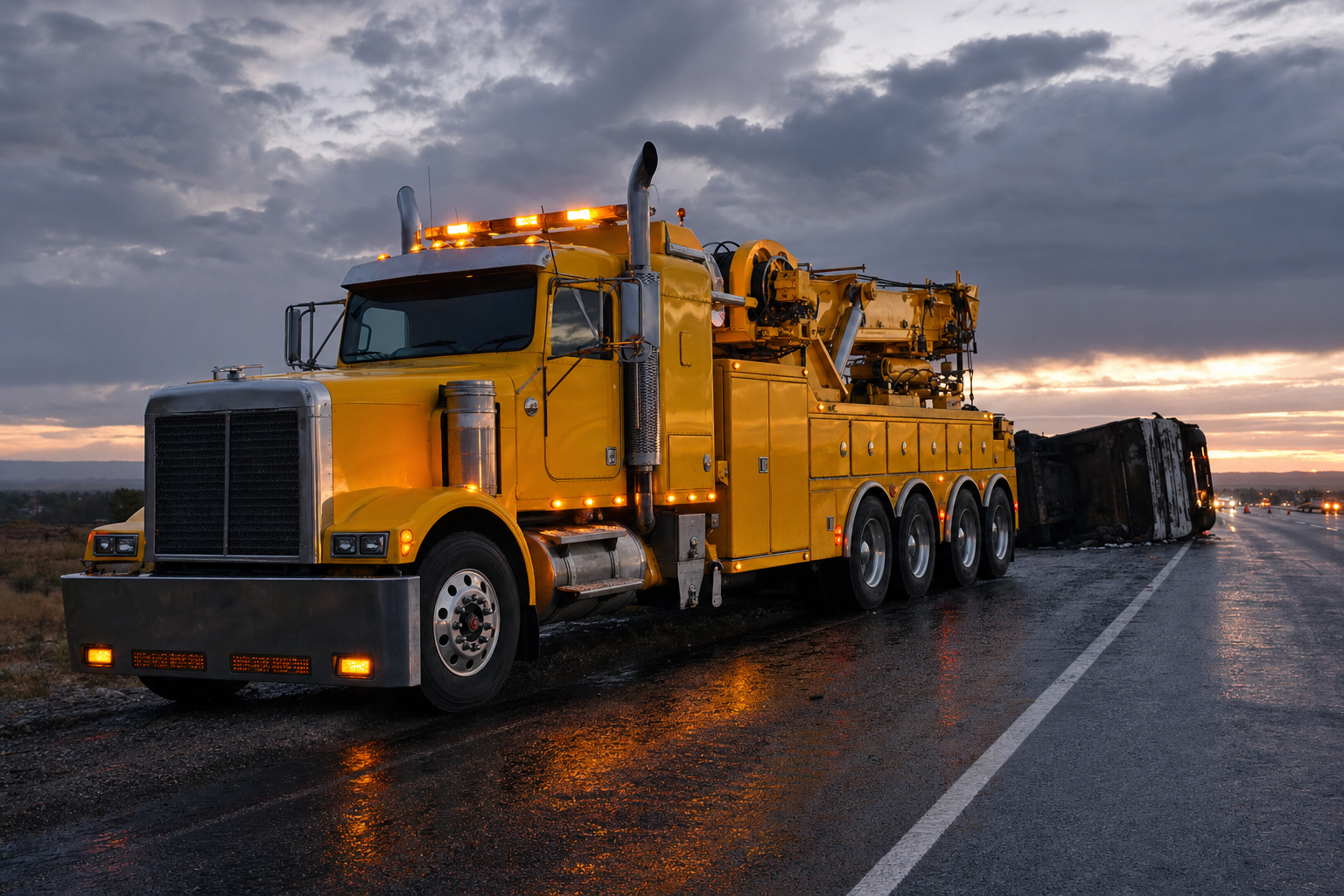
When a vehicle breaks down on a busy highway or a semi-truck jackknifes in a winter storm, the arriving tow truck—or "wrecker"—is often viewed as a mechanical savior. However, behind the flashing amber lights and the heavy-duty winches lies a complex web of rules that dictate how these machines operate. Emergency towing is not just about having a big enough engine; it is a highly regulated sector of the transport industry where physics meets policy.
Understanding why these regulations and permits exist requires looking at the road from two perspectives: that of the operator who needs to clear a hazard, and that of the government which must protect public infrastructure and safety.
Why Do Towing Rules Exist?
At its core, the regulatory environment for wreckers is designed to manage risk. A standard passenger car weighs about two tons, but a heavy-duty recovery vehicle towing a loaded cement mixer can easily exceed 80,000 pounds. This level of mass carries significant implications for road safety and civil engineering.
Protecting the Pavement
Roads and bridges are designed to withstand specific weight thresholds. If a vehicle exceeds these limits, it doesn't just wear down the asphalt; it can cause structural fatigue in bridges or "rutting" in the road surface. Regulations ensure that when a wrecker performs a recovery, it doesn't leave the infrastructure in worse shape than the accident it was called to clear.
Ensuring Public Safety
A "combination vehicle"—the tow truck plus its "cargo" (the disabled vehicle)—behaves differently than a standard truck. Braking distances increase, the center of gravity shifts, and the turning radius expands. Permits and regulations ensure that the equipment being used is rated for the task and that the driver has the necessary expertise to handle the increased load.
The Factors That Shape the Rules
When authorities determine whether a tow truck needs a special permit or must follow specific regulations, they look at several key factors. These aren't just arbitrary numbers; they are based on the physical realities of moving heavy objects.
Gross Vehicle Weight
The most significant factor is almost always the gross vehicle weight. This is the total weight of the tow truck, the disabled vehicle, and all equipment on board. Most jurisdictions have a "threshold" weight. If the combination stays under this limit, the operator might only need to follow standard commercial vehicle rules. Once they cross that threshold, they enter the realm of specialized permits.
Axle Weight and Weight Distribution
It isn't just about the total weight; it’s about how that weight is distributed across the road. A massive wrecker might have three or even four axles in the rear to spread out the load. Regulations often specify a maximum weight per axle or "axle group." If a disabled vehicle is so heavy that it puts too much pressure on the tow truck's rear axles, the operator may need a specific overweight permit to legally move it, even in an emergency.
Width and Length (Oversize Loads)
Sometimes the challenge isn't the weight, but the size. A wrecker towing a wide-body bus or a piece of construction equipment might exceed the standard lane width. These "oversize" combinations are subject to regulations that dictate which roads they can use and whether they require "pilot cars" or "escort vehicles" to warn other drivers.
Emergency vs. Non-Emergency Status
The "Emergency" in emergency towing often acts as a regulatory trigger. In many regions, wreckers are granted certain "exemptions" when they are clearing a hazard from a travel lane. These rules exist because a heavy truck sitting in the middle of an interstate is a high-risk obstacle. Authorities may allow a wrecker to temporarily exceed certain weight limits just to get the wreckage to the nearest safe exit, whereas a planned tow of a functional vehicle would require a formal permit.
Regulations vs. Permits: What’s the Difference?
In the transport world, people often use the terms "regulation" and "permit" interchangeably, but they serve different roles.
- Regulations are the permanent rules of the road. They are always in effect. For example, a regulation might state that all wreckers must have secondary safety chains or specific types of reflective tape. In some data snapshots of the industry, you may see a count of zero specific regulations. This often indicates that the industry is governed by broader, existing transportation laws rather than a separate, standalone "tow truck code."
- Permits are essentially "special permissions" to bypass a regulation. If the regulation says no vehicle over 80,000 pounds can cross a certain bridge, an overweight permit is the document that allows a specific wrecker to do so under controlled conditions.
In some jurisdictions, the count of specialized wrecker permits is zero because the state handles these through "blanket" commercial permits or law enforcement discretion during an active scene. This lack of a specific "wrecker permit" category doesn't mean there are no rules; it means the rules are integrated into the wider framework of heavy haulage and public safety.
The Regional Landscape
The rules for wreckers can change the moment a driver crosses a state or provincial line. This regional breakdown is one of the biggest challenges for long-distance recovery operators.
One region might prioritize "clear-lane" policies, where the primary goal is moving the obstruction as fast as possible, leading to fewer permit requirements at the scene. Another region might have older bridge infrastructure, leading to a much higher volume of weight-based regulations and the need for frequent, specific permits.
Operators must be aware of these regional differences, as what is a legal tow in one county might result in a significant fine or an impounded vehicle in the next. These differences are usually driven by:
- Geography: Mountainous regions have different braking and weight requirements than flat coastal plains.
- Infrastructure Age: Older cities often have tighter weight restrictions on surface streets.
- Traffic Density: Highly urbanized areas may have stricter time-of-day regulations for when heavy tows can occur.
A Balanced Approach to Safety
The goal of the regulatory environment for emergency towing is to strike a balance. On one hand, the public needs accidents cleared quickly to prevent secondary crashes and traffic jams. On the other hand, the sheer size and weight of recovery vehicles pose their own risks if left unchecked.
By focusing on factors like gross vehicle weight, axle distribution, and vehicle dimensions, the rules ensure that the "tow" doesn't become a bigger problem than the "accident." For the informed general public, understanding these factors helps illuminate the complexity of the work that happens behind the scenes every time a heavy wrecker rolls out to help a traveler in need. While the paperwork—the permits and the regulatory compliance—is invisible to most, it is the foundation that keeps the roads safe and the economy moving.