Navigating the Road: Understanding Safety and Overhang for In-Tow Units
5 min read
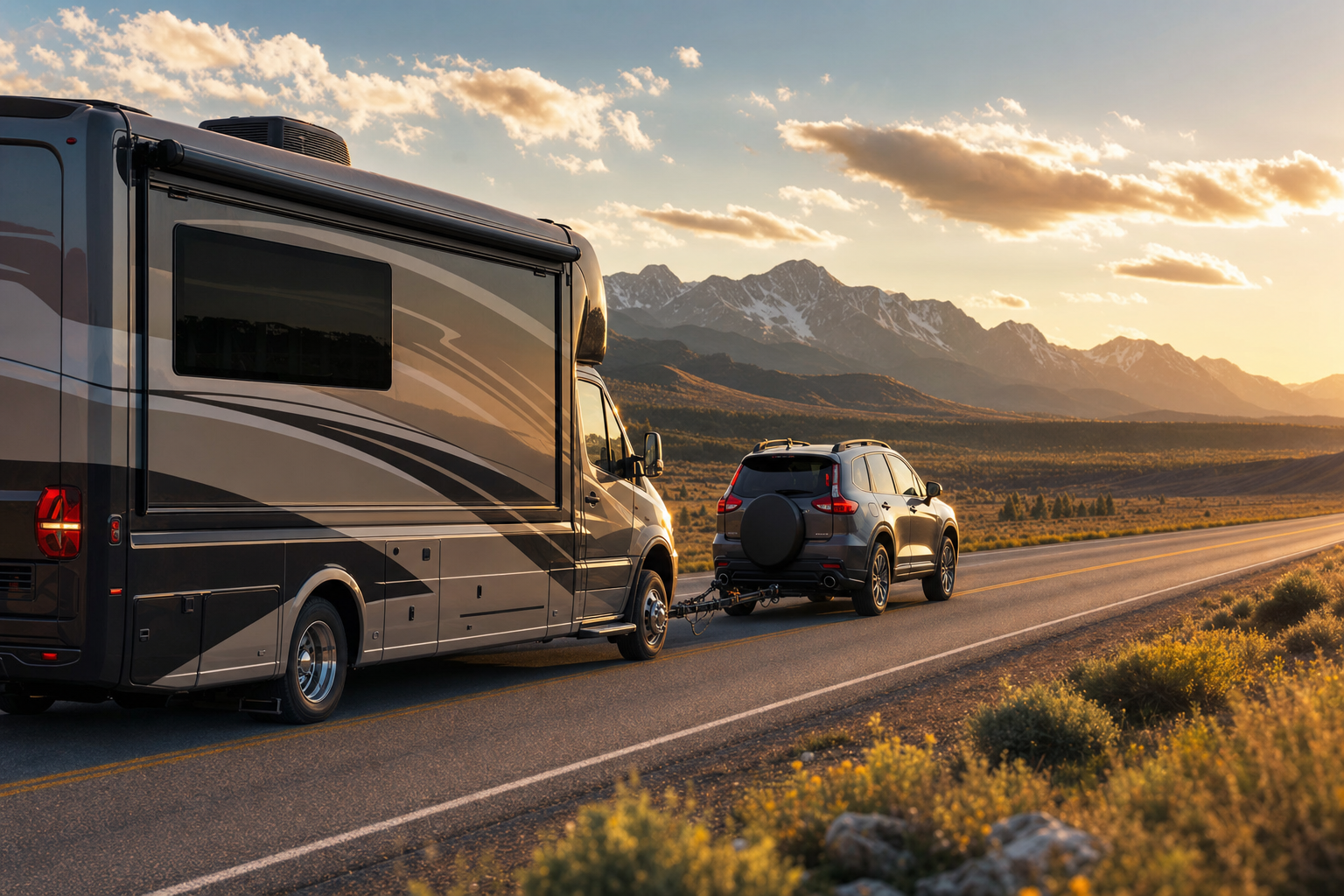
When you see a large motorhome cruising down the highway with a small SUV trailing closely behind, or a heavy-duty truck pulling a specialized piece of equipment on a tow bar, you are looking at an "in-tow" unit. In the world of transport, these setups represent a unique intersection of physics, safety engineering, and jurisdictional law.
While many transport categories are governed by a dense web of specific permits and standalone regulations, the landscape for in-tow units—specifically regarding their safety inspections and physical dimensions—is often characterized by its integration into broader rules of the road. In fact, current authoritative data shows zero standalone regulations and zero specific permits for these units in this focused category. This lack of a "master list" doesn't mean the road is a free-for-all; rather, it indicates that the safety of in-tow units is managed through the fundamental vehicle codes of each home jurisdiction and the physical laws of the road.
Understanding why these rules exist and how they are applied is essential for anyone moving equipment or vehicles across state or provincial lines.
The Logic of the Home Jurisdiction
One of the most common questions for those operating in-tow units is: "Whose rules do I follow?" This brings us to the concept of the home jurisdiction. This is the state, province, or territory where the vehicle is registered.
The reason regulations often seem "invisible" in centralized databases is due to the principle of reciprocity. Most jurisdictions have long-standing agreements to honor the safety standards and registrations of a vehicle's home base. For example, if your home jurisdiction requires a specific annual safety inspection for a towed vehicle, other jurisdictions generally accept that inspection as valid proof of roadworthiness.
Why Home Inspections Matter
Safety inspections are not just bureaucratic hurdles; they are designed to prevent mechanical failures that could turn a routine trip into a catastrophe. When a vehicle is being towed—especially "flat towing" where all four wheels are on the ground—it is subjected to different stresses than when it is being driven.
Inspectors typically look at:
- The Towing Interface: Ensuring the tow bar or hitch is rated for the actual weight of the unit.
- Braking Systems: Many jurisdictions require supplemental braking systems for in-tow units that exceed a certain weight, ensuring the towed vehicle can help stop itself rather than pushing the lead vehicle.
- Lighting and Signaling: Verification that the brake lights and turn signals on the towed unit are synchronized with the lead vehicle.
Because these requirements are baked into the standard vehicle code of the home jurisdiction, they don't always appear as "extra" permits. They are simply the baseline requirements for being allowed on the road.
The Physics of the Rear Overhang
Beyond the mechanical health of the vehicle, the physical dimensions of the in-tow setup are strictly monitored. The most critical calculation in this area is the rear overhang. This refers to the distance between the center of the rear-most axle of the towed unit and the very end of the unit (or any load it is carrying).
The Danger of the "Tail Swing"
You might wonder why authorities care if a vehicle sticks out a few extra feet. The answer lies in the geometry of a turn. When a vehicle turns, the portion behind the rear axle swings in the opposite direction of the turn. This is known as "tail swing."
If a rear overhang is too long, a driver making a sharp right turn at an intersection might inadvertently swing the rear of their towed unit into a pedestrian on the sidewalk or a car in the adjacent lane. By regulating the maximum allowable overhang, authorities ensure that the swept path of the vehicle remains predictable and safe for everyone sharing the road.
Weight Distribution and Stability
Overhang also dictates how weight is distributed across the vehicle’s frame. A long overhang acts as a lever. If too much weight is concentrated at the very back of a towed unit, it can lift the front of that unit, reducing the effectiveness of its tires and potentially causing "trailer sway." This instability is one of the leading causes of highway accidents involving towed vehicles.
To manage this, regulations typically focus on three factors:
- Gross Vehicle Weight: The total weight of the towed unit must stay within the limits that the frame and axles can support.
- Overall Combination Length: The total length of the towing vehicle plus the towed unit must fit within standard lane and intersection geometries.
- The Overhang Ratio: Many regions limit the rear overhang to a percentage of the wheelbase (the distance between the front and rear axles) to ensure the vehicle remains balanced.
Why There Are No "Extra" Permits
As noted in the current data, there are zero specific permits required for these safety and overhang factors in this category. This is an important distinction for the informed traveler or transport operator.
Usually, a "permit" is required when you intend to break the standard rules—such as moving an oversized load or an exceptionally heavy piece of machinery. For standard in-tow units, such as a car behind an RV or a small utility trailer, you are expected to operate within the "legal dimensions" set by the highway code.
When you stay within these dimensions (standard width, height, and length) and your home jurisdiction's safety inspection is up to date, you are operating under "exempt" or "standard" status. The rules are active, but a special piece of paper is not required to prove you are following them—your valid license plate and registration act as your "permit" to use the public infrastructure, provided you remain within the law.
Staying Compliant Without a Map
Because there isn't a single master list of permits for in-tow safety, the responsibility falls on the operator to understand the baseline. If you are preparing for a long-haul trip with an in-tow unit, keep these practical points in mind:
- Check Your "Home" Rules First: Ensure your vehicle meets the safety inspection requirements of your registration state. If your home state requires a specific braking system for towed loads over 3,000 pounds, ensure you have it.
- Measure Your Swing: Before hitting the road, measure your rear overhang. If it exceeds four feet, many jurisdictions require you to at least attach a red safety flag or a light to the end of the projection, even if a formal permit isn't required.
- Respect the Gross Weight: Never exceed the gross vehicle weight rating of either the towing vehicle or the in-tow unit. Overloading is the fastest way to invite a roadside inspection.
In summary, the "zero permits and zero regulations" found in specific transport databases for this category isn't a sign of neglect. It is a sign of a mature regulatory system that relies on the foundational safety laws of the home jurisdiction and the universal principles of vehicle physics. By focusing on mechanical integrity and mindful dimensions, operators can ensure they move safely across any border, permit or no permit.