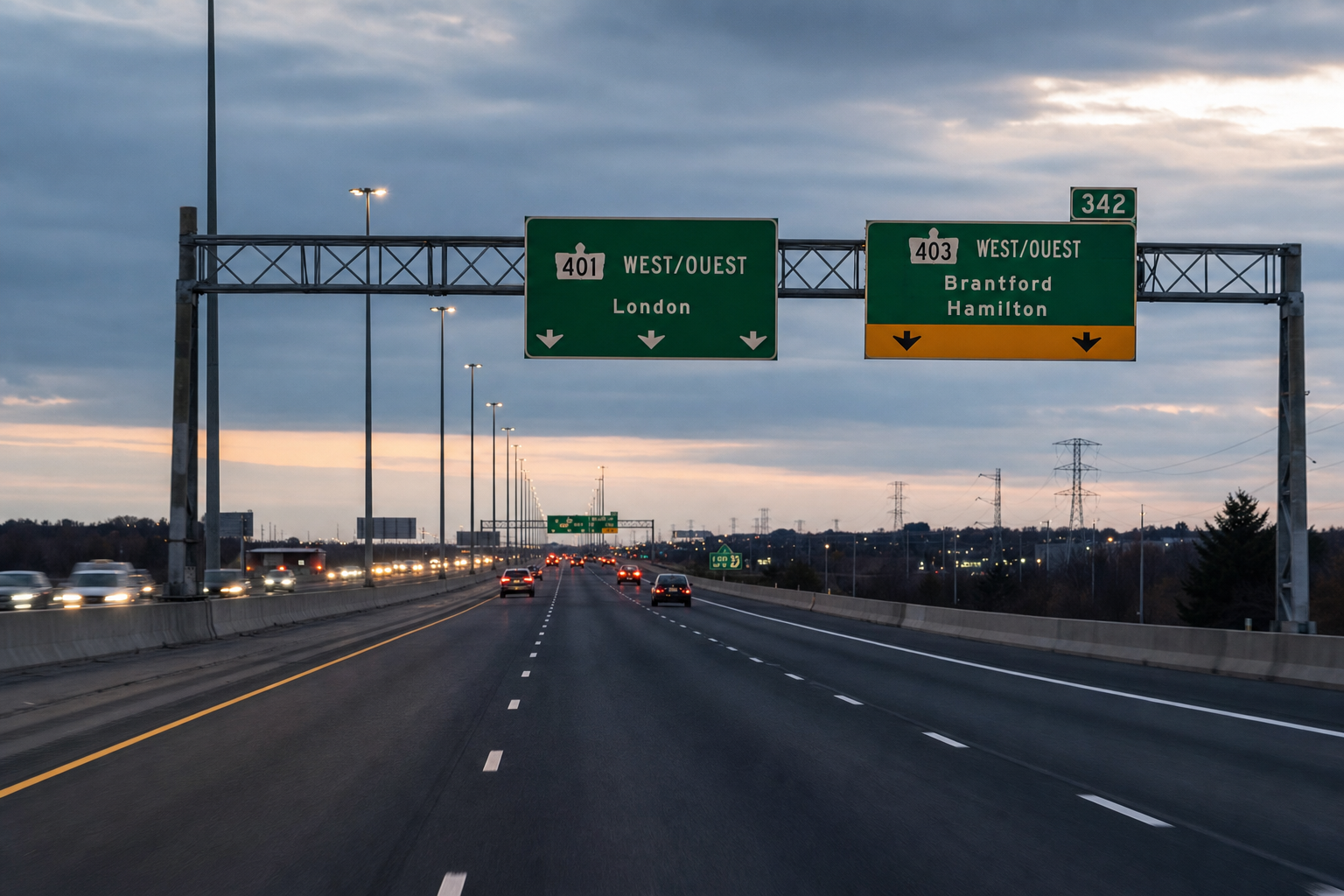
Understanding Restricted Towing Zones: A Guide to the GTA Highway Pilot Program
5 min read
If you have ever been stranded on the side of a busy highway in the Greater Toronto Area (GTA), you know how stressful the situation can be. Between the rushing traffic and the uncertainty of when help will arrive, the last thing a driver needs is more confusion. This is precisely why the province introduced the Restricted Towing Zone pilot program.
By designating specific sections of Ontario’s busiest highways as restricted zones, the government aims to bring order to what was once a chaotic and sometimes dangerous industry. This article explores the factors that shape these regulations, why the rules exist, and how the program affects your experience on the road.
What is a Restricted Towing Zone?
A Restricted Towing Zone (RTZ) is a defined section of a provincial highway where only authorized towing companies are permitted to provide assistance. In these zones, "chase" towing—where multiple tow trucks race to the scene of an accident to secure a job—is strictly prohibited.
Currently, this program is a pilot project. Because it is an experimental framework designed to test new ways of managing traffic flow and safety, the standard database reflects zero traditional regulations and zero individual permits. This doesn't mean the zones are "lawless"; rather, it indicates that the program operates under a specialized provincial mandate rather than a collection of static, permanent statutes. The rules are governed by specific contracts and operational requirements that ensure only vetted, professional operators are on the scene.
Why These Rules Exist: Safety and Efficiency
The primary motivation behind restricted towing isn't about limiting competition; it’s about public safety. Before the pilot began, the towing industry in the GTA was often described as the "Wild West." When a collision occurred, tow truck drivers would often speed to the scene, sometimes driving on shoulders or weaving through traffic to arrive first.
Ending the "Race for the Hook"
The "race for the hook" created significant safety hazards for emergency responders and the public. By assigning a single authorized company to a specific zone, the province eliminates the incentive for tow trucks to speed to a scene. One authorized responder is dispatched, allowing for a much more controlled and professional environment.
Reducing Secondary Collisions
Every minute a disabled vehicle sits on the shoulder of a highway like the 401, the risk of a secondary collision increases. Rapid clearance is essential. Restricted zones ensure that a truck is always nearby and ready to move the vehicle to a designated "Reporting Centre" or a safe location quickly, clearing the lanes for traffic and reducing the likelihood of further accidents.
Key Factors Shaping the Regulations
While the pilot program simplifies who can show up to help you, the regulations governing how they help are shaped by several critical factors. These determine which truck is sent and what protocols must be followed.
Location and Regional Breakdown
The GTA is home to some of the most complex highway interchanges in North America. The pilot program is currently focused on specific sections of the 400-series highways, including parts of:
- Highway 401
- Highway 400
- Highway 427
- The Queen Elizabeth Way (QEW)
The boundaries of these zones are not arbitrary. They are selected based on traffic volume, collision frequency, and the availability of safe "set-down" locations where vehicles can be moved without impeding traffic.
Gross Vehicle Weight and Equipment
Not all tow trucks are created equal. One of the most significant factors in determining the rules for a specific tow is the gross vehicle weight of the vehicle in distress.
- Light-Duty Towing: For standard passenger cars and SUVs, a light-duty truck is sufficient. The regulations for these tows focus on speed and basic safety.
- Heavy-Duty Towing: When a tractor-trailer or a bus breaks down, it requires specialized heavy-recovery equipment. The regulations for these incidents are much more stringent, often involving coordinated efforts with the Ministry of Transportation to manage lane closures and ensure the massive weight of the vehicle doesn't damage the roadway during the recovery.
Safety Protocols and Pricing
In an RTZ, the authorized companies must adhere to strict safety standards. This includes specific lighting on their trucks, background checks for their drivers, and mandatory training for working in high-speed environments. Furthermore, one of the biggest benefits to the consumer is regulated pricing. Under the pilot program, authorized towers must adhere to fixed rates, preventing the "price gouging" that has historically plagued the industry during high-stress roadside emergencies.
What This Means for the Driver
For the average driver, the most important thing to know is that if you break down or are involved in an accident within a restricted zone, you cannot call your own tow truck to come onto the highway. You must use the authorized service provider for that zone.
However, the regulations are designed to protect your rights as a consumer:
- You Still Have Choice (Later): While the authorized tow truck must move your vehicle off the highway or to a safe location, you generally retain the right to decide where your vehicle goes after it has been removed from the restricted zone (such as your preferred repair shop).
- Professional Conduct: Authorized drivers must provide you with a "Know Your Rights" document and be transparent about where your vehicle is being taken.
- Predictability: Because the counts for individual permits and independent regulations are currently centralized within this pilot framework, it creates a more predictable experience. You don't have to wonder if the truck that showed up is legal; if they are in an RTZ and dispatched by the province, they are the vetted authority.
The Future of Restricted Towing
The current "zero" count for permanent regulations and permits highlights that we are in a period of observation. The provincial government is collecting data on response times, accident clearance rates, and driver satisfaction.
As the pilot evolves, it is likely that these temporary mandates will be codified into more permanent laws. For now, the program serves as a structured experiment in how to make the GTA’s highways safer and more efficient. By understanding that these zones exist to prioritize quick clearance and transparent pricing, drivers can feel a bit more secure knowing that there is a system in place to help them when things go wrong on the road.
The Restricted Towing Zone pilot represents a shift toward a more managed, professional, and safety-oriented transportation network. While it changes how we interact with towing services, the ultimate goal remains the same: getting everyone home safely and keeping the province moving.