The Invisible Hand of the Highway: Understanding Road Traffic Monitoring and Management
5 min read
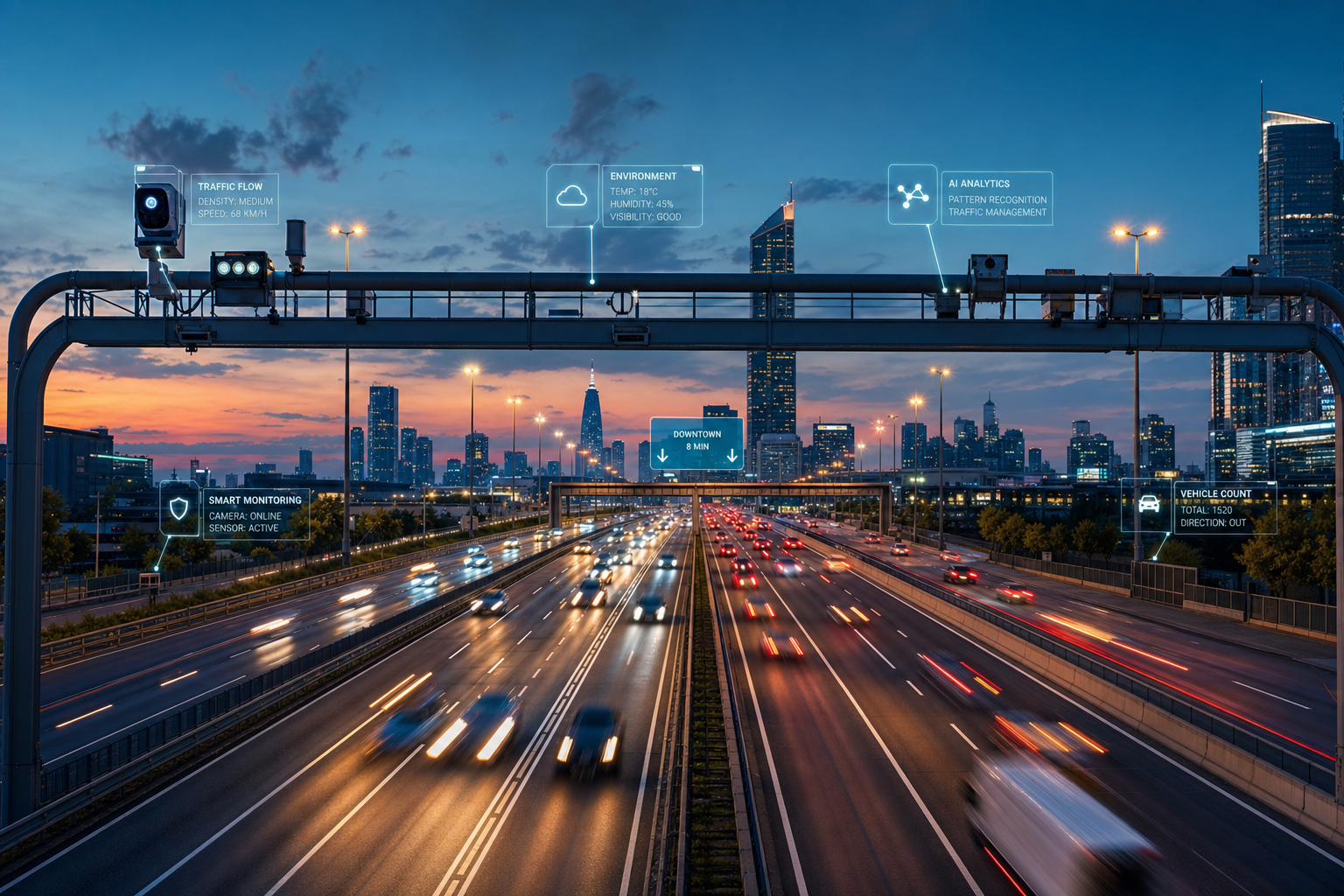
Every time you glance at a digital overhead sign warning of a "20-minute delay ahead" or check a map app to see a crimson line indicating heavy congestion, you are interacting with a sophisticated ecosystem of road traffic monitoring. It is a world of sensors, cameras, and data streams that work silently to keep millions of vehicles moving safely.
For many regulated industries, "permits" and "regulations" are the primary hurdles to clear. However, the world of real-time traffic monitoring presents a unique case study. When we look at the current authoritative landscape for this category, we find a total of 0 regulations and 0 permits drawn from the primary oversight sources. To the casual observer, this might suggest a lack of oversight. In reality, it reflects the fact that road traffic monitoring is treated more as a core public utility and an engineering discipline than a restricted commercial activity.
Understanding why the "rule count" stands at zero—and what actually governs the flow of our streets—requires a look at the factors that shape how we watch, measure, and influence vehicle movement.
The Logic of the Zero: Why "Permits" Don't Always Apply
In many sectors, a "permit" is a license granted to a private entity to perform a specific action, such as building a house or discharging treated water. In the realm of road traffic monitoring—encompassing vehicle density, speed tracking, and digital message signs—the "actor" is almost always a government agency or a highly integrated public-private partnership.
Because the monitoring of public roads is a fundamental responsibility of transportation departments, the "rules" are not typically framed as external regulations that one must apply for. Instead, they exist as internal engineering standards, data privacy protocols, and inter-agency agreements. You don't need a permit to monitor the traffic on a road you own and manage; instead, you follow rigorous technical manuals that dictate how sensors are placed and how data is communicated to the public.
Key Factors Shaping Traffic Management
Even without a traditional permit structure, several critical factors determine how monitoring systems are deployed and why certain rules exist in the background. These factors ensure that the data collected is accurate, useful, and—most importantly—safe.
1. Vehicle Density and Flow
The primary goal of monitoring is to understand how many vehicles are occupying a space at any given time. This "density" is the heartbeat of traffic engineering. High density often triggers automated responses, such as adjusting the timing of ramp meters or updating digital signs to suggest alternate routes. The "rule" here isn't a legal statute, but a mathematical one: once density hits a certain threshold, flow breaks down. Engineers use this factor to determine where to invest in expensive hardware like overhead radar or ground-loop sensors.
2. Speed and Congestion Levels
Speed monitoring is perhaps the most visible form of traffic oversight. While law enforcement uses speed for "regulations" (tickets), traffic managers use speed as a diagnostic tool.
- Safety: Real-time speed data allows systems to detect accidents before a 911 call is even placed. A sudden drop from 65 mph to 0 mph triggers an immediate alert.
- Congestion Management: By monitoring speeds across various segments of a highway, agencies can calculate "travel time reliability." This factor determines when "variable speed limits" might be implemented to prevent the "accordion effect" of stop-and-go traffic.
3. Digital Message Sign (DMS) Status
The signs that tell you about road work or missing persons (Amber Alerts) are governed by strict communication standards. The factor here is "driver distraction versus utility." Regulations at the federal and state levels (often found in manuals for uniform traffic control devices) dictate exactly what can be shown on these signs. You will rarely see advertisements on highway DMS because the primary factor in their regulation is the preservation of driver focus and the clarity of emergency information.
4. Vehicle Type and Weight
While our data shows zero general permits for "monitoring," there are specific rules regarding the types of vehicles being tracked. Sensors that measure gross vehicle weight while a truck is in motion (weigh-in-motion technology) are highly regulated to ensure the protection of bridge infrastructure and pavement longevity. The "factor" here is the physical impact of heavy loads on public assets.
The Regional Breakdown: A Patchwork of Standards
Traffic monitoring doesn't look the same in a rural mountain pass as it does in a dense metropolitan center. The factors determining the "rules of engagement" change based on the environment:
- Urban Hubs: In cities, the focus is on "multimodal" movement. Monitoring isn't just about cars; it’s about how vehicles interact with buses, cyclists, and pedestrians. The complexity here leads to more stringent data-sharing agreements between different city departments.
- Interstate Corridors: On long stretches of highway, the focus shifts to incident management and weather response. Rules here are shaped by the need for "interoperability"—ensuring that a sensor in one state can talk to the traffic center in the neighboring state.
The Role of Data Privacy
If there is one area where "regulation" is beginning to catch up with technology, it is in the realm of data privacy. Modern traffic monitoring often uses license plate recognition or Bluetooth MAC address sniffing to track how long it takes a "device" (a car or a phone) to get from Point A to Point B.
While there may be zero "permits" required to install these sensors, the use of the resulting data is governed by increasingly strict privacy laws. These rules ensure that while a transportation department knows "a vehicle" passed through an intersection, they aren't necessarily storing the identity of "the driver" without a specific law enforcement or tolling justification.
Educational Outlook: A Changing Landscape
The "zero permits, zero regulations" status we see today is a snapshot of a system that has historically been managed by the public sector for the public good. However, as we move toward a future of autonomous vehicles and smart cities, this may change.
We might see the emergence of permits for private companies wanting to access "infrastructure-to-vehicle" (I2V) data streams, or regulations regarding how private mapping companies utilize public sensor data. For now, the "rules" of road traffic monitoring remain embedded in the bedrock of civil engineering and public safety protocols.
The lack of formal permits doesn't mean a lack of order; it means the system is designed to be a seamless, integrated part of the road itself. As an informed traveler, knowing that these systems are shaped by factors like density, speed, and safety—rather than just bureaucratic whim—can help you better understand the digital signals that guide you home.