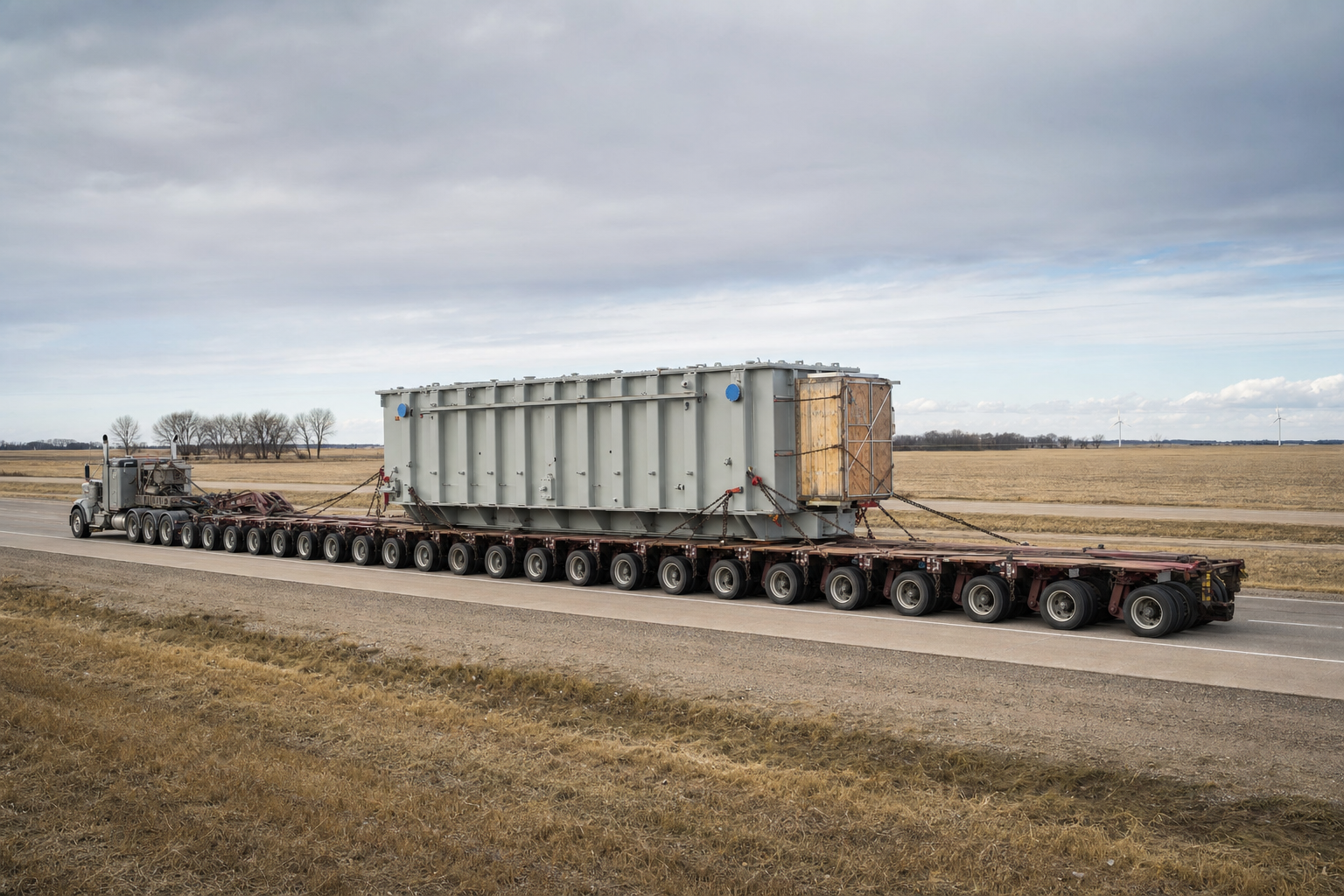
Heavy Haulers and the Border: Understanding High-Capacity Vehicle Permits
6 min read
In the world of logistics and regional commerce, the term "train" often brings to mind locomotives pulling rows of steel cars along a track. However, in the context of Great Lakes regional transport—specifically along the corridor between Michigan and Indiana—the term takes on a different meaning. Here, "trains" often refer to high-capacity vehicle configurations: massive, multi-axle trucks designed to carry weights far exceeding the standard limits found on most American interstates.
These specialized vehicles are essential for moving heavy raw materials like steel, machinery, and agricultural products. Yet, because of their immense size and weight, they cannot simply drive anywhere they please. Their movement is governed by a complex framework of engineering concerns, infrastructure safety, and regional economic agreements.
To understand why this niche area of transport is managed the way it is, we must look at the factors that determine when and how these vehicles are allowed to operate. Interestingly, when looking at the broad database of general transport rules for this specific Michigan-to-Indiana niche, there are currently zero standard regulations and zero general permits listed from authoritative sources. This doesn't mean the "wild west" prevails; rather, it indicates that these operations are so specialized that they often fall under highly specific, route-contingent agreements rather than a one-size-fits-all regulatory bucket.
The Engineering Behind the Rules
The primary reason any regulation exists for high-capacity vehicles is the protection of physical infrastructure. Roads and bridges are designed with specific tolerances in mind. When a vehicle exceeds those tolerances, the damage isn't just incremental; it can be exponential.
Gross Vehicle Weight
The most obvious factor is the gross vehicle weight. While a standard semi-truck on a federal highway is typically capped at 80,000 pounds, high-capacity configurations in this region can sometimes reach double that weight. The "why" behind the regulation is simple: gravity. The more a vehicle weighs, the more stress it puts on the sub-base of the road and the structural components of bridges.
Axle Weight and Distribution
Perhaps more important than total weight is how that weight is distributed. This is why "Michigan trains" are famous for having a high number of axles—sometimes 11 or more. By spreading the gross vehicle weight across more axles, the pressure exerted on a single point of the pavement (the "footprint") is reduced.
Regulators look at axle spacing and the weight carried by each individual axle to ensure that while the truck is heavy, it isn't "punching through" the asphalt. If the weight is distributed correctly, a 160,000-pound truck can actually be less damaging to a road surface than a poorly loaded 80,000-pound truck with fewer axles.
The Michigan-Indiana Corridor
The geography of the Michigan border and specific points in Indiana creates a unique regulatory environment. Michigan has historically allowed much higher weight limits than its neighbors. However, once a truck crosses the state line into Indiana, it enters a jurisdiction with different infrastructure standards and legal limits.
To facilitate trade without destroying Indiana’s roads, specific "extra-heavy duty" highways and corridors have been designated. These are specific routes—often near the industrial hubs of Northwest Indiana—that are engineered to handle the overflow of high-capacity traffic coming from the Michigan border.
The fact that current data shows zero general regulations or permits for this category suggests that these permissions are not "off-the-shelf." Instead, they are likely handled through:
- Designated Route Agreements: Only specific roads are reinforced to handle these weights.
- Site-Specific Permissions: Permits may be tied to a specific point of origin and a specific destination, rather than being a general license to roam the state.
- Grandfathered Provisions: Some rules are unique to the history of the region’s steel and automotive industries and are managed through specialized interstate compacts.
Factors That Shape Permit Requirements
When authorities do evaluate these high-capacity configurations for travel, several key factors determine whether a permit is granted and what conditions are attached to it.
Bridge Health and "Bridge Formulas"
Every bridge has a "rated capacity." Engineers use a mathematical "bridge formula" to determine if a vehicle's weight and axle spacing will cause structural fatigue. For high-capacity vehicles, a permit might be denied not because the road can't handle it, but because a single bridge along the route is nearing the end of its life or was built to an older standard.
Pavement Durability and Seasonal Changes
The time of year matters. During the "spring thaw," the ground beneath the pavement becomes saturated with water and loses its load-bearing capacity. During these times, even a vehicle that usually qualifies for a permit might be restricted to prevent "frost heaves" or catastrophic pavement failure.
Safety and Braking Distance
Heavy loads require significantly more energy to stop. Regulators must consider the mechanical capabilities of the vehicle. High-capacity permits often require specific braking systems, increased horsepower-to-weight ratios, and specialized driver certifications. The goal is to ensure that these "trains" can navigate traffic safely without becoming a runaway hazard on a downgrade.
Why the Data Shows "Zero" General Rules
It may seem counterintuitive that a category as significant as "high-capacity vehicle configurations" would have zero regulations and zero permits listed in a general authoritative database. However, in the world of specialized transport, "zero" often points toward a highly controlled environment.
This suggests that the movement of these vehicles is not governed by "general" permits that any driver can download and fill out. Instead, it implies a system of high-level oversight where every move is calculated. When dealing with weights that can double the federal limit, the "rules" are often the result of direct engineering studies and specific legislative carve-outs for the Michigan-Indiana industrial corridor.
In this context, the lack of general rules is actually a sign of how seriously the authorities take these configurations. They are not treated as "just another truck"; they are treated as specialized industrial equipment that requires a bespoke approach to safety and infrastructure protection.
A Balance of Interests
The regulations (and the lack of general, automated permits) reflect a delicate balance between economic necessity and public safety. The region depends on the ability to move massive quantities of material efficiently. If these high-capacity vehicles were banned, it would take two or three standard trucks to move the same load, increasing traffic congestion, fuel consumption, and carbon emissions.
On the other hand, the public expects that roads will stay smooth and bridges will remain safe. By focusing on gross vehicle weight, axle distribution, and specific corridor routing, authorities ensure that the region’s "trains" can keep moving without placing an undue burden on the taxpayer-funded infrastructure.
For those looking to operate in this space, the lesson is clear: high-capacity transport is a world of specifics. While there may be no broad, general permits that apply to everyone, the underlying factors of weight, physics, and geography govern every mile of the journey from the Michigan border into Indiana. Understanding these factors is the first step in appreciating the invisible engineering that keeps the Great Lakes economy rolling.
Disclaimer: This article is intended for educational and informational purposes only. It does not constitute legal advice or formal compliance guidance. Regulatory requirements for heavy hauling and high-capacity vehicles are subject to change and vary significantly by specific route and jurisdiction. Always consult with state transportation departments or legal professionals for specific permitting needs.