The Science of the Scale: Understanding Heavy Vehicle Weights and Dimensions
5 min read
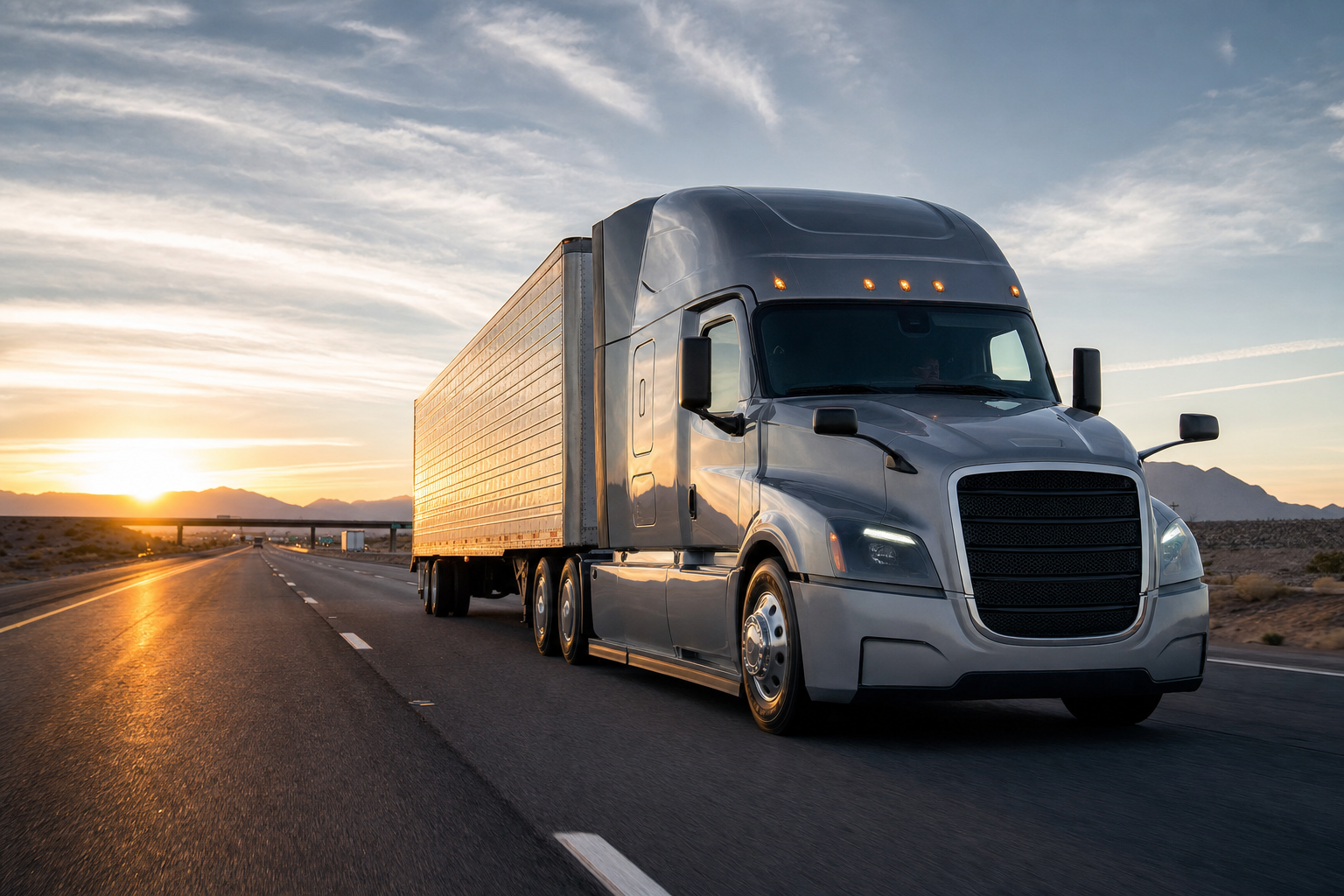
When you see a massive tractor-trailer cruising down the interstate or a specialized logging truck navigating a winding secondary road, you are looking at a complex feat of engineering. However, the physical truck is only half the story. The other half is a rigorous framework of 236 distinct rules—comprising 177 regulations and 59 permits—designed to ensure that these vehicles don’t inadvertently destroy the very infrastructure they rely on.
These rules, drawn from 47 different authoritative sources across North America, are not arbitrary. They are a delicate balancing act between the needs of commerce and the physical limits of concrete, steel, and asphalt. Understanding why these rules exist requires looking at the factors that shape them, from the number of axles on a trailer to the specific week of the year.
Why We Regulate: Safety and Infrastructure
The primary goal of weight and dimension regulations is twofold: protecting the structural integrity of roads and bridges and ensuring the safety of all road users.
A road surface is essentially a flexible or rigid membrane. If a vehicle is too heavy, or if that weight is concentrated in too small an area, it can crack the pavement or create deep ruts. Bridges are even more sensitive; they are designed to support specific "load ratings," and exceeding these can lead to catastrophic failure.
To manage this, the regulatory environment is heavily weighted toward prohibitions. Out of the 236 rules in this category, 140 are "must not" directives—explicit bans on certain weights or sizes—while 85 are "must" requirements that dictate how a vehicle must be configured to stay legal.
The Weight Factor: Spreading the Load
The most common factor in these regulations is the total weight of the vehicle and its load, which appears in 14 different rules. However, "total weight" is a bit of a simplification. What matters most to a bridge engineer is not just how much a truck weighs, but how that weight is distributed.
The Bridge Formula
This is where the "Bridge Formula" comes into play. It is a mathematical equation used to determine the legal weight for any group of axles. The formula relies on three key factors:
- The number of axles in a group: Spreading weight across more axles reduces the pressure on any single point of the road (this factor appears in 13 rules).
- The distance between the extremes of an axle group: A longer distance between the first and last axle of a group helps distribute the weight over a larger section of a bridge (also appearing in 13 rules).
- The total number of axles on the entire vehicle: This determines the overall "footprint" of the truck's weight (13 rules).
By requiring a specific arrangement and number of axles, regulators ensure that a 80,000-pound truck doesn't exert more pressure on a bridge than it was designed to handle.
Dimensions: Fitting the Physical World
While weight protects the road surface, dimension regulations—covering width, height, and length—protect the space around the road.
- Height: Total height from the road surface (a factor in 6 rules) is strictly regulated to prevent vehicles from striking overpasses, power lines, or tunnel ceilings. In some cases, even the vertical height of a specific container is measured.
- Width: The total width of the vehicle (5 rules) is limited by the width of standard traffic lanes. A vehicle that is too wide risks side-swiping oncoming traffic or hitting roadside infrastructure.
- Length: The overall length of the vehicle combination (9 rules) and the length of a single semitrailer unit (3 rules) affect a vehicle's "off-tracking"—how much the trailer cuts the corner during a turn. Longer vehicles require wider intersections and more space to maneuver safely.
The Role of the Roadway
Not all roads are created equal. A rule that applies to a massive Interstate highway might not apply to a local collector road. The type of highway system (9 rules) and the designated class of the highway—such as arterial, collector, or local (6 rules)—often determine what a vehicle is allowed to carry.
Engineers also look at the pavement construction itself. Whether a road uses rigid or flexible pavement, and the type of foundation underneath, can trigger different weight reductions. This is especially true when considering specific bridge design ratings. If a bridge has a low capacity rating (such as an H15-44 classification), it may trigger an immediate restriction for certain heavy configurations.
The Impact of the Seasons
One of the most fascinating aspects of transport regulation is its relationship with the weather. In many regions, the ground beneath the road freezes in the winter and thaws in the spring. During the spring thaw, moisture trapped under the pavement can make the roadbed soft and highly susceptible to damage.
Because of this, specific seasonal periods (6 rules) and spring frost weight restrictions (3 rules) are used to temporarily lower the weight limits. During these "ban" or "post" periods, a road that could normally handle a heavy log truck might be restricted to much lighter loads to prevent the pavement from being crushed.
Regional Variations
Weights and dimensions are not governed by a single entity. Instead, they are a patchwork of national, state, and provincial rules.
- New Hampshire leads the regional count with 21 regulations and 4 permits, followed closely by Missouri (17 regulations, 5 permits) and Michigan (18 regulations).
- At the federal level, the United States has 23 regulations and 2 permits, while Canada maintains 11 regulations and 1 permit.
- Other regions like Saskatchewan (4 regulations, 9 permits) and Alberta (6 regulations, 5 permits) show a higher reliance on the permit system to manage heavy loads.
Permits are essential because they allow for "Multi-Trip Operations" or the movement of "Overweight Vehicles" that cannot be broken down into smaller loads—such as massive industrial turbines or specialized construction equipment.
Special Categories and Exemptions
The nature of the cargo often changes which rules apply. For example, specific regulations exist for:
- Forest Products: Log trucks and log truck tractors (6 rules) often have different axle requirements due to the nature of their work in rugged terrain.
- Livestock: Hauling live animals can trigger different considerations for vehicle stability and stops.
- Public Safety: Vehicles designed for firefighting are often exempt from certain weight and dimension regulations to ensure they can reach an emergency as quickly as possible.
- Agricultural Equipment: Farm equipment and grain augers often fall into specialized classifications with their own sets of rules.
Conclusion
The 236 rules governing weights and dimensions are more than just a legal hurdle for truckers; they are the "operating manual" for our highway infrastructure. By accounting for the physics of axle spacing, the fragility of thawing roads, and the height of overpasses, these regulations ensure that goods keep moving without destroying the roads they travel on.
Whether it's the 14 rules focused on gross vehicle weight or the specific bridge ratings that protect our crossings, each regulation serves to keep the transport network safe, functional, and sustainable for everyone.