Heavy Duty: Understanding the Rules for Overweight Specialized Vehicles
5 min read
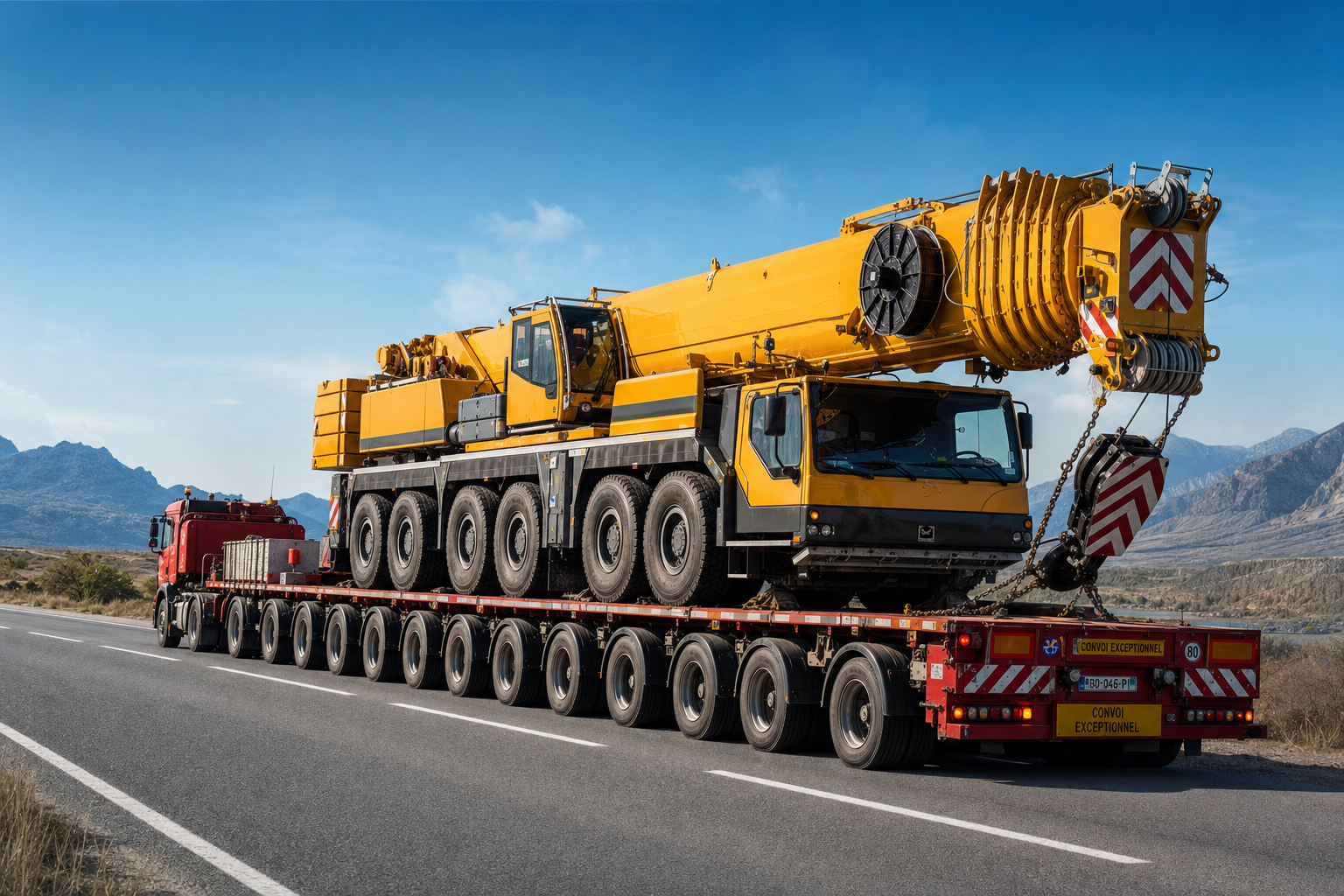
When most people think of heavy trucking, they imagine a standard semi-trailer hauling consumer goods across the country. However, there is an entire class of vehicles that doesn't fit the standard mold. These are specialized machines—giant mobile cranes, oilfield service rigs, and heavy construction equipment—where the machinery is permanently mounted to the chassis. Because these vehicles are built for a specific purpose rather than for carrying a variable load, they often naturally exceed the weight limits set for standard traffic.
Navigating the rules for these vehicles is a complex task. Across different jurisdictions, there are 83 distinct rules (comprising 2 broad regulations and 81 specific permits) that dictate how these vehicles can move. Understanding why these rules exist and how they are applied is essential for anyone involved in heavy industry, infrastructure, or logistics.
Why Specialized Weights Require Permits
In the world of transportation, weight is the enemy of infrastructure. Roads and bridges are engineered to withstand specific pressure levels. When a vehicle exceeds those levels, it causes exponentially more wear and tear on the pavement and can even risk the structural integrity of bridges.
For standard trucks, the solution is simple: don't load the trailer so heavily. But for a vehicle like a mobile crane, the "load" is the vehicle itself. You cannot simply remove a piece of the crane to make it lighter for the drive. This is why the vast majority of the rules—81 out of 83—are structured as permits rather than general regulations.
A permit is essentially a "conditional "yes." It allows a vehicle that technically breaks the standard rules to operate, provided the owner meets specific safety and engineering criteria. These permits are backed by 11 authoritative sources that ensure the rules remain consistent with modern engineering standards.
The Key Factors That Shape the Rules
What determines whether a service rig can move on a specific highway? It isn't just about the number on a scale. Authorities look at several critical factors to decide if a vehicle is safe for the road.
Standard Truck Configurations
The most common factor, appearing in 35 of the rules, is the specific identifier or code for the truck's configuration. Think of these as blueprints or "standard drawings." Instead of measuring every single vehicle from scratch, regulators use standardized models. If your vehicle matches a recognized configuration—such as a specific type of four-axle crane—the permit process is streamlined because the road impacts of that specific design are already known.
Axle Grouping and Types
Spreading weight is the most effective way to protect a road. A 40,000-pound weight resting on a single axle will crush the asphalt, but the same weight spread across four axles might be perfectly safe. This is why the type or grouping of the vehicle's axles is a factor in 32 of the rules.
Authorities look at how many axles are present and how they are grouped (such as tandems or tridems). The goal is to ensure that no single point of contact with the road is bearing more weight than the pavement can handle.
Permanently Mounted Equipment
Six of the rules specifically address whether the vehicle is equipped with permanently mounted equipment. This is a crucial distinction. A truck carrying a heavy block of concrete is a "load" that can be reduced. A truck that is a crane is a single unit. Rules for these vehicles are often more flexible regarding weight, but more rigid regarding where and when they can travel, because the weight is "non-reducible."
Weight Calculations and Totals
Finally, the "how much" matters. Rules frequently trigger based on three specific weight-related metrics:
- Gross Vehicle Weight: The total mass of the vehicle and everything on it.
- Weight Over Legal Limits: The specific amount of "excess" weight by which the vehicle exceeds standard limits.
- Vehicle Classification: The official category of the vehicle, which determines which set of permits it is eligible for.
The Anatomy of a Rule: "Must" vs. "Must Not"
The rules governing overweight vehicles aren't just suggestions; they are legally binding requirements. In the current landscape of overweight vehicle oversight, there is a mix of 52 "must" requirements and 31 "must not" prohibitions.
- Positive Requirements (The "Musts"): These are the 52 rules that mandate specific actions. They might include requirements to use specific routes that have been reinforced, to travel only during daylight hours, or to undergo a structural analysis to prove the vehicle won't collapse a bridge.
- Prohibitions (The "Must Nots"): These 31 rules represent the boundaries. They might prohibit crossing certain older bridges, traveling during holidays when traffic is high, or exceeding a certain speed limit while on the permit.
By balancing these "musts" and "must nots," authorities create a safety envelope that allows heavy industry to function without destroying the public’s investment in its highways.
Regional Variations
The geography of these rules is not uniform. The density of permits often follows industrial activity.
- Oklahoma: A major hub for the energy sector, Oklahoma accounts for 35 permits. This high number is likely due to the frequent movement of heavy oilfield service rigs and specialized drilling equipment that require precise oversight.
- The United States (Federal/Multi-State): There are 37 permits and 1 regulation that apply at a broader national level, ensuring that when these massive vehicles cross state lines, there is some level of consistency in safety standards.
- Alberta, Canada: In Canada, Alberta is a significant player with 6 permits, again reflecting a landscape heavy with industrial and resource-extraction activity.
- National Canada and Montana: These regions contribute a smaller number of specific rules (3 in Canada and 1 in Montana), often serving as the baseline regulations that the more specific local permits build upon.
A System of Balance
At its core, the regulatory framework for overweight vehicles is about balance. It recognizes that specialized vehicles like service rigs and cranes are vital to the economy and to the building of our infrastructure. However, it also recognizes that a 100,000-pound vehicle is a significant risk to the road surface and public safety.
By focusing on factors like axle grouping and standardized truck configurations, and by using a permit-heavy system, regulators can treat each heavy vehicle as a unique case. This ensures that the crane reaching a construction site or the service rig heading to a wellbore can get there safely, without leaving a trail of damaged roads in its wake. Understanding these factors helps demystify the "why" behind the many signs, scales, and permits that define the life of a heavy-haul professional.