Understanding Front Axle Overload: The Balance Between Capability and Infrastructure
5 min read
When you see a heavy-duty truck maneuvering through a construction site or hauling timber down a mountain road, your eyes are likely drawn to the massive load on the trailer. However, for regulators and engineers, one of the most critical points of focus is actually at the very front of the vehicle: the steering axle.
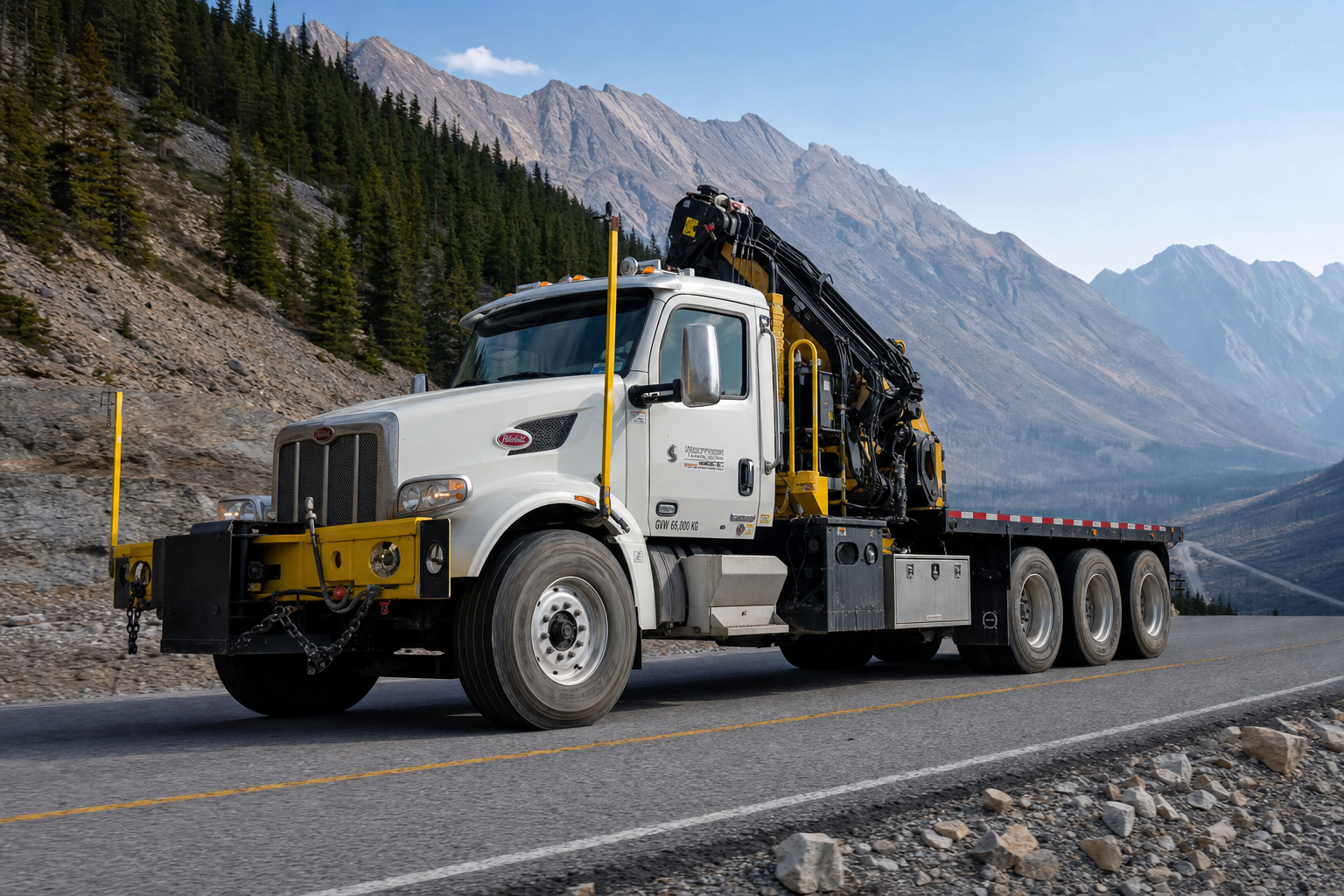
Front axle overload refers to situations where a vehicle’s steering axle is designed and rated by the manufacturer to carry weights that exceed standard regulatory limits. While having a "beefier" front end allows for specialized equipment like cranes or heavy engines, it also changes the way a vehicle interacts with the pavement and bridges.
To manage this, authorities have developed a framework of six total rules—comprising four formal regulations and two specific permits—drawn from two authoritative sources. Understanding these rules requires looking at the specific factors that trigger them, from the type of equipment mounted on the truck to the time of year the vehicle is on the road.
Why Do These Regulations Exist?
Roads are not indestructible. Every time a heavy axle passes over a bridge or a stretch of asphalt, it causes a microscopic amount of deflection. Over thousands of repetitions, this leads to rutting, cracking, and structural fatigue. Steering axles are particularly important because they are typically "single" axles, meaning the weight is concentrated on just two tires rather than spread across a tandem or tridem group.
The regulations are designed to strike a balance. On one hand, industry needs specialized vehicles that can carry heavy components; on the other, the public needs roads that won’t fall apart prematurely. This is why all six of the rules identified in this category carry a "must" modality—they are mandatory requirements, not optional guidelines.
The Factors That Shape the Rules
Not every heavy truck is treated the same. Several specific factors determine which rules apply to a vehicle and whether a driver needs to seek a special permit.
The Manufacturer’s Weight Rating
Everything starts with the manufacturer. A vehicle cannot legally or safely carry more weight than its front axle was built to handle. One of the primary factors in front axle regulation is the manufacturer’s weight rating for the front axle. Even if a permit allows for an "overload" compared to standard road limits, that permit will never authorize a weight that exceeds what the axle was mechanically engineered to support.
Specialized Equipment: Log Picker Trucks
The vocational use of the vehicle is a major determining factor, appearing in two of the six rules. Log picker trucks are a prime example. Because these vehicles have heavy hydraulic loaders mounted directly behind the cab, a significant portion of the vehicle’s empty weight rests on the front axle. Regulators recognize that these vehicles are essential for the forestry industry, so they provide specific frameworks to allow them to operate without being in constant violation of standard weight limits, provided they meet certain safety criteria.
Seasonal Sensitivity and Ban Periods
Roads are at their most vulnerable during the spring thaw, when moisture trapped beneath the pavement weakens the subgrade. During these "ban periods," authorities often restrict the percentage of legal axle weights allowed. For a vehicle already operating with a heavy front axle, these seasonal reductions are critical. A truck that is perfectly legal in the height of summer may find itself sidelined or forced to reduce its load significantly during a ban period to prevent catastrophic road damage.
The Presence of Dangerous Goods
Safety is the ultimate priority on public highways. When a vehicle is currently carrying dangerous goods, the margin for error narrows. Because an overloaded front axle can affect steering response and braking distance, at least one rule specifically identifies the transport of hazardous materials as a factor that changes the regulatory requirements. If you are hauling fuel, chemicals, or explosives, the rules governing your axle weights may be more stringent to ensure the highest possible level of vehicle control.
Administrative Compliance: Annual Permits
Finally, there is the question of administrative standing. In many cases, the difference between being "legal" and "overloaded" is whether the vehicle has a valid annual permit. These permits act as a contract between the operator and the province or territory, ensuring that the operator has paid for the additional wear and tear they cause and has agreed to follow specific routing or safety restrictions.
Regional Breakdown: Alberta and Yukon
The way these rules are distributed across Western and Northern Canada reflects the local industries and infrastructure of those regions.
Alberta: A Regulatory Hub
Alberta accounts for the majority of the rules in this category, with three regulations and one permit. Given Alberta’s massive oil, gas, and forestry sectors, the province has a highly developed system for managing heavy steering axles. The presence of three distinct regulations suggests a robust baseline of "standard" exceptions and requirements that apply to heavy front axles, while the permit system provides a path for even more specialized configurations that fall outside general rules.
Yukon: A Balanced Approach
In the Yukon, the framework is simpler but equally binding, consisting of one regulation and one permit. In Northern climates, infrastructure is particularly sensitive to weight due to permafrost and extreme temperature swings. The 1:1 split between regulations and permits suggests that while there is a clear set of rules for the road, many heavy front axle operations are handled on a case-by-case basis through the permitting process.
Summary of the Regulatory Landscape
Navigating the world of front axle overloads is about understanding the intersection of mechanical limits and environmental protection. With six total rules—four regulations and two permits—the system is designed to be specific.
If you are operating a vehicle with a front axle rated for heavy loads, your compliance depends on:
- What you are driving: Is it a specialized vehicle like a log picker?
- What you are carrying: Are there dangerous goods involved?
- When you are driving: Is there a seasonal weight ban in effect?
- What your equipment is rated for: Are you staying within the manufacturer’s mechanical limits?
- Your paperwork: Do you have the necessary annual permits to exceed standard limits?
By keeping these factors in mind, operators can ensure they are protecting both their equipment and the vital road networks they rely on every day. While the rules are strict, they exist to ensure that the heavy work of industry can continue without compromising the safety and integrity of public infrastructure.