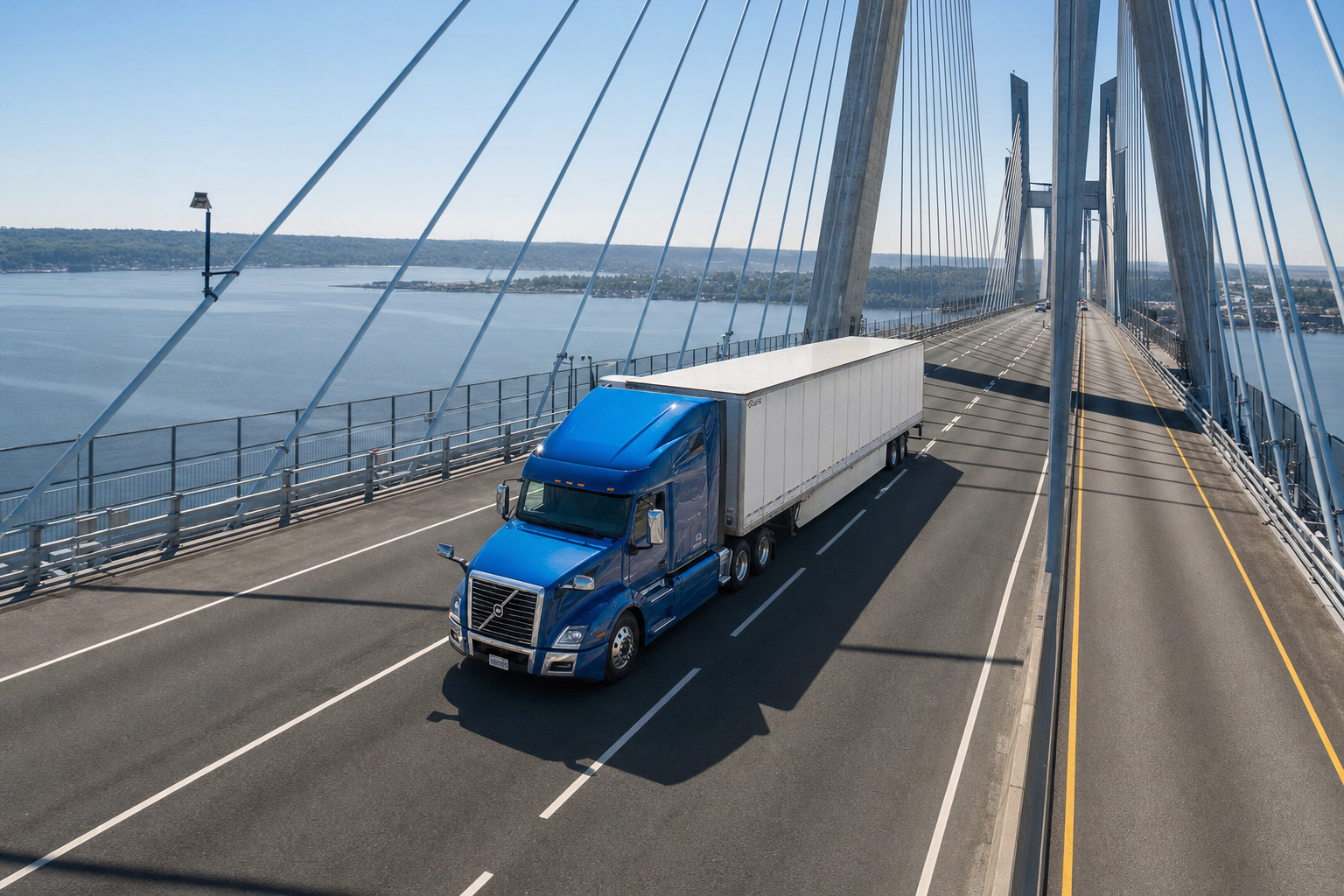
Navigating the Heavy Path: Understanding Truck Weight Limit Maps and Regulations
5 min read
In the world of logistics and heavy hauling, a map is far more than a tool for navigation. For a professional driver or a fleet manager, a truck weight limit map is a vital regulatory document. It serves as the interface between the massive physical demands of a semi-truck and the structural limits of the roads and bridges it travels upon.
To the uninitiated, it might seem that a road is just a road, but from a regulatory perspective, every mile of pavement and every bridge structure is governed by a complex web of rules designed to preserve infrastructure and ensure public safety. Across eight authoritative sources, there are currently 33 distinct rules—comprising 14 regulations and 19 permits—that dictate how heavy vehicles move across our landscape.
Understanding these maps requires looking beneath the surface to see the factors that trigger these rules. Whether you are crossing a bridge in South Dakota or navigating a seasonal route in Manitoba, the regulations you encounter are shaped by specific engineering and environmental realities.
Why the Rules Exist: Safety and Preservation
The primary goal of weight and dimension regulations is twofold: the protection of the taxpayer's investment in infrastructure and the safety of all road users. Of the 33 rules typically tracked in these datasets, the majority are restrictive in nature. Specifically, there are 22 "must not" requirements, which are strict prohibitions against exceeding certain limits. These are balanced by 10 "must" requirements—mandatory actions a driver must take, such as following a specific route—and one "may" requirement, which offers a permissive option for certain configurations.
These rules exist because roads are not indestructible. Every time a heavy vehicle passes over a highway, it causes a microscopic amount of wear. When a vehicle exceeds the weight the road was designed to carry, that wear accelerates exponentially, leading to ruts, cracks, and eventually, structural failure.
The Most Common Trigger: Structure Identifiers
Perhaps the most important factor in the entire regulatory landscape is the unique identifier for a specific structure. In our current data set, this factor appears in 18 different rules.
Bridges are the most vulnerable points in any transportation network. Unlike a section of highway built on solid ground, a bridge is a complex engineering feat with a finite load-bearing capacity. Regulatory maps use unique structure identifiers to link a physical bridge to a specific set of weight limits. When you see a restriction on a map, it is often tied to that specific ID, ensuring that drivers know exactly which bridge has a limit that might be lower than the general highway allowance.
Roadway Classifications and National Standards
Not all roads are created equal. Regulators assign a specific classification or schedule to every roadway, a factor that influences four major rules. These classifications determine the allowed weight or vehicle configuration for that specific stretch of pavement.
A major part of this classification system involves the Surface Transportation Assistance Act (STAA) national network standards. One specific rule in the data set is determined entirely by whether a route falls under this national classification. These "truck-friendly" routes are designed to handle larger, heavier loads, providing a reliable skeleton for interstate commerce while keeping heavy traffic off smaller, local roads that weren't built for such stress.
The Impact of the Seasons
Weight limits are not always static; they can change with the weather. Seasonal programs affect road access and weight limits in significant ways, appearing as a key factor in three of the rules.
In northern regions, the "spring thaw" is a critical period for road managers. As the ground warms, moisture trapped beneath the pavement can weaken the road's foundation. During this time, authorities often impose strict weight reductions to prevent the heavy loads from literally "punching through" the softened asphalt. Conversely, some regions offer "winter weight" allowances, where the deep-frozen ground provides extra support, allowing for slightly heavier loads than would be permitted in the summer.
Precise Measurements and Posting Dates
While structure IDs and roadway types cover the majority of the rules, there are several highly specific factors that ensure the system remains precise:
- Bridge Weight Limits: At least one rule is triggered by a specific maximum weight allowed for a vehicle crossing a bridge, which can supersede any general highway limits.
- Official Posting Dates: Regulations are not static. The date a bridge restriction was officially posted is used to determine which rules apply at any given time, providing a legal paper trail for enforcement.
- Clearance and Dimensions: Vertical and horizontal clearance measurements, as well as the specific dimensions of the vehicle itself, determine if a truck can physically fit through a structure or on a route. Even if a truck is under the weight limit, a low-clearance bridge or a narrow lane can trigger a "must not" regulation.
A Regional Breakdown of Rules
The way these regulations and permits are distributed varies significantly by geography. Different regions have different infrastructure priorities and environmental challenges.
- South Dakota: This region shows a very active regulatory environment, with 8 regulations and 8 permits. This suggests a robust system where rules are clearly defined but flexible enough to allow for specialized transport through a heavy permitting process.
- Nova Scotia: In this dataset, Nova Scotia shows zero general regulations but 4 permits. This indicates a system where movement for heavy vehicles is managed almost entirely through individual permissions and specific oversight rather than broad, standing prohibitions.
- Manitoba: With 1 regulation and 3 permits, Manitoba also leans heavily on the permitting process, likely due to the seasonal complexities of the region’s terrain.
- Mississippi, Montana, and Georgia: These states show a balanced approach, typically maintaining 1 regulation and 1 or 2 permits each, reflecting a standard baseline of rules with specific exceptions for heavy hauling.
- Saskatchewan: This region stands out with 2 regulations and 0 permits in this specific set, suggesting a more rigid adherence to standing weight and dimension laws for the mapped areas.
Understanding the Map is Understanding the Law
When you look at a Truck Weight Limit Map, you are looking at the culmination of engineering data, environmental science, and legislative policy. The 33 rules—the "musts," "must nots," and "mays"—are there to guide the heavy haulage industry through a landscape that is constantly changing.
By understanding the key factors—from the unique ID of a bridge to the way the seasons affect the soil beneath the road—drivers and logistics professionals can better appreciate the "why" behind the map. These rules aren't just bureaucratic hurdles; they are the essential instructions for keeping the transportation network functional, safe, and ready for the next load.