Understanding Winter Road Restrictions: A Guide to Safety, Traction, and Compliance
5 min read
When the first frost hits and snow begins to blanket mountain passes, the landscape of the transportation industry shifts. What was a clear, high-speed corridor in July becomes a complex environment requiring specialized equipment and heightened caution in January. For drivers, fleet managers, and logistics planners, "Winter Road Restrictions" are more than just signs on the highway; they are a critical set of safety protocols designed to keep traffic moving and prevent catastrophic accidents.
Navigating these rules can be challenging because they are rarely static. Instead, they are reactive, scaling in intensity as the weather worsens. Understanding the factors that shape these regulations is the first step in ensuring that your journey—whether personal or professional—remains safe and compliant.
Why Do Winter Restrictions Exist?
The primary driver behind any winter road regulation is public safety. However, the secondary reasons are equally important for the functioning of society. When a vehicle, particularly a heavy commercial truck, loses traction on an icy incline, it doesn't just put the driver at risk. A single "spin-out" or jackknifed trailer can block an entire interstate for hours.
These blockages create a domino effect: emergency services cannot reach accidents, snowplows cannot clear the roads, and the delivery of essential goods is halted. Therefore, authorities use regulations to ensure that every vehicle on the road has the necessary grip to maintain control, even in suboptimal conditions. By mandating certain equipment before the summit becomes impassable, transportation departments protect both the individual and the economy.
The Core Factors: What Determines the Rules?
Regulations aren't applied arbitrarily. They are triggered by a combination of environmental data and vehicle specifications. When you see a "Chains Required" sign, several behind-the-scenes factors have already been calculated by transit authorities.
Gross Vehicle Weight and Class
One of the most significant factors in winter regulation is the gross vehicle weight. Physics dictates that a forty-ton semi-truck behaves very differently on ice than a two-ton passenger car. Because of this, many winter laws are tiered.
Light-duty vehicles might only be advised to use caution, while "heavy-duty" vehicles—usually defined by their weight rating—are often subject to strict minimum chain requirements. In many jurisdictions, even if a road is open to cars, it may be restricted for heavier vehicles if the grade of the road is too steep for a heavy load to navigate safely on packed snow.
Tire Specifications and Traction
Not all tires are created equal. Modern regulations frequently distinguish between standard tires, all-season tires, and dedicated traction tires.
- Traction Tires: These are specifically engineered for cold temperatures and often feature the "mountain and snowflake" symbol. They stay pliable in freezing weather, providing better grip.
- Studded Tires: Some regions allow tires with metal studs for extra "bite" on ice, though these are often restricted to specific months of the year to prevent damage to the dry pavement.
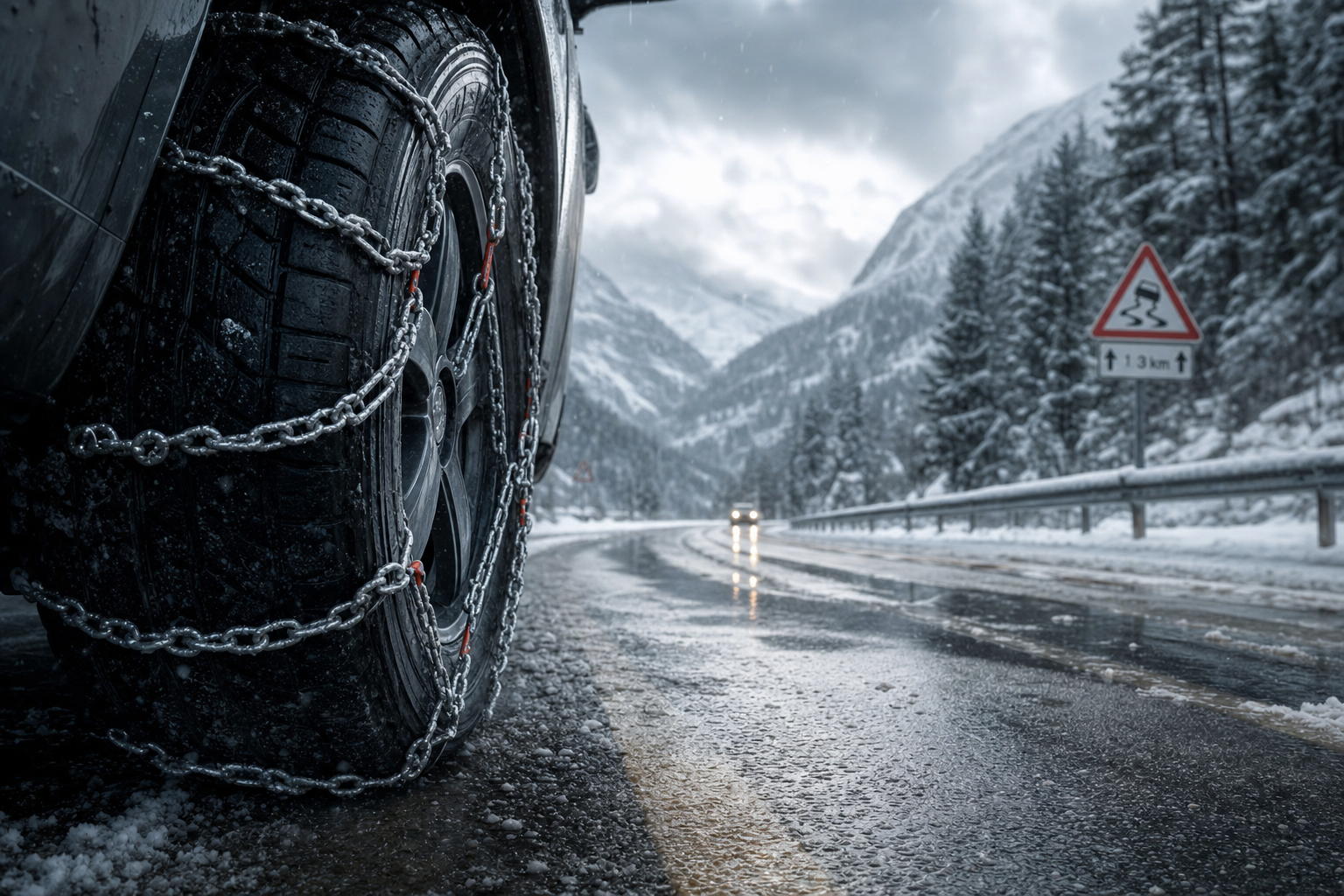
- Chain Requirements: When traction tires aren't enough, "chains" become the gold standard. Regulations will specify exactly how many tires must be chained and on which axles (usually the drive wheels and at least one braking axle on a trailer) to ensure the vehicle can both move and stop.
The Severity of Inclement Weather
Weather is the ultimate "trigger" for these rules. Regulations are often written as "conditional." This means the law exists on the books year-round, but it only "activates" when inclement weather conditions reach a certain threshold. Authorities monitor road temperature, visibility, and snow accumulation to decide when to move from "traction tires advised" to "chains required for all vehicles."
Regulations vs. Permits: Understanding the Framework
In the world of winter transport, there is an important distinction between a general regulation and a specific permit.
Regulations are the baseline laws that apply to everyone. These are the rules regarding when you must carry chains, what types of tires are legal, and how you must behave in a blizzard. These are public mandates that change based on the season and the immediate weather forecast.
Permits, conversely, are often required for vehicles that fall outside the "standard" operating procedures—such as oversized or overweight loads. During the winter, the "permit" landscape often becomes much tighter. Many states or provinces will "suspend" oversized load permits during active snowstorms. This is because a vehicle that is extra-wide or extra-long is significantly harder to maneuver on icy roads and poses a greater risk of blocking the path for others.
Currently, data across many jurisdictions shows a heavy emphasis on dynamic regulations rather than static permits. This reflects a shift toward "active traffic management," where the rules of the road change in real-time based on the sensors embedded in the asphalt and the cameras monitoring the mountain passes.
Regional Variability and the "Chain Law"
While the physics of ice is the same everywhere, the legal requirements vary significantly by region.
- Mountainous Regions: In areas with steep grades and high altitudes, chain laws are much more stringent. You may find "Chain Up" zones—designated areas where it is safe for drivers to pull over and install traction devices.
- Transitional Zones: In areas that see only occasional snow, the regulations might focus more on "emergency snow routes," where parking is prohibited during storms to allow plows to pass.
It is a common misconception that having four-wheel drive or all-wheel drive exempts a driver from all rules. While these systems help with acceleration, they do not necessarily help with stopping on ice. Many mountain passes will still require all-wheel-drive vehicles to carry chains in their trunk, even if they aren't currently required to wear them.
Best Practices for the Informed Traveler
While these regulations can seem like a hurdle, they are essentially a guidebook for survival in harsh conditions. To navigate winter road restrictions successfully, consider the following approach:
- Check the "Weight Class": Know your vehicle's gross vehicle weight. If you are driving a rental or a new commercial vehicle, check the door placard. This determines which signs apply to you.
- Inspect Your Rubber: Ensure your tires meet the "traction tire" definition (look for the snowflake icon). If you are heading into high-elevation territory, carry a set of chains that fit your specific tire size.
- Monitor Official Feeds: Most transportation departments now offer real-time apps or websites that show active restrictions. These are far more accurate than a standard GPS.
- Respect the "Chain Up" Signs: Do not wait until you are sliding to put on chains. Use the designated areas provided by the state. Installing chains on the shoulder of a narrow, icy road is one of the most dangerous positions a driver can be in.
Conclusion
Winter road restrictions are a testament to the fact that, despite our advanced technology, nature still dictates the terms of our travel. These rules—shaped by vehicle weight, tire technology, and the sheer unpredictability of mountain weather—exist to create a predictable environment out of chaotic conditions.
By understanding the "why" behind the chain laws and traction requirements, drivers can move past seeing them as mere compliance hurdles and recognize them as essential tools for a safe arrival. Whether you are hauling freight across the country or heading to a ski resort for the weekend, respecting the threshold of winter regulations is the surest way to keep the roads open for everyone.